Modern Physics: Introduction
From the physics curriculum
TL;DR
Modern physics emerged in the early 20th century, challenging classical physics' ability to explain phenomena at very high speeds, very small scales, or extreme energies. It introduced revolutionary concepts like quantum mechanics and relativity, which describe the universe in ways classical physics simply couldn't. Understanding these new frameworks is key to comprehending the fundamental nature of reality.
1. The Mental Model
Imagine classical physics as a sturdy, reliable car, perfect for everyday driving. Modern physics is like realizing you also need a spaceship to explore distant galaxies and a microscope to see individual atoms – the car just isn't designed for those jobs.
2. The Core Material
For centuries, classical physics, largely based on Isaac Newton's laws and James Clerk Maxwell's electromagnetism, successfully explained most phenomena we observed. It gave us powerful tools to understand motion, gravity, light, and heat. However, as experimental techniques improved at the end of the 19th century, physicists started encountering problems classical physics couldn't explain. These "crises" eventually led to the birth of modern physics.
The Breakdown of Classical Physics

Photo by Matvei on Pexels
Several key experiments and observations baffled classical physicists:
- Blackbody Radiation: Classical physics predicted that a heated object (a "blackbody") should emit an infinite amount of ultraviolet radiation – the "ultraviolet catastrophe." This clearly didn't happen in reality.
- Photoelectric Effect: When light shines on a metal surface, it can eject electrons. Classical wave theory of light couldn't explain why the frequency of light, not its intensity, determined if electrons were ejected, or why there was a threshold frequency below which no electrons were emitted at all.
- Atomic Spectra: Atoms emit and absorb light at very specific, discrete wavelengths, creating unique "fingerprints." Classical physics couldn't explain why these spectra weren't continuous.
- Michelson-Morley Experiment: This experiment aimed to detect the "luminiferous aether," a hypothetical medium through which light was thought to travel. The experiment found no evidence of this aether, implying light's speed is constant regardless of the observer's motion, which contradicted classical notions of relative velocity.
The Solutions: Relativity and Quantum Mechanics
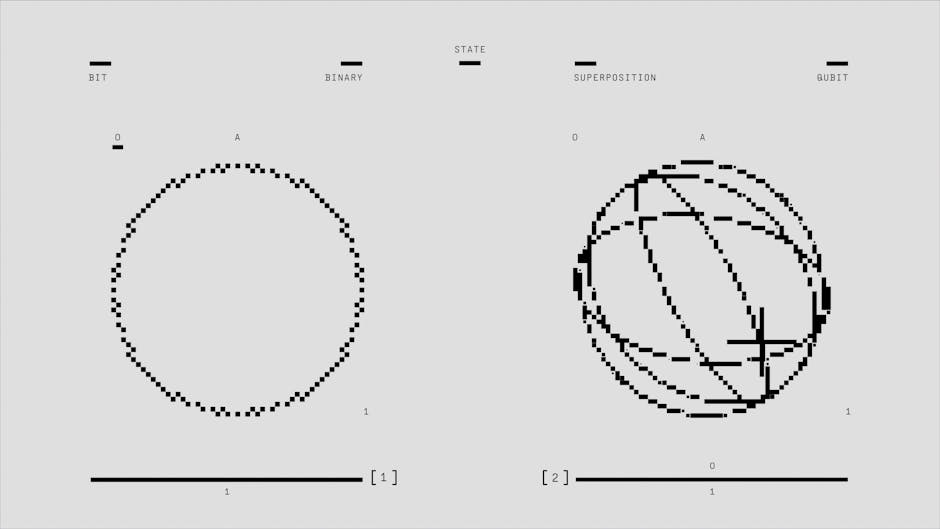
Photo by Google DeepMind on Pexels
These problems weren't minor glitches; they pointed to fundamental flaws in classical understanding at extreme scales. Two revolutionary theories emerged to address them:
a) Special Relativity (Albert Einstein, 1905)
This theory deals with objects moving at high speeds (approaching the speed of light) and revises our understanding of space and time. Its core postulates are:
* The laws of physics are the same for all observers in uniform motion (inertial frames of reference).
* The speed of light in a vacuum (c) is the same for all inertial observers, regardless of the motion of the light source.
These seemingly simple ideas have profound consequences:
* Time Dilation: Time passes more slowly for objects moving at high speeds relative to a stationary observer.
* Length Contraction: Objects moving at high speeds appear shorter in the direction of their motion.
* Mass-Energy Equivalence: Energy and mass are interconvertible, famously expressed by \(E=mc^2\).
b) Quantum Mechanics (Max Planck, Niels Bohr, Werner Heisenberg, Erwin Schrödinger, and many others, early 20th century)
This theory describes the behavior of matter and energy at the atomic and subatomic levels, where classical physics completely fails. Key concepts include:
* Quantization: Energy, momentum, and other physical properties aren't continuous but exist in discrete "packets" or "quanta." Max Planck first introduced this concept to solve the blackbody radiation problem.
* Wave-Particle Duality: Particles (like electrons) can exhibit wave-like properties, and waves (like light) can exhibit particle-like properties (photons).
* Uncertainty Principle: It's impossible to precisely know both the position and momentum of a particle simultaneously. The more accurately you know one, the less accurately you can know the other.
* Probability: Quantum mechanics doesn't predict exact outcomes but rather the probabilities of different outcomes.
Here's a simple flow of how these new ideas addressed the classical failures:
graph TD
    A["Classical Physics Failures"] --> B["Blackbody Radiation"]
    A --> C["Photoelectric Effect"]
    A --> D["Atomic Spectra"]
    A --> E["Michelson-Morley"]

    B --> F["Planck's Quantum Hypothesis"]
    C --> G["Einstein's Photon Concept"]
    D --> H["Bohr Model (Quantized Orbits)"]
    E --> I["Einstein's Postulates of Relativity"]

    F & G & H --> J["Development of Quantum Mechanics"]
    I --> K["Development of Special Relativity"]

    J & K --> L["Modern Physics"]
Modern physics laid the groundwork for countless technological advancements, from lasers and transistors to nuclear power and medical imaging, all of which rely on understanding phenomena at the quantum or relativistic scale.
3. Worked Example
Let's consider the photoelectric effect example.
Imagine you have two light sources: a dim blue light and a bright red light.
Classical Prediction: According to classical physics, the intensity of light determines the energy transferred. So, a very bright red light should transfer more energy and eject more electrons than a dim blue light.
Observation/Modern Physics: When you actually perform the experiment:
* The dim blue light (higher frequency) does eject electrons, even if it's faint. The electrons have a certain kinetic energy.
* The bright red light (lower frequency) does not eject any electrons, no matter how bright it is.
* If you increase the intensity of the blue light, you eject more electrons, but each electron still has the same kinetic energy as with the dim blue light.
Explanation (Quantum Mechanics):
Einstein explained this using Planck's idea of quantization. Light consists of discrete packets of energy called photons. The energy of a single photon is directly proportional to its frequency (\(E = hf\), where \(h\) is Planck's constant and \(f\) is frequency).
* For electrons to be ejected, a photon must have enough energy to overcome the "work function" (\(\phi\)) of the metal (the minimum energy required to free an electron).
* Blue light photons have higher energy than red light photons. If the blue light's photons have energy \(E_{blue} > \phi\), electrons are ejected. The excess energy becomes the electron's kinetic energy (\(KE = E_{blue} - \phi\)).
* If the red light's photons have energy \(E_{red} < \phi\), no electrons are ejected, no matter how many red photons hit the surface. It's like trying to knock down a wall with lots of tiny pebbles instead of a few strong sledgehammer blows.
* Increasing the intensity of blue light simply means more blue photons are hitting the surface, so more electrons are ejected, but each interaction is still one photon giving its energy to one electron, so the individual electron's kinetic energy doesn't change.
This example clearly shows how classical physics fails, and how the quantum concept of energy quantization elegantly explains the observed phenomena.
4. Key Takeaways
- Modern physics emerged because classical physics couldn't explain phenomena at very small scales, very high speeds, or extreme energies.
- Key experimental failures like blackbody radiation, the photoelectric effect, and the Michelson-Morley experiment prompted new theories.
- Special Relativity revolutionized our understanding of space, time, and mass-energy equivalence at high speeds.
- Quantum Mechanics introduced the concept of discrete energy packets (quanta) and wave-particle duality to describe the subatomic world.
- These two theories form the bedrock of modern physics and explain phenomena from the smallest particles to the largest cosmic structures.
- Modern physics isn't a replacement for classical physics but an extension that applies under different conditions; classical physics is still accurate for everyday situations.
Common Mistakes to Avoid:
- Don't think of modern physics as entirely replacing classical physics; it extends it to new domains. Classical physics is still valid for macroscopic, slow-moving objects.
- Don't confuse the concepts of relativity and quantum mechanics; they address different kinds of problems, though they both belong to modern physics.
- Assuming "common sense" or everyday intuition will work at the quantum or relativistic scales; it often doesn't!
- Believing that if something is "modern" it must be completely understood and without mystery; both theories still have profound implications and ongoing research.
5. Now Try It
Think about a common piece of technology you use, like your smartphone. Research one component (e.g., the display, the processor, the camera sensor) and identify at least one way a principle from modern physics (either relativity or quantum mechanics) is essential for its function. For example, how does a laser or LED work? What role does quantum mechanics play in semiconductor transistors? What would success look like? You'd be able to explain, in a few sentences, how a specific modern physics concept is directly applied in that technology.
Frequently asked about Modern Physics: Introduction
Study this next
Get the full physics curriculum
Clone the complete plan to your dashboard for unlimited AI-generated notes, practice quizzes, and a personalised revision schedule.
Save this course free