Optics: Light and Vision
From the physics curriculum
TL;DR
Light behaves predictably as waves and particles, allowing us to understand how mirrors and lenses manipulate it. Our eyes use this manipulation, focusing light onto the retina to form the images we perceive. Understanding these principles helps explain vision defects and corrective measures.
1. The Mental Model
Think of light like tiny, energetic dancers moving incredibly fast. When they hit a surface, they either bounce off (reflection), go through (refraction), or get absorbed. Our eyes are amazing cameras that capture these dancers, focusing them perfectly to create the pictures we see.
2. The Core Material
Optics is the study of light and its interaction with matter. For light and vision, we mostly care about how light travels, reflects, and refracts.
Reflection: Bouncing Light
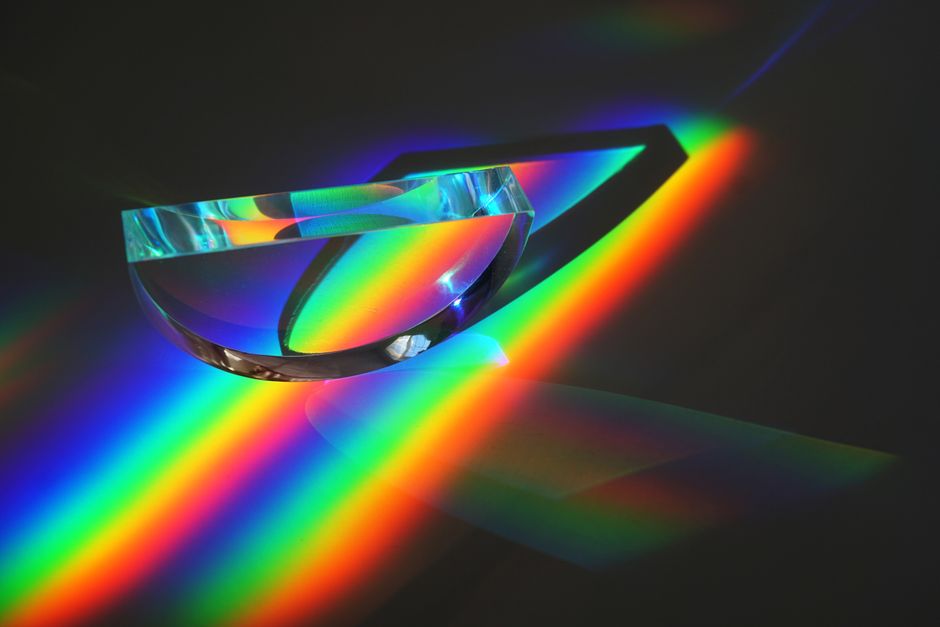
Photo by Nancy Zjaba on Pexels
When light hits a surface and bounces back, that's reflection.
* Specular reflection happens on smooth surfaces (like mirrors), where light rays reflect in a single, predictable direction, creating clear images.
* Diffuse reflection happens on rough surfaces (like a wall), scattering light in many directions, which is why you can see the wall from different angles but don't see your reflection in it.
The Law of Reflection is simple: the angle at which light hits a surface (angle of incidence) equals the angle at which it bounces off (angle of reflection). Both angles are measured from the "normal," an imaginary line perpendicular to the surface.
Refraction: Bending Light

Photo by Design Bits on Pexels
Refraction is the bending of light as it passes from one transparent medium to another (e.g., from air to water, or air to a lens). This happens because light changes speed in different materials.
* When light enters a denser medium (like water from air), it slows down and bends towards the normal.
* When light enters a less dense medium (like air from water), it speeds up and bends away from the normal.
The amount of bending is described by Snell's Law, which uses the refractive index of each material (a measure of how much it slows down light). Lenses work entirely on the principle of refraction.
Lenses: Focusing and Spreading Light
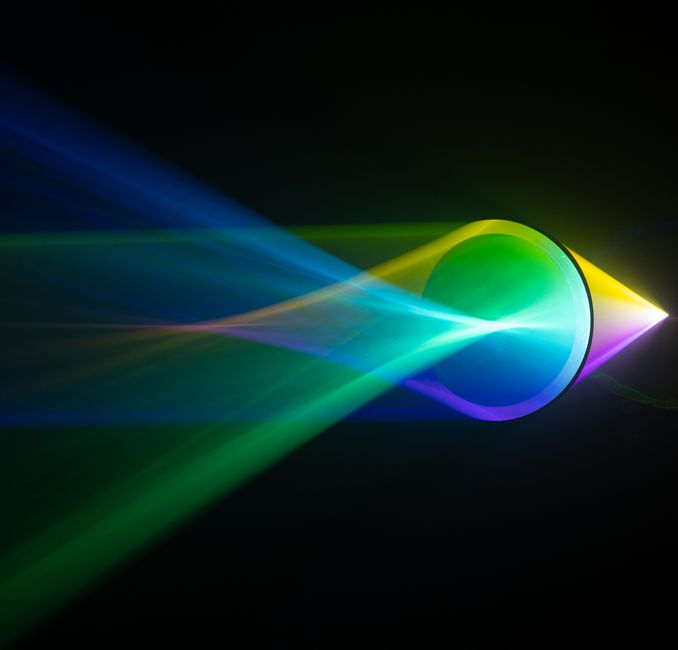
Photo by Anthony Dalesandro on Pexels
Lenses are shaped pieces of transparent material (like glass or plastic) that use refraction to converge (focus) or diverge (spread out) light rays.
* Converging (convex) lenses are thicker in the middle. They bring parallel light rays to a single focal point. These are used to correct farsightedness (hyperopia) and in magnifying glasses.
* Diverging (concave) lenses are thinner in the middle. They spread out parallel light rays as if they came from a single focal point. These are used to correct nearsightedness (myopia).
The image formed by a lens can be real (light rays actually converge there, can be projected onto a screen) or virtual (light rays only appear to diverge from there, cannot be projected).
The Eye: A Natural Camera
Your eye is an incredible optical instrument:
1. Cornea: The transparent front part of your eye. It does most of the initial focusing of light.
2. Pupil: The opening in the center of the iris that controls the amount of light entering the eye.
3. Lens: A flexible, transparent structure behind the pupil. It fine-tunes the focus by changing its shape (accommodation) to view objects at different distances.
4. Retina: The light-sensitive layer at the back of the eye. It contains photoreceptor cells (rods and cones) that convert light into electrical signals.
5. Optic Nerve: Transmits these signals from the retina to the brain, where they are interpreted as images.
Here's how light travels through your eye:
graph TD
    A["Light from object"] --> B["Cornea (major focusing)"]
    B --> C["Pupil (amount control)"]
    C --> D["Eye Lens (fine-tuning focus)"]
    D --> E["Vitreous Humor"]
    E --> F["Retina (light to electrical signals)"]
    F --> G["Optic Nerve (signal to brain)"]
    G --> H["Brain (image interpretation)"]
Vision Defects and Correction
Common vision problems are usually due to the eye's shape preventing light from focusing correctly on the retina.
* Myopia (Nearsightedness): The eye focuses light in front of the retina. Distant objects appear blurry. Corrected with diverging (concave) lenses.
* Hyperopia (Farsightedness): The eye focuses light behind the retina. Near objects appear blurry. Corrected with converging (convex) lenses.
* Presbyopia: Age-related farsightedness, where the eye's lens loses flexibility. Corrected with converging lenses, often bifocals.
* Astigmatism: Irregular curvature of the cornea or lens, causing blurry vision at all distances. Corrected with cylindrical lenses.
3. Worked Example
Let's consider someone with myopia (nearsightedness).
Suppose a person with myopia can only clearly see objects up to 2 meters away. For objects farther than 2 meters, the light rays from them are focused in front of their retina. To correct this, we need a lens that will spread out these distant light rays slightly before they enter the eye, so the eye can then focus them exactly on the retina.
A diverging (concave) lens is used. If the person's farthest clear vision point (far point) is 2 meters, we want the concave lens to make light from very distant objects (effectively at infinity) appear to come from 2 meters away.
Using the lens formula (1/f = 1/do + 1/di, where f is focal length, do is object distance, di is image distance):
* For very distant objects, do = infinity, so 1/do = 0.
* We want the virtual image (di) to be at the person's far point, which is 2 meters. Since it's a virtual image on the same side as the object (for a diverging lens), di = -2 m.
So, 1/f = 0 + 1/(-2 m)
1/f = -1/2 m
f = -2 meters
A concave lens with a focal length of -2 meters (or -200 cm) would correct this person's myopia. The negative sign confirms it's a diverging lens.
4. Key Takeaways
- Light behaves predictably through reflection (bouncing) and refraction (bending).
- Smooth surfaces cause specular reflection, while rough surfaces cause diffuse reflection.
- Light bends when it changes speed as it passes between different transparent materials.
- Converging lenses focus light, while diverging lenses spread it out.
- Your eye uses a cornea and a flexible lens to focus light precisely onto the retina.
- Myopia is corrected by diverging lenses, and hyperopia by converging lenses.
- Understanding these principles helps explain how glasses and contact lenses work.
Common mistakes to avoid:
- Confusing reflection and refraction; remember, reflection is bouncing, refraction is bending through a material.
- Assuming all lenses are the same; convex lenses converge light, concave lenses diverge it.
- Forgetting that the eye's lens changes shape (accommodates) for different distances.
- Mixing up which type of lens corrects which vision defect (e.g., concave for myopia, convex for hyperopia).
5. Now Try It
Find a spoon or a shiny metal bowl. Look at your reflection on the inside (concave) surface and then on the outside (convex) surface. Describe how your reflection appears in both cases (upright/inverted, magnified/minified). Then, fill a clear glass with water and put a pencil in it. Look at the pencil from the side and from above. Explain what you observe happening to the pencil's appearance and why, using the concepts of reflection and refraction. What does your success look like? You'll be able to correctly identify which surface acts like which type of mirror/lens and accurately explain the visual distortions you see using the terms reflection and refraction.
Frequently asked about Optics: Light and Vision
Study this next
Get the full physics curriculum
Clone the complete plan to your dashboard for unlimited AI-generated notes, practice quizzes, and a personalised revision schedule.
Save this course free