Waves: Properties and Applications
From the physics curriculum
TL;DR
Waves are disturbances that transfer energy without transferring matter, characterized by properties like amplitude, wavelength, and frequency. They can be classified as transverse or longitudinal, and their behavior includes reflection, refraction, diffraction, and interference. Understanding these properties helps explain phenomena from sound to light and is crucial for many technologies.
1. The Mental Model
Think of waves like a "Mexican wave" at a stadium: the disturbance (people standing up) moves around the stadium, but the people themselves just stand up and sit down in their seats—they don't travel across the stadium. This energy transfer without matter transfer is the core idea of a wave.
2. The Core Material
Waves are all around us, from the sound waves that let you hear to the light waves that let you see. Despite their differences, all waves share fundamental properties and behaviors.
Wave Classification
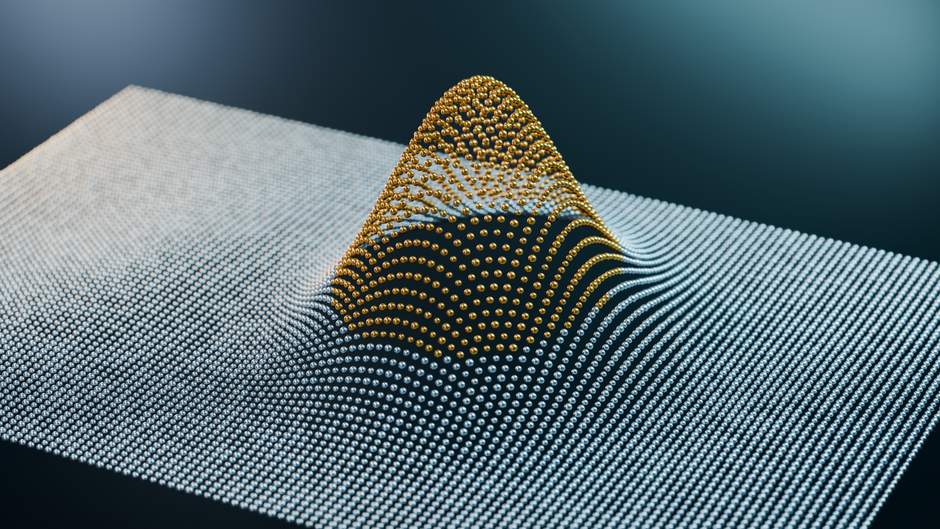
Photo by Santhosh Kanthala on Pexels
Waves are typically classified in two main ways:
-
Based on medium requirement:
- Mechanical Waves: Require a medium to travel through (e.g., sound waves need air, water waves need water). They can't travel through a vacuum.
- Electromagnetic (EM) Waves: Don't require a medium and can travel through a vacuum (e.g., light, radio waves, X-rays).
-
Based on particle motion relative to wave direction:
- Transverse Waves: The particles of the medium oscillate perpendicular to the direction the wave energy is traveling. Imagine shaking a rope up and down to send a wave horizontally. Light waves are also transverse.
- Crest: The highest point of a transverse wave.
- Trough: The lowest point.
- Longitudinal Waves: The particles of the medium oscillate parallel to the direction the wave energy is traveling. Sound waves are a great example: air molecules get compressed and spread out in the same direction the sound travels.
- Compression: Regions where particles are crowded together.
- Rarefaction: Regions where particles are spread apart.
- Transverse Waves: The particles of the medium oscillate perpendicular to the direction the wave energy is traveling. Imagine shaking a rope up and down to send a wave horizontally. Light waves are also transverse.
graph TD
    A["Wave Type"] --> B["Requires Medium?"]
    B --> C{"Yes"}
    B --> D{"No"}
    C --> E["Mechanical Wave"]
    D --> F["Electromagnetic Wave"]

    A --> G["Particle Motion Direction?"]
    G --> H{"Perpendicular to Wave Travel"}
    G --> I{"Parallel to Wave Travel"}
    H --> J["Transverse Wave"]
    I --> K["Longitudinal Wave"]
Key Wave Properties
Every wave can be described using several key properties:
- Amplitude (A): The maximum displacement or distance moved by a point on a vibrating body or wave measured from its equilibrium position. For transverse waves, it's the height from the equilibrium line to a crest (or trough). For longitudinal waves, it's related to the density difference in compressions/rarefactions. Amplitude relates to a wave's energy. A bigger amplitude means more energy.
- Wavelength (λ, lambda): The distance between two consecutive identical points on a wave, like two adjacent crests, two adjacent troughs, or two adjacent compressions.
- Frequency (f): The number of complete wave cycles that pass a point in one second. Measured in Hertz (Hz). A higher frequency means more waves pass by per second.
- Period (T): The time it takes for one complete wave cycle to pass a given point. It's the inverse of frequency:
T = 1/f. Measured in seconds. - Wave Speed (v): How fast the wave travels through the medium. It's related to wavelength and frequency by the wave equation:
v = fλ.
Wave Phenomena
Waves don't just travel; they interact with their environment and each other:
- Reflection: When a wave bounces off a boundary or surface and changes direction. The angle of incidence equals the angle of reflection (Law of Reflection). Think of an echo or light bouncing off a mirror.
- Refraction: When a wave passes from one medium to another and changes speed, which often causes it to change direction (bend). This happens because the wave's speed is different in the new medium. Think of a straw looking bent in a glass of water.
- Diffraction: When a wave spreads out as it passes through an opening or around an obstacle. This effect is more noticeable when the wavelength is similar in size to the opening or obstacle. Sound waves diffract easily around corners; light waves diffract when passing through a narrow slit.
- Interference: When two or more waves meet and combine to form a single resultant wave.
- Constructive Interference: Occurs when waves meet "in phase" (crest meets crest, or trough meets trough), resulting in a wave with a larger amplitude.
- Destructive Interference: Occurs when waves meet "out of phase" (crest meets trough), resulting in a wave with a smaller, or even zero, amplitude.
3. Worked Example
Let's say you're listening to a radio station broadcasting at a frequency of 98.1 MHz (MegaHertz). Radio waves are electromagnetic waves, so they travel at the speed of light, which is approximately 3.0 x 10^8 m/s in a vacuum (and very close to that in air). What is the wavelength of this radio wave?
First, convert the frequency to Hertz:
f = 98.1 MHz = 98.1 x 10^6 Hz
Now, use the wave equation: v = fλ
We want to find λ, so rearrange the equation: λ = v/f
Plug in the values:
λ = (3.0 x 10^8 m/s) / (98.1 x 10^6 Hz)
λ = (3.0 / 98.1) x (10^8 / 10^6) m
λ = 0.03058 x 10^2 m
λ ≈ 3.06 meters
So, a radio wave from that station has a wavelength of about 3.06 meters. This is why radio antennas need to be a certain size to efficiently pick up specific frequencies—they're designed to resonate with these wavelengths.
4. Key Takeaways
- Waves transfer energy without transferring matter, which is a fundamental concept.
- Transverse waves oscillate perpendicular to energy flow, while longitudinal waves oscillate parallel.
- Key properties like amplitude, wavelength, frequency, and speed define a wave.
- The wave equation
v = fλlinks speed, frequency, and wavelength. - Reflection, refraction, diffraction, and interference are common wave behaviors.
- The amplitude of a wave is directly related to the energy it carries.
- All electromagnetic waves (light, radio, X-rays) travel at the speed of light in a vacuum.
Common mistakes to avoid:
- Confusing frequency with period; remember they are inverses.
- Thinking waves carry matter; they only carry energy.
- Forgetting to convert units (like MHz to Hz) before calculations.
- Mixing up transverse and longitudinal wave definitions.
5. Now Try It
Imagine you're at a beach watching ocean waves. You notice that 12 wave crests pass a fixed point on a pier in 60 seconds. You also estimate that the distance between two consecutive crests is 5 meters.
- Calculate the frequency of these waves in Hertz.
- Calculate the period of these waves.
- Calculate the speed of these waves.
What success looks like: You'll have three numerical answers with correct units for frequency, period, and wave speed, demonstrating your understanding of how these properties are interrelated.
Frequently asked about Waves: Properties and Applications
Study this next
Get the full physics curriculum
Clone the complete plan to your dashboard for unlimited AI-generated notes, practice quizzes, and a personalised revision schedule.
Save this course free