Equilibrium in Physical Processes
From the chemistry curriculum
TL;DR
Physical equilibrium happens when opposing physical changes occur at equal rates, making the overall system appear stable. While things look still, changes are constantly happening at the microscopic level, just balanced out. This concept helps us understand many everyday phenomena, from ice melting to fizz in a soda.
1. The Mental Model
Imagine a busy airport where planes are constantly landing and taking off. If the number of planes landing equals the number taking off over a period, the total number of planes at the airport stays the same, even though individual planes are always moving. That's equilibrium: constant microscopic activity, stable macroscopic appearance.
2. The Core Material
Equilibrium in physical processes means that a system has reached a state where the rates of opposing physical changes are equal. This results in no net change in the observable properties of the system, like temperature, pressure, or concentration. It doesn't mean nothing is happening; it means dynamic processes are perfectly balanced.
Types of Physical Equilibrium
Physical equilibrium can occur in several scenarios:
-
Phase Equilibrium: This involves substances existing in more than one phase (solid, liquid, gas) simultaneously, with the rate of transition between phases being equal.
- Solid-Liquid Equilibrium: Think of ice and water at 0°C. Ice is melting into water at the same rate water is freezing into ice.
- Liquid-Gas Equilibrium: Imagine a sealed bottle of soda. Water molecules are evaporating into gas at the same rate gas molecules are condensing back into liquid. This is also called vapor-liquid equilibrium.
- Solid-Gas Equilibrium: Sublimation, like dry ice turning directly into CO₂ gas, can reach equilibrium in a sealed container where the rate of sublimation equals the rate of deposition.
-
Solution Equilibrium: This occurs when a solute is dissolving into a solvent at the same rate the dissolved solute is recrystallizing (coming out of solution).
- Saturated Solution: This is the classic example. When you add salt to water until no more will dissolve, you have a saturated solution. Salt is still dissolving, but an equal amount is crystallizing back out.
Key Characteristics of Physical Equilibrium
- Dynamic Nature: It's not static! Changes are continuously happening at the molecular level.
- Constant Macroscopic Properties: Observable properties like temperature, pressure, density, and concentration remain constant.
- Achievable from Either Direction: Equilibrium can be reached whether you start with reactants or products. For example, solid-liquid equilibrium can be reached by cooling water or heating ice.
- Influence of Conditions: External factors like temperature and pressure affect the position of equilibrium (i.e., how much of each phase/species is present at equilibrium).
Vapor-Liquid Equilibrium Illustrated
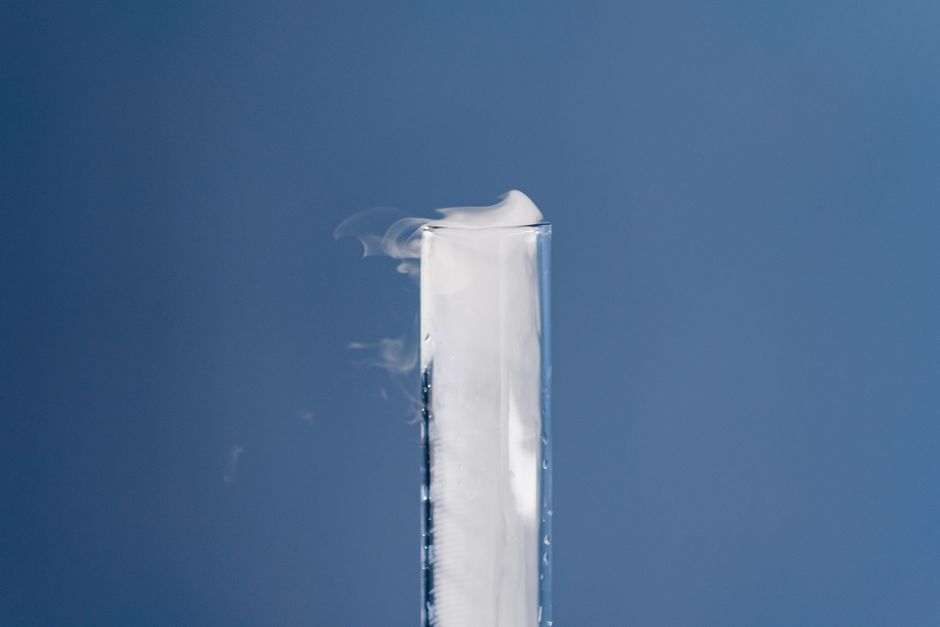
Photo by Ron Lach on Pexels
Let's use a sealed container with some liquid water to illustrate how equilibrium develops.
graph TD
    A["Empty sealed container"] --> B["Add liquid water"]
    B --> C{"Water molecules evaporate (Liquid → Gas)"}
    C --> D{"Gas molecules collide and condense (Gas → Liquid)"}
    D --"Initially, evaporation rate > condensation rate"--> E["Net evaporation, more gas builds up"]
    E --"As gas concentration increases"--> F["Condensation rate increases"]
    F --"Eventually"--> G{"Rate of evaporation = Rate of condensation"}
    G --> H["Equilibrium reached: Vapor pressure constant"]
In this process:
* Initially, there's a lot of liquid and very little gas, so many molecules leave the liquid (evaporate), but few return (condense).
* As more molecules enter the gas phase, the concentration of gas molecules increases. This leads to more frequent collisions with the liquid surface, increasing the rate of condensation.
* Eventually, the rate at which molecules leave the liquid becomes equal to the rate at which they return. At this point, the amount of liquid and gas remains constant, and the pressure exerted by the gas (vapor pressure) stabilizes. This is dynamic equilibrium.
3. Worked Example
Let's consider a practical example: Sugar dissolving in water to make a saturated solution.
Imagine you have a beaker of water and you continuously add granulated sugar, stirring well.
- Initial State: You add the first spoon of sugar. The sugar dissolves quickly. The solution is unsaturated.
- Adding More Sugar: You keep adding sugar. It continues to dissolve, but perhaps a bit slower now, as the solution gets sweeter (more concentrated).
- Reaching Saturation: At some point, you add another spoon of sugar, stir, and notice that some sugar granules remain at the bottom, no matter how long you stir. You might think "no more sugar can dissolve."
- Equilibrium State: This isn't entirely true. At the molecular level, sugar molecules are still dissolving from the solid granules into the water. However, simultaneously, an equal number of dissolved sugar molecules are crystallizing out of the solution and adding back to the solid sugar at the bottom. The net effect is that the amount of solid sugar and the concentration of dissolved sugar in the solution remain constant. You've reached a dynamic equilibrium: the rate of dissolving equals the rate of crystallization. The solution is now saturated.
4. Key Takeaways
- Equilibrium means the rates of opposing physical processes are equal, leading to stable macroscopic properties.
- It's a dynamic state; molecular-level changes are constantly occurring and balancing each other out.
- Common types include phase equilibrium (solid-liquid, liquid-gas) and solution equilibrium (dissolving/crystallizing).
- Temperature and pressure are crucial factors that can shift the position of equilibrium.
- Equilibrium can be approached from either direction, e.g., by melting ice or freezing water.
Common Mistakes to Avoid:
- Confusing equilibrium with "doing nothing": Remember, it's very active at the microscopic level.
- Thinking all substances stop changing: Individual molecules are still moving and transforming, just in a balanced way.
- Believing equilibrium only happens at specific temperatures (like 0°C for water/ice): While specific points are common, equilibrium can be achieved under various conditions (e.g., vapor pressure of water exists at any temperature above freezing).
- Ignoring the "sealed system" aspect for phase equilibria: For liquid-gas equilibrium, the system usually needs to be closed to prevent gas from escaping, allowing the gas concentration to build up and condensation to occur.
5. Now Try It
Think about a freshly opened bottle of a carbonated drink. Describe the process of how the dissolved carbon dioxide gas (CO₂) reaches equilibrium with the CO₂ gas above the liquid in the bottle, after the bottle is sealed again (perhaps you took a sip and put the lid back on). What happens if you then put the bottle in the fridge versus leaving it on the counter? What would indicate that equilibrium has been reached in each case?
Try it yourself: The Haber process simulator
Frequently asked about Equilibrium in Physical Processes
More from chemistry
Get the full chemistry curriculum
Clone the complete plan to your dashboard for unlimited AI-generated notes, practice quizzes, and a personalised revision schedule.
Save this course free