Water Management
From the Sustainable Irrigation Systems curriculum
TL;DR
Effective water management in irrigation systems means balancing crop water needs with available supply while minimising waste. It involves understanding the water cycle, measuring water use, and applying efficient irrigation techniques. Good management ensures sustainable agricultural production and conserves precious water resources.
1. The Mental Model
Think of water management as a balancing act: you're trying to give your plants exactly what they need, no more and no less, while being smart about where that water comes from and where it goes. It's about being efficient and responsible with a vital resource.
2. The Core Material
Water management in sustainable irrigation is all about getting the most "crop per drop." It involves a few key areas: understanding water sources, calculating how much water your crops need, and then delivering that water as efficiently as possible.
Understanding Your Water Sources

Photo by cottonbro studio on Pexels
Before you can manage water, you need to know where it's coming from. Common sources include:
* Rainfall: This is your primary natural source. Its variability is a big challenge.
* Groundwater: Water stored beneath the Earth's surface in aquifers. Pumping too much can deplete these resources.
* Surface Water: Rivers, lakes, and reservoirs. These can be subject to downstream demands and environmental regulations.
* Reclaimed Water: Treated wastewater, often used for non-potable purposes like irrigation. This is an increasingly important sustainable source.
Understanding the quality (salinity, contaminants) and quantity of your source is crucial.
Calculating Crop Water Needs (Evapotranspiration)

Photo by 🇻🇳🇻🇳 Việt Anh Nguyễn 🇻🇳🇻🇳 on Pexels
Crops need water to grow, but they also lose water to the atmosphere through evapotranspiration (ET). This is the sum of evaporation from the soil surface and transpiration from the plants.
* Reference Evapotranspiration (ET0): This is the ET rate from a hypothetical reference crop (like grass or alfalfa) under ideal conditions. It's influenced by climate factors like temperature, humidity, wind speed, and solar radiation.
* Crop Coefficient (Kc): This factor adjusts ET0 to reflect the specific water needs of your actual crop at different growth stages.
* Crop Evapotranspiration (ETc): This is the actual water use by your crop.
$$ETc = ET0 \times Kc$$
You can measure ET0 using weather stations or estimate it using methods like Penman-Monteith. Knowing ETc tells you how much water your crops are actually "drinking."
Soil Water Holding Capacity
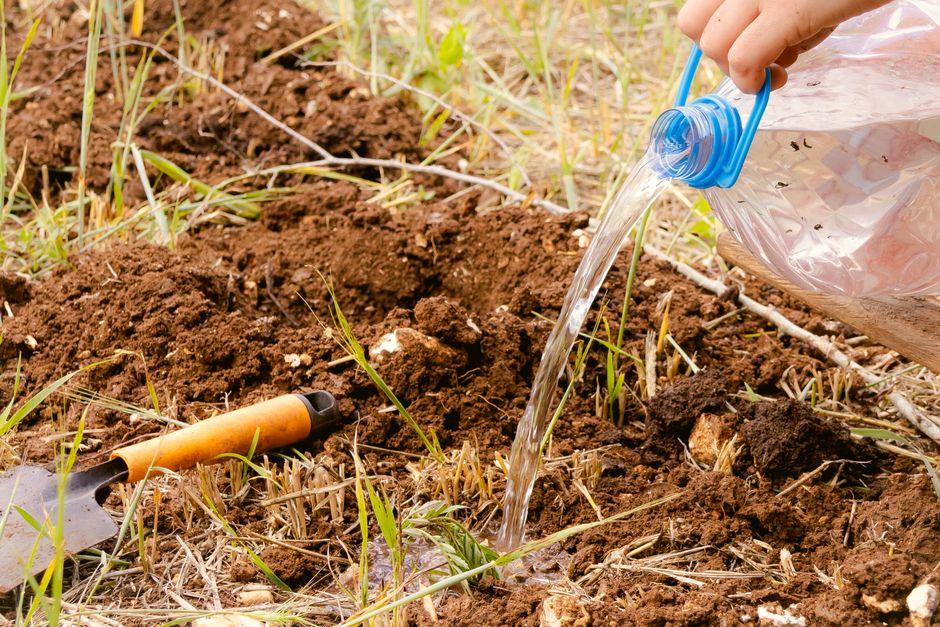
Photo by Yeşim Çolak on Pexels
The soil acts like a sponge, holding water for plants.
* Field Capacity (FC): The maximum amount of water the soil can hold against gravity.
* Permanent Wilting Point (PWP): The point at which the soil moisture is so low that plants can no longer extract water and permanently wilt.
* Available Water Capacity (AWC): The amount of water between FC and PWP that is available for plant use.
* Management Allowed Depletion (MAD): The percentage of AWC you're willing to deplete before irrigating again. This helps prevent plant stress without over-irrigating.
Irrigation Scheduling
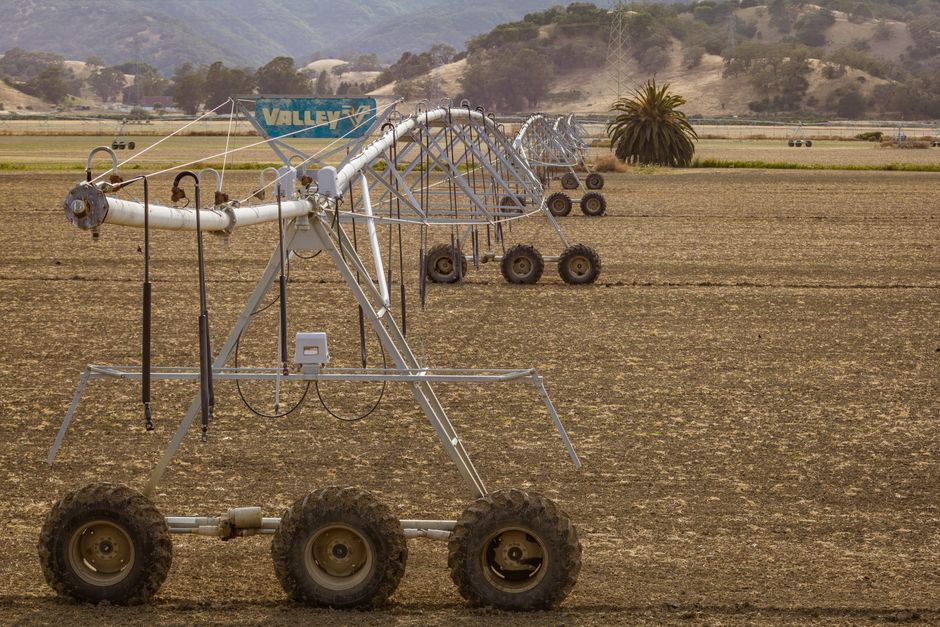
Photo by Robert So on Pexels
This is when and how much water to apply. It's critical for efficiency.
* When to irrigate: When the soil moisture drops to your MAD. You can monitor this with soil moisture sensors, tensiometers, or simply by feeling the soil.
* How much to irrigate: Enough to refill the soil to field capacity, accounting for ETc since the last irrigation and any effective rainfall.
graph TD
    A["Identify Water Sources (Rain, Groundwater, Surface)"] --> B["Assess Water Quality & Quantity"]
    B --> C{"Determine Crop Water Needs (ETc)"}
    C --> D["Monitor Soil Moisture & Weather Data"]
    D --> E{"Is Irrigation Needed? (Soil Moisture < MAD)"}
    E -- No --> D
    E -- Yes --> F["Calculate Irrigation Amount (to refill soil)"]
    F --> G["Select Efficient Irrigation Method (Drip, Sprinkler)"]
    G --> H["Apply Water & Monitor System Performance"]
    H --> D
Efficient Irrigation Methods
Choosing the right method is paramount for water conservation.
* Drip/Micro-irrigation: Delivers water directly to the plant root zone, minimising evaporation and runoff. Highly efficient (90%+).
* Sprinkler Irrigation: Applies water through nozzles under pressure. Efficiency varies (60-85%) depending on type (pivot, lateral, solid set) and weather conditions (wind).
* Surface Irrigation (Furrow, Flood): Least efficient (often 30-60%) due to evaporation, deep percolation, and runoff, but can be improved with proper land levelling and management.
Monitoring and Evaluation
Regularly check your system for leaks, blockages, and uniform water distribution. Use flow meters to track how much water you're applying. Monitor crop health to see if your irrigation is effective.
3. Worked Example
Let's say you're growing corn, and you need to figure out how much water to apply.
- Determine ET0: A local weather station reports that the reference evapotranspiration (ET0) for today is 5 mm.
- Find Kc: Your corn crop is in its mid-season growth stage, for which the crop coefficient (Kc) is 1.2.
- Calculate ETc:
$$ETc = ET0 \times Kc = 5 \text{ mm/day} \times 1.2 = 6 \text{ mm/day}$$
This means your corn needs 6 mm of water today. - Check Soil Moisture: Your soil moisture sensor indicates the root zone has dropped 30 mm below Field Capacity.
- Calculate Irrigation Requirement: You want to refill the root zone to Field Capacity, so you need to apply 30 mm of water.
- Account for System Efficiency: Your drip irrigation system has an estimated application efficiency of 90% (0.90). This means some water will be lost.
$$\text{Gross Irrigation Amount} = \frac{\text{Net Irrigation Requirement}}{\text{Application Efficiency}}$$
$$\text{Gross Irrigation Amount} = \frac{30 \text{ mm}}{0.90} \approx 33.3 \text{ mm}$$
So, you should apply approximately 33.3 mm of water to your corn. If you were using a less efficient system, you'd need to apply even more to ensure 30mm reached the roots.
4. Key Takeaways
- Water management is about using water efficiently to meet crop needs while conserving the resource.
- Understanding your water sources, their quality, and quantity is the first step.
- Calculating crop evapotranspiration (ETc) helps determine how much water your plants actually consume.
- Soil water holding capacity and Management Allowed Depletion (MAD) guide when and how much to irrigate.
- Drip and micro-irrigation systems are generally the most water-efficient choices.
- Regular monitoring of your irrigation system and crop health is essential for continuous improvement.
Common Mistakes to Avoid:
- Over-irrigation: Applying too much water, leading to wasted water, nutrient leaching, and potentially root diseases.
- Under-irrigation: Not applying enough water, causing plant stress, reduced yields, and inefficient nutrient uptake.
- Ignoring rainfall: Failing to account for effective rainfall in irrigation scheduling, leading to over-irrigation.
- Poor system maintenance: Leaky pipes, clogged emitters, or mismatched nozzles can drastically reduce efficiency.
- Not considering soil type: Different soils have different water holding capacities; ignoring this leads to incorrect irrigation.
5. Now Try It
For a crop you're familiar with (or research one online, e.g., tomatoes), identify its typical crop coefficient (Kc) for its main growth stages. Then, using an assumed daily reference evapotranspiration (ET0) of 6 mm, calculate the crop water need (ETc) for each of those growth stages. Think about how this information would influence your irrigation schedule over the growing season.
Success looks like: A table or list showing the crop, its growth stages, the associated Kc values, and the calculated ETc for each stage based on the 6mm ET0. This helps you visualise how a plant's water needs change.
Frequently asked about Water Management
Study this next
Get the full Sustainable Irrigation Systems curriculum
Clone the complete plan to your dashboard for unlimited AI-generated notes, practice quizzes, and a personalised revision schedule.
Save this course free