Irrigation Methods
From the Sustainable Irrigation Systems curriculum
TL;DR
Irrigation methods deliver water to crops efficiently, balancing water availability with plant needs. Choosing the right method depends on factors like water source, crop type, soil, and budget. Understanding these methods helps optimize water use and improve agricultural sustainability.
1. The Mental Model
Think of irrigation methods as different ways to give a drink to a plant. Some methods are like carefully pouring water at the roots, others are like a gentle rain shower, and some are like filling a bathtub around the plants. Each way has its pros and cons for getting water where it's needed most without wasting it.
2. The Core Material
Irrigation methods are broadly categorized by how water is applied to the soil and plants. The goal is to maximize water use efficiency (WUE) – getting the most crop yield for the least amount of water.
Surface Irrigation
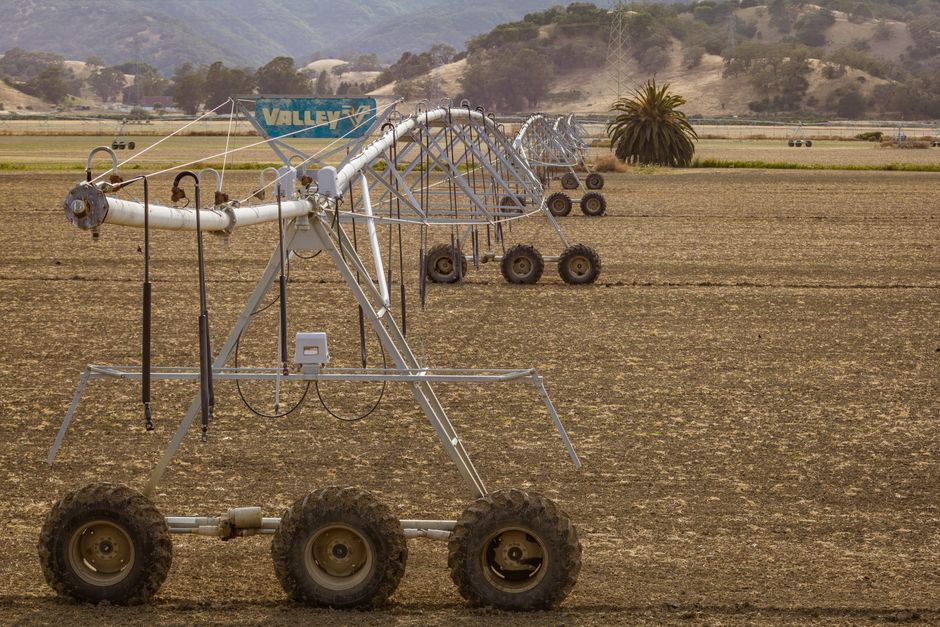
Photo by Robert So on Pexels
This is one of the oldest and simplest methods. Water flows over the land surface by gravity to wet the soil.
- Furrow Irrigation: Water flows down small channels (furrows) dug between crop rows. It's good for row crops like corn or potatoes.
- Border Strip Irrigation: Water is released into a wide strip of land with small earth levees (borders) on either side, flowing uniformly across the width. Suitable for closely spaced crops or pastures.
- Basin Irrigation: The field is divided into small, level plots (basins) surrounded by dikes. Water fills the basin and infiltrates the soil. Ideal for orchards or rice paddies.
The main challenge with surface irrigation is uneven water distribution and high water losses due to evaporation and deep percolation if not managed carefully.
Sprinkler Irrigation

Photo by Mark Stebnicki on Pexels
Water is pumped through a pipe system and sprayed into the air over the crop, mimicking rainfall.
- Center Pivot: A long lateral pipe rotates around a central pivot point, watering a circular area. Highly efficient and widely used for large fields.
- Lateral Move (Linear Move): Similar to center pivot, but the pipe moves in a straight line across a rectangular field.
- Solid Set: Sprinklers are permanently installed throughout the field. Good for high-value crops or areas needing frequent, light applications.
- Portable/Hand Move: Sprinklers and pipes are moved manually from one location to another. Labor-intensive but flexible.
Sprinkler systems generally offer better water distribution uniformity than surface methods and can be used on varied topography. However, wind drift and evaporation can still lead to some water loss.
Drip (Micro-Irrigation)

Photo by Anil Sharma on Pexels
This method delivers water slowly and directly to the plant root zone through emitters, either on the soil surface or buried.
- Drip Emitters: Small devices that release water in drops or a slow stream.
- Drip Tape: Thin-walled tubing with built-in emitters, often used for row crops.
- Micro-Sprinklers/Sprayers: Small sprinklers that apply water to a limited area around the plant, often used in orchards.
Drip irrigation is the most water-efficient method because it minimizes evaporation and deep percolation losses. It also allows for fertigation (applying fertilizers through the irrigation water). It's excellent for high-value crops, orchards, vineyards, and areas with scarce water. The main drawbacks are higher initial cost and potential clogging of emitters.
Here's a diagram showing the decision-making process for choosing an irrigation method:
graph TD
    A["Start: Choose Irrigation Method"] --> B{"Crop Type?"}
    B -- "Field Crops (e.g., Corn, Wheat)" --> C{"Field Topography & Soil?"}
    B -- "High-Value Crops (e.g., Vegetables, Orchards)" --> D{"Water Availability & Cost?"}

    C -- "Flat, uniform soil" --> E["Surface Irrigation (Furrow, Border, Basin)"]
    C -- "Sloping, uneven soil" --> F["Sprinkler Irrigation (Pivot, Lateral, Solid Set)"]

    D -- "Limited Water, High Cost" --> G["Drip Irrigation (Drip Emitters, Tape)"]
    D -- "Adequate Water, Moderate Cost" --> F
    F --> H["Consider efficiency, labor, maintenance"]
    G --> H
    E --> H
    H --> I["Implement and Monitor"]
Subsurface Drip Irrigation (SDI)

Photo by Elvis KAMBIRE on Pexels
A specialized form of drip irrigation where drip lines are permanently buried below the soil surface, directly delivering water to the root zone. This minimizes evaporation even further and can reduce weed growth. It requires careful installation and management to prevent root intrusion and emitter clogging.
3. Worked Example
Imagine you're farming 50 acres of tomatoes in an arid region with sandy loam soil. Your water source is a well with limited pumping capacity, and water costs are rising.
- Option 1: Furrow Irrigation. Initially cheaper to install. However, sandy loam soil infiltrates water quickly, leading to significant losses from deep percolation in furrows. Tomatoes are also susceptible to leaf diseases from overhead wetting, and furrow irrigation would wet the entire row. Your limited water supply would be quickly depleted, and overall efficiency would be low.
- Option 2: Center Pivot Sprinkler. This would provide good uniformity over 50 acres and work on sandy soil. However, tomatoes are a row crop, and center pivot is often better suited for broadacre crops. More importantly, overhead wetting could increase disease risk, and evaporation losses would still be significant in an arid, windy region. Water use might still be too high for your limited supply.
- Option 3: Drip Irrigation. While the upfront cost is higher, drip tape placed along each tomato row would deliver water directly to the root zone. This minimizes evaporation and deep percolation in sandy soil, making it highly water-efficient. It prevents wetting the foliage, reducing disease risk. You could also precisely apply fertilizer through the system (fertigation), optimizing nutrient delivery. Given your limited water and high costs, the long-term water savings and increased yield potential from drip irrigation make it the most sustainable and economically viable choice for this specific scenario.
4. Key Takeaways
- Water Use Efficiency (WUE): The primary goal is to deliver water effectively with minimal waste.
- Method Choice Factors: Consider crop type, soil, topography, water availability/cost, and labor.
- Surface Irrigation: Simple and low-cost but often less efficient due to high losses.
- Sprinkler Irrigation: Provides good uniformity and adaptability to varied terrain, mimicking rain.
- Drip Irrigation (including SDI): Highest water efficiency, applies water directly to the root zone, reducing losses and disease.
- System Maintenance: Regular maintenance is crucial for any system to maintain efficiency and prevent issues.
Common Mistakes to Avoid:
- One-size-fits-all approach: Don't assume one method works for all crops or conditions.
- Ignoring soil type: Different soils have different infiltration rates, affecting water application.
- Over-irrigation: Applying too much water wastes resources and can leach nutrients or waterlog plants.
- Neglecting maintenance: Clogged emitters, leaky pipes, or faulty sprinklers severely reduce efficiency.
5. Now Try It
You're advising a farmer who wants to grow almonds on a gently sloping 20-acre field with clay soil. They have access to a reliable, but moderately priced, water source. They are concerned about water efficiency but also need a system that can handle the slight slope and deliver water effectively to mature trees.
What to do: Research the most suitable irrigation method for this scenario. Consider the crop (almonds), soil (clay), topography (gently sloping), and water availability/cost.
What success looks like: You've identified the best method, explained why it's suitable for each of the given factors, and briefly mentioned one potential challenge to manage with that method in this specific context.
Frequently asked about Irrigation Methods
Study this next
Get the full Sustainable Irrigation Systems curriculum
Clone the complete plan to your dashboard for unlimited AI-generated notes, practice quizzes, and a personalised revision schedule.
Save this course free