Cell Biology and Plant Physiology
From the Grade 8 Biology curriculum
TL;DR
Cells are the basic building blocks of all living things, with plants having specialized cells and structures to help them grow and make their own food through a process called photosynthesis. Plant physiology explains how plants function, focusing on processes like water transport, nutrient uptake, and reproduction. Understanding these concepts helps us see how plants survive and thrive.
1. The Mental Model
Imagine a LEGO set where each individual LEGO brick is a cell. Just like different LEGO bricks come together to build a complex model, different types of cells come together to build a complex organism like a plant, each with a special job.
2. The Core Material
Every living thing, from tiny bacteria to massive trees, is made of cells. They're the smallest units of life that can perform all the basic activities needed for survival.
What is a Cell?

Photo by Monstera Production on Pexels
Think of a cell as a tiny, self-contained factory. Each part of the factory (called an organelle) has a specific job.
- Cell Membrane: This is like the factory's outer wall. It controls what goes in and out of the cell.
- Cytoplasm: This is the jelly-like substance filling the cell, where all the organelles float.
- Nucleus: This is the control center, containing the cell's genetic material (DNA), which tells the cell what to do. (Only in eukaryotic cells, which plant cells are!)
- Mitochondria: These are the powerhouses of the cell. They break down food to release energy.
What Makes Plant Cells Special?
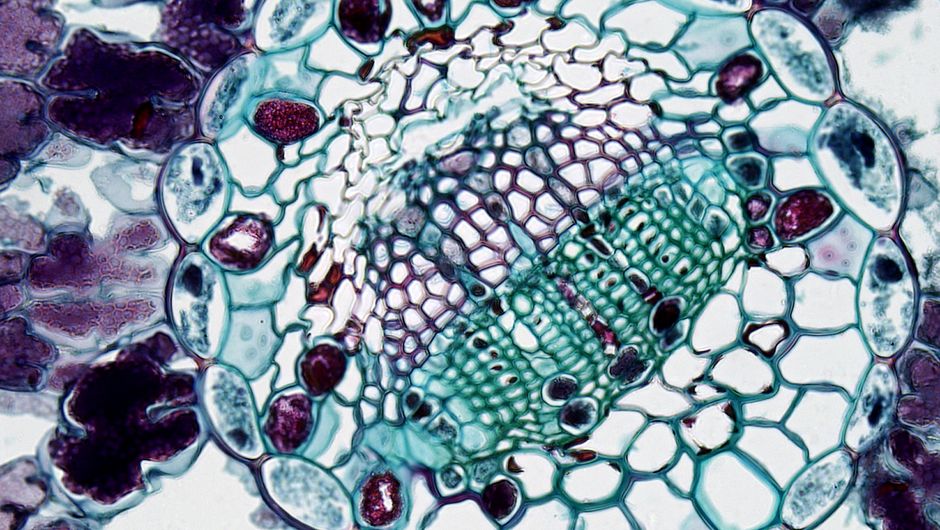
Photo by Fayette Reynolds M.S. on Pexels
Plant cells have a few extra parts that animal cells don't, which help them perform their unique functions:
- Cell Wall: A strong, rigid outer layer outside the cell membrane. It provides support and protection, like a sturdy frame around the factory. This is why plants can stand tall!
- Chloroplasts: These are the food factories of the plant cell. They contain chlorophyll, the green pigment that captures sunlight for photosynthesis.
- Large Central Vacuole: A big sac that stores water, nutrients, and waste. It also helps maintain turgor pressure (pushing against the cell wall) which keeps the plant firm. If a plant wilts, its vacuoles have lost water.
Plant Physiology: How Plants Work

Photo by Fayette Reynolds M.S. on Pexels
Plant physiology is simply the study of how plants function. It covers all the amazing processes that keep a plant alive and growing.
Photosynthesis
This is arguably the most important process for plants (and for us!). It's how plants make their own food using sunlight.
graph TD
    A["Sunlight Energy"] --> B["Chlorophyll (in Chloroplasts)"]
    C["Carbon Dioxide (CO2)"] --> B
    D["Water (H2O)"] --> B
    B --> E["Glucose (Sugar/Food)"]
    B --> F["Oxygen (O2)"]
    E --> G["Plant Growth & Energy"]
    F --> H["Released into Air"]
Steps of Photosynthesis:
1. Light absorption: Chlorophyll in chloroplasts captures energy from sunlight.
2. Water splitting: Water (H2O) is absorbed through the roots and split, releasing oxygen (O2) as a byproduct.
3. Carbon dioxide conversion: Carbon dioxide (CO2) from the air enters the leaves and is combined with the energy from sunlight and water to make glucose (sugar).
4. Glucose as food: The plant uses this glucose for energy to grow, flower, and produce fruits.
Respiration
Just like animals, plants also need to breathe! Cellular respiration is the process where plants break down the glucose (sugar) they made during photosynthesis to release energy for their daily activities. This happens in the mitochondria.
Transpiration
This is the process where water vapor is released from small pores (called stomata) on the leaves into the atmosphere. It's like a plant sweating! Transpiration helps pull water up from the roots to the rest of the plant, bringing nutrients along.
Water and Nutrient Transport
Plants absorb water and nutrients from the soil through their roots.
* Xylem: This is like the plant's plumbing system that transports water and dissolved minerals upwards from the roots to the leaves.
* Phloem: This system transports sugars (the food made during photosynthesis) from the leaves to other parts of the plant where it's needed for growth or storage.
3. Worked Example
Let's trace how a plant gets energy to grow a new leaf.
- A chloroplast in a leaf cell absorbs sunlight energy.
- Carbon dioxide from the air enters the leaf through stomata.
- Water is absorbed by the roots, transported up through the xylem, and arrives at the leaf.
- Inside the chloroplast, photosynthesis occurs: sunlight + CO2 + H2O are combined to create glucose (sugar) and oxygen. The oxygen is released.
- The plant uses some of this glucose immediately for energy through cellular respiration in the mitochondria of the leaf cells.
- The remaining glucose (food) is transported through the phloem to other parts of the plant, like a developing bud, providing the energy and building blocks needed for that bud to grow into a new leaf.
- As the new leaf grows, the large central vacuole in its cells fills with water, pushing against the cell wall to keep the leaf firm and upright (turgor pressure).
4. Key Takeaways
- Cells are the fundamental units of life, and plant cells have unique structures like a cell wall, chloroplasts, and a large central vacuole.
- The cell wall provides structure and protection, allowing plants to stand upright.
- Chloroplasts are where photosynthesis occurs, using chlorophyll to capture sunlight and make food (glucose).
- The large central vacuole helps store water and maintains turgor pressure, keeping the plant firm.
- Photosynthesis is the process plants use to convert sunlight, carbon dioxide, and water into glucose and oxygen.
- Respiration is how plants break down glucose to release energy for their activities.
- Xylem transports water and nutrients from roots to leaves, while phloem transports sugars from leaves to other parts of the plant.
Common Mistakes to Avoid:
- Confusing the cell wall (outer rigid layer) with the cell membrane (inner selective layer).
- Thinking plants only "breathe" during the day; they respire (release energy from food) all the time.
- Forgetting that oxygen is a product of photosynthesis, not what plants "take in" for making food.
- Mixing up the roles of xylem (water up) and phloem (sugar down/around).
5. Now Try It
Imagine you're explaining to a younger sibling why a plant wilts if you forget to water it, but then perks up after you water it. In 3-4 sentences, use the terms cell wall, large central vacuole, and turgor pressure to explain what happens inside the plant's cells when it wilts and then recovers.
What success looks like: You've clearly explained the role of water in maintaining the plant's structure using the specified terms.
Frequently asked about Cell Biology and Plant Physiology
Study this next
Get the full Grade 8 Biology curriculum
Clone the complete plan to your dashboard for unlimited AI-generated notes, practice quizzes, and a personalised revision schedule.
Save this course free