Cell Biology and Plant Systems
From the Science final exam curriculum
TL;DR
Cells are the basic units of life, with prokaryotic and eukaryotic types having distinct structures and functions. Eukaryotic plant cells have unique organelles like cell walls, chloroplasts, and large central vacuoles that support photosynthesis and structural integrity. Plant systems, including roots, stems, and leaves, are specialized for functions like water absorption, transport, and food production.
1. The Mental Model
Think of a cell as a tiny, self-contained factory: it takes in raw materials, processes them, produces goods, and removes waste. Plant cells are specialized factories with extra departments like solar panels (chloroplasts) and sturdy walls, all working together to form larger, interconnected plant systems.
2. The Core Material
Cell Types: Prokaryotic vs. Eukaryotic

Photo by turek on Pexels
All living things are made of cells, but there are two main types:
- Prokaryotic Cells: These are the simpler, older cells. They don't have a nucleus or other membrane-bound organelles. Think bacteria. Their genetic material (DNA) just floats in the cytoplasm.
- Eukaryotic Cells: These are more complex and include animal, plant, fungal, and protist cells. They have a true nucleus that encloses their DNA, and many other specialized organelles.
Eukaryotic Cell Organelles (General)
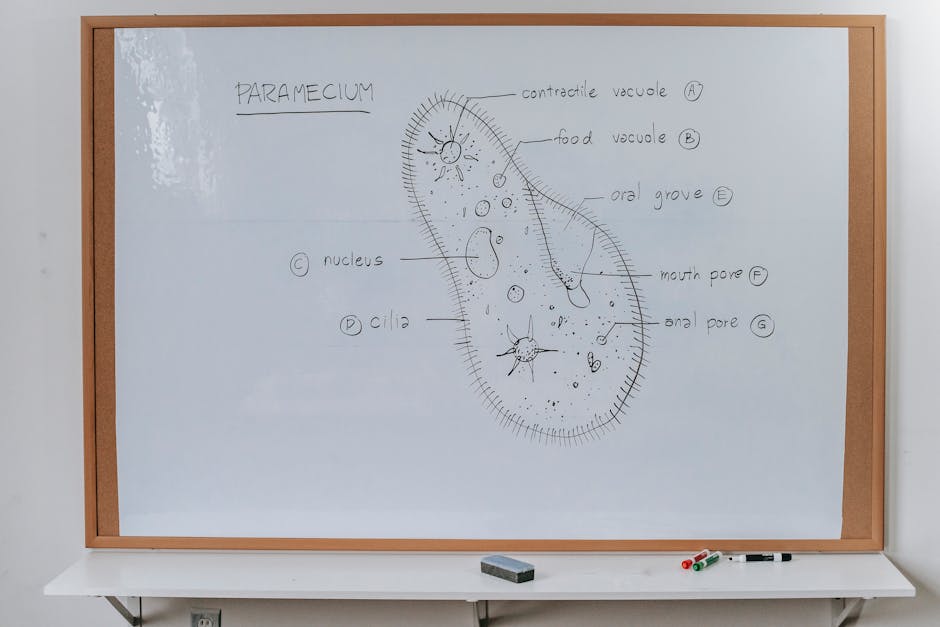
Photo by Katerina Holmes on Pexels
You need to know the basic functions of these key organelles found in most eukaryotic cells:
- Nucleus: Contains the cell's genetic material (DNA) and controls cell activities.
- Mitochondria: The "powerhouses" of the cell; they produce energy (ATP) through cellular respiration.
- Ribosomes: Build proteins.
- Endoplasmic Reticulum (ER): A network of membranes involved in protein and lipid synthesis.
- Rough ER: Has ribosomes, involved in protein modification.
- Smooth ER: Lacks ribosomes, involved in lipid synthesis and detoxification.
- Golgi Apparatus: Modifies, sorts, and packages proteins and lipids for secretion or delivery to other organelles.
- Lysosomes: Contain digestive enzymes to break down waste and cellular debris (more common in animal cells).
- Cytoplasm: The jelly-like substance filling the cell, where organelles are suspended.
Plant Cell Specifics

Photo by Leo Freire on Pexels
Plant cells are eukaryotic but have a few key structures that animal cells don't:
- Cell Wall: A rigid outer layer made primarily of cellulose, providing structural support and protection.
- Chloroplasts: Sites of photosynthesis, where light energy is converted into chemical energy (sugars). They contain chlorophyll, the green pigment.
- Large Central Vacuole: A large membrane-bound sac that stores water, nutrients, and waste products. It also helps maintain turgor pressure against the cell wall, keeping the plant rigid.
Here's how energy flows in a plant cell:
graph TD
    A["Sunlight & CO2"] --> B["Chloroplasts (Photosynthesis)"]
    B --> C["Sugars (Glucose) & O2"]
    C --> D["Mitochondria (Cellular Respiration)"]
    D --> E["ATP (Energy for cell)"]
    E --> F["Cell Activities (Growth, Repair, etc.)"]
Plant Systems
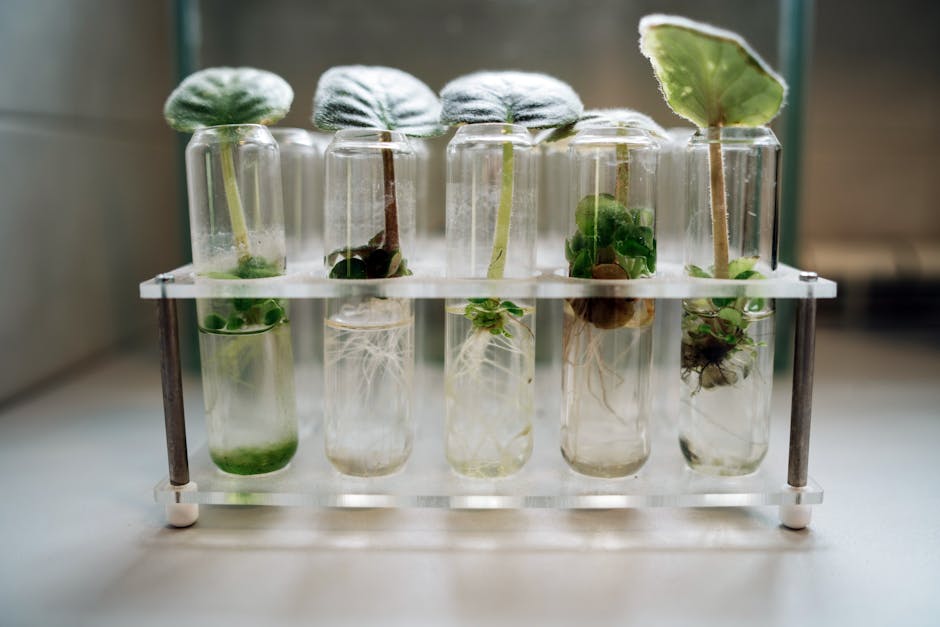
Photo by Mikhail Nilov on Pexels
Plants are organized into various systems, each with specialized functions:
- Root System: Anchors the plant and absorbs water and minerals from the soil.
- Root hairs: Tiny extensions that increase surface area for absorption.
- Shoot System: Consists of the stem, leaves, and reproductive structures.
- Stem: Supports the leaves and flowers, transports water and nutrients between roots and leaves.
- Xylem: Transports water and dissolved minerals from roots to leaves.
- Phloem: Transports sugars (food) made during photosynthesis from leaves to other parts of the plant.
- Leaves: Primary sites of photosynthesis.
- Stomata: Small pores on the leaf surface that regulate gas exchange (CO2 in, O2 and water vapor out).
- Chlorophyll: Green pigment in chloroplasts that absorbs sunlight.
- Flowers/Fruits: Involved in reproduction.
- Stem: Supports the leaves and flowers, transports water and nutrients between roots and leaves.
3. Worked Example
Imagine a celery stalk, which is a plant stem. If you put the base of a celery stalk in a glass of water with food coloring, after a few hours, you'll see the colored water has moved up the stalk and into the leaves. This demonstrates the function of the xylem. The xylem vessels, a key part of the stem's vascular system, are continuously transporting water from the roots (or in this case, the colored water from the glass) upwards to the rest of the plant. If you were to cut a cross-section of the stalk, you'd see the tiny tubes carrying the colored water, showing the path of transport.
4. Key Takeaways
- Prokaryotic cells lack a nucleus and membrane-bound organelles, while eukaryotic cells have them.
- Plant cells are eukaryotic and distinguished by their cell wall, chloroplasts, and large central vacuole.
- The cell wall provides structural support and protection, while chloroplasts are where photosynthesis occurs.
- Mitochondria are responsible for cellular respiration, producing energy for both plant and animal cells.
- Plant systems (roots, stems, leaves) are specialized for absorption, transport, photosynthesis, and reproduction.
- Xylem transports water and minerals up the plant, and phloem transports sugars (food) throughout the plant.
- Common mistakes to avoid:
- Confusing the functions of mitochondria (respiration) and chloroplasts (photosynthesis).
- Forgetting that plant cells also have mitochondria and perform cellular respiration.
- Mixing up xylem and phloem functions.
- Thinking only animal cells have a nucleus; all eukaryotic cells do.
- Underestimating the importance of the central vacuole in maintaining plant rigidity (turgor).
5. Now Try It
Take a fresh leaf and observe it closely. Draw what you see, focusing on its features. Then, in 15 minutes, write down how each of the following plant cell organelles (cell wall, chloroplasts, central vacuole) and plant systems (stem, roots) contributes to the leaf's ability to perform photosynthesis and stay rigid. Your success will be showing a clear connection between the structures and their specific functions in supporting the leaf.
Frequently asked about Cell Biology and Plant Systems
Study this next
Get the full Science final exam curriculum
Clone the complete plan to your dashboard for unlimited AI-generated notes, practice quizzes, and a personalised revision schedule.
Save this course free