ICSE/ISC: Exam Technique — Specimen Papers
From the ICSE & ISC Prep curriculum
TL;DR
Specimen papers are your secret weapon for exam success, helping you understand the format, question types, and time management. Treat them like real exams to identify your strengths and weaknesses before the actual paper. Regularly practicing with them builds confidence and refines your approach.
1. The Mental Model
Think of specimen papers as a rehearsal for a play. You're not just reading the script; you're performing it under conditions similar to opening night, so you know exactly what to expect and can refine your performance.
2. The Core Material
Specimen papers are official sample question papers released by the council (CISCE). They're designed to give you a clear idea of the upcoming board exams' structure, difficulty level, and content. They aren't just for practice; they're a window into the examiners' expectations.
Why Use Specimen Papers?
Photo by Image Hunter on Pexels
- Understand the Exam Format: You'll see the exact layout, number of sections, types of questions (e.g., MCQs, short answers, long answers, practical/application-based), and marking scheme. This eliminates surprises on exam day.
- Identify High-Weightage Topics: Often, certain topics or question patterns appear consistently. Practicing specimen papers helps you spot these trends and prioritize your revision.
- Time Management Practice: The biggest challenge for many isn't knowing the answers, but finishing the paper on time. Solving specimen papers under timed conditions is crucial for developing your pacing strategy.
- Pinpoint Weaknesses: When you attempt a paper, you'll naturally struggle with certain questions or topics. This highlights exactly where you need to focus your revision efforts.
- Build Confidence: Successfully completing a full paper, even a practice one, significantly boosts your self-assurance.
How to Use Specimen Papers Effectively
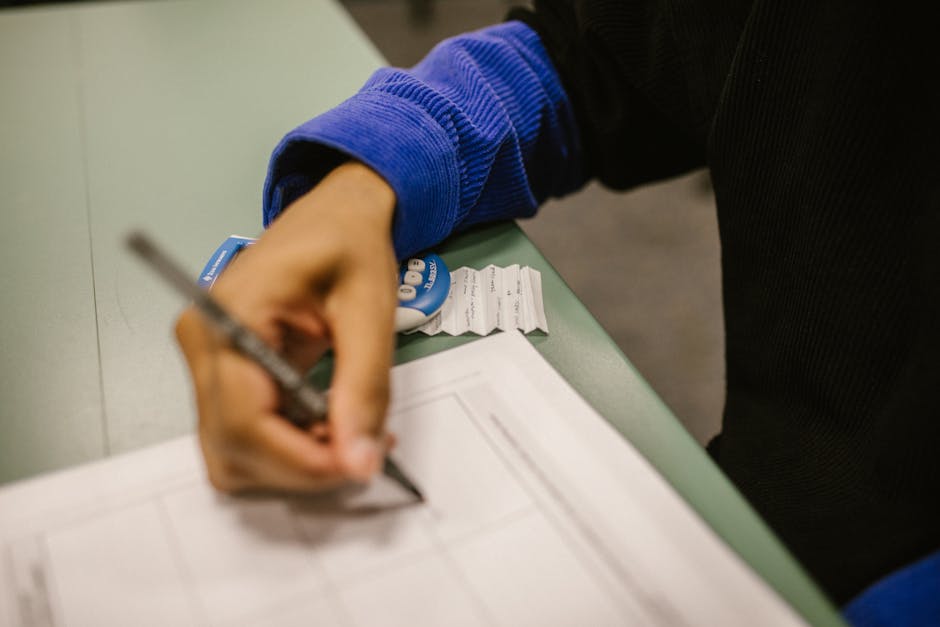
Photo by RDNE Stock project on Pexels
Here’s a structured approach to make the most of each paper:
graph TD
    A["Get Specimen Paper & Syllabus"] --> B["Set Up Exam Conditions"];
    B --> C["Attempt Paper (Timed)"];
    C --> D["Review & Self-Correct"];
    D --> E["Identify Weak Areas"];
    E --> F["Revise Specific Topics"];
    F --> G["Repeat with Next Paper"];
Setting Up Exam Conditions

Photo by This And No Internet 25 on Pexels
- Time Yourself Strictly: Use a timer and stick to the official exam duration. Don't give yourself extra minutes.
- No Distractions: Find a quiet place, put away your phone, and avoid looking up answers. Treat it like the real thing.
- Use Proper Stationery: Have pens, pencils, rulers, and any permitted calculators ready.
- Simulate Environment: If possible, try to practice at the same time of day as your actual exam to get your body clock used to it.
Review and Self-Correction
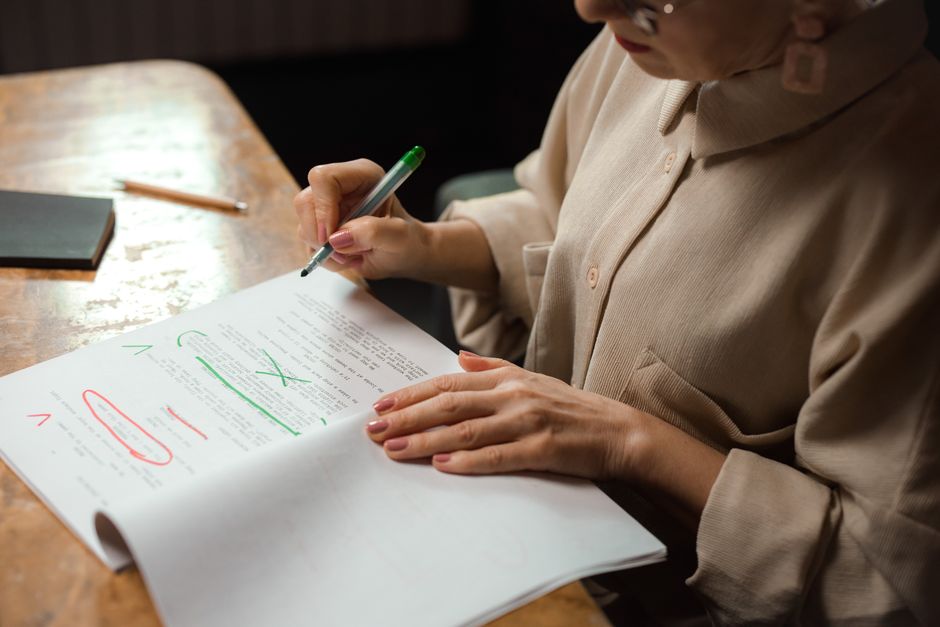
Photo by Ron Lach on Pexels
Once you've completed the paper:
- Check Your Answers: Use the provided marking scheme or your textbook/notes to accurately grade your paper. Be honest with yourself.
- Analyze Mistakes: Don't just note what you got wrong. Understand why you got it wrong. Was it:
- Lack of knowledge?
- Carelessness/Silly error?
- Misunderstanding the question?
- Poor time management?
- Incorrect application of concept?
- Correct Thoroughly: Rewrite correct answers for questions you missed. Re-solve problems you got wrong.
- Note Down Learnings: Keep a dedicated notebook for mistakes from specimen papers. This becomes your personalized revision guide.
3. Worked Example
Let's say you're preparing for your ISC Chemistry Paper 1 (Theory).
Step 1: Obtain the Specimen Paper. You get the latest ISC Chemistry Specimen Paper from the CISCE website.
Step 2: Set Up. It's a 3-hour paper. You clear your desk, put your phone away, set a timer for 3 hours, and get your pen, calculator, and periodic table ready. You start at 10 AM, just like the actual exam.
Step 3: Attempt the Paper. You work through all sections, carefully reading each question, allocating time as you go. You find that Section B (Organic Chemistry) takes you longer than expected, and you struggle with a specific numerical problem from Electrochemistry. You also notice you spent too much time on a 3-mark question, leaving less for a 5-mark one.
Step 4: Review and Self-Correct. After 3 hours, you stop writing. You then use the official marking scheme.
* Mistake 1: In Section B, you confused two organic reactions, losing 2 marks. Reason: Lack of precise recall.
* Mistake 2: The Electrochemistry numerical had a unit conversion error. Reason: Carelessness/Silly error.
* Mistake 3: You completely missed a question from a chapter you thought you knew well (Chemical Kinetics). Reason: Hidden weakness/misunderstanding.
* Observation: You consistently ran out of time towards the end, rushing the last few questions. Reason: Poor time management.
Step 5: Revise.
* You make flashcards for the confused organic reactions.
* You practice 5-6 more numerical problems from Electrochemistry, paying extra attention to units.
* You re-read the Chemical Kinetics chapter, focusing on the specific topic you missed, and solve end-of-chapter questions.
* You make a mental note to allocate specific times for each section in your next practice paper.
By following this, you've turned a simple practice session into a powerful learning experience.
4. Key Takeaways
- Always use the latest official specimen papers from the CISCE website for accurate exam insights.
- Treat every specimen paper attempt like the actual board exam, including strict time limits and no distractions.
- Don't just check answers; deeply analyze why you made mistakes to understand conceptual gaps or silly errors.
- Maintain a 'mistake notebook' where you record recurring errors and the correct solutions or concepts.
- Practice time management actively by allocating specific durations for sections and individual questions.
- Specimen papers help you anticipate the difficulty level and the type of language used in questions.
- Regular practice builds exam stamina and reduces anxiety, making you more confident on exam day.
Common Mistakes to Avoid:
- Not timing yourself strictly, leading to a false sense of security about completion time.
- Looking up answers during the paper, which defeats the purpose of identifying weaknesses.
- Only solving a part of the paper instead of completing it fully, missing out on holistic practice.
- Not reviewing your mistakes thoroughly or correcting them, so you repeat the same errors.
- Focusing only on the score rather than the learning insights gained from the paper.
5. Now Try It
For your next major subject (e.g., Physics, Maths, English), pick up the latest official specimen paper. Set a timer for the full exam duration, find a quiet spot, and attempt the entire paper without any notes or external help. Once done, use the marking scheme to grade your paper honestly. Then, dedicate 15 minutes to writing down at least three specific areas (e.g., "Circular Motion numericals," "Formal Letter format," "Specific chemical equations") where you lost marks due to conceptual errors or poor recall. Your success will be measured by how well you identify these areas, not just your score.
Frequently asked about ICSE/ISC: Exam Technique — Specimen Papers
Study this next
Get the full ICSE & ISC Prep curriculum
Clone the complete plan to your dashboard for unlimited AI-generated notes, practice quizzes, and a personalised revision schedule.
Save this course free