External Landforming Processes and Weathering
From the Geography p1 curriculum
TL;DR
External landforming processes, also known as denudation, shape the Earth's surface through the combined action of weathering, erosion, transport, and deposition. Weathering breaks down rocks in place, making them vulnerable to erosion which then carries away the broken material. These processes are driven by forces like gravity, wind, water, and ice, constantly reshaping landscapes over time.
1. The Mental Model
Think of the Earth's surface as a giant sculpture that's always being refined. Weathering is like chiseling and cracking the rock, making it weaker. Erosion is then like sweeping away the broken bits, transport moves them, and deposition is where they finally settle down.
2. The Core Material
External landforming processes are those that occur on or near the Earth's surface, driven by energy from the sun (e.g., heating leading to freeze-thaw) and gravity. These processes collectively remove and transport material, lowering the land surface over time. They are often grouped under the term denudation, which encompasses weathering, erosion, transport, and deposition.
Weathering
Weathering is the in-situ (in place) breakdown of rocks and minerals at or near the Earth's surface. It doesn't involve the removal of material, just its disintegration or decomposition. There are three main types:
-
Physical (Mechanical) Weathering: Breaks rocks into smaller pieces without changing their chemical composition.
- Freeze-thaw: Water enters cracks, freezes and expands, widening the cracks. Repeated cycles cause rocks to shatter. Common in areas with fluctuating temperatures around freezing point.
- Exfoliation (Onion-skin weathering): Outer layers of rock peel off due to repeated heating and cooling, or pressure release from overlying rock removal.
- Salt crystal growth: Salt solutions penetrate cracks; as water evaporates, salt crystals grow, exerting pressure and widening cracks.
- Wetting and drying: Clay minerals absorb water and swell, then shrink as they dry, causing stresses.
-
Chemical Weathering: Changes the chemical composition of rocks, leading to their decomposition.
- Carbonation: Carbon dioxide dissolves in rainwater to form weak carbonic acid, which reacts with calcium carbonate in rocks like limestone, dissolving them. (e.g., formation of caves).
- Hydrolysis: Water reacts with minerals (especially silicates) to form new minerals like clays, which are softer and weaker.
- Oxidation: Oxygen reacts with minerals, particularly those containing iron, causing them to rust and weaken. (e.g., red coloration in some rocks).
- Solution: Some minerals (like halite or gypsum) dissolve directly in water.
-
Biological Weathering: Involves living organisms breaking down rocks.
- Root wedging: Plant roots grow into cracks, expanding them.
- Animal burrowing: Animals dig into the ground, exposing new rock surfaces.
- Organic acids: Lichens and mosses produce weak acids that chemically weather rocks.
Erosion and Transport
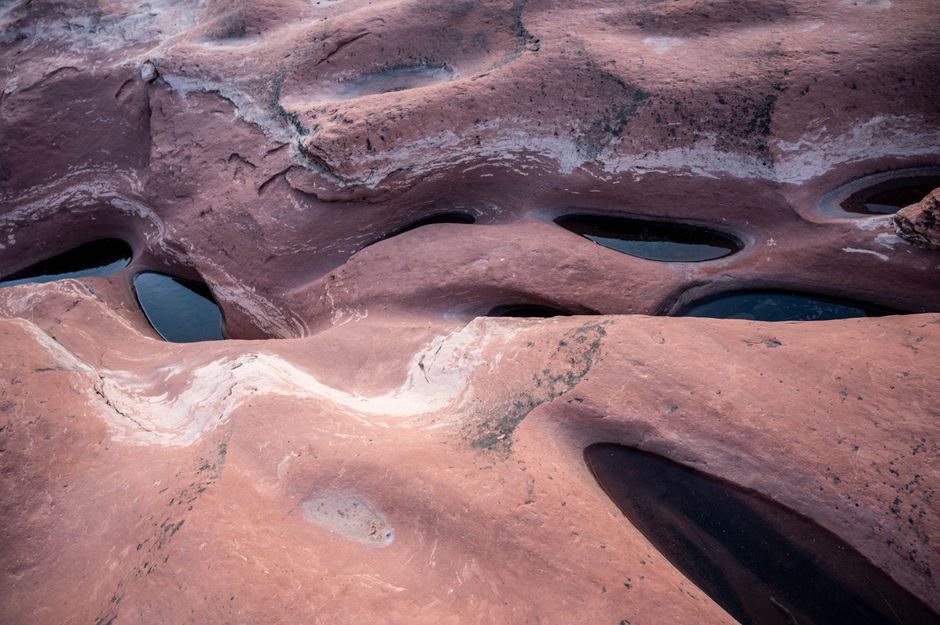
Photo by Jackie A on Pexels
Erosion is the process where weathered rock material is picked up and carried away by agents like wind, water, ice, or gravity.
Transport is the movement of this eroded material. The type of transport depends on the agent and the size/nature of the material:
- Water: Can transport material as solution (dissolved minerals), suspension (fine particles floating), saltation (bouncing small pebbles), or traction (rolling large rocks). Rivers are major agents of erosion and transport.
- Wind: Transports fine particles (sand, dust) by suspension or saltation, especially in arid areas.
- Ice (Glaciers): Excellent at eroding and transporting very large amounts of material, from fine rock flour to huge boulders, by plucking and abrasion.
- Gravity (Mass Movement): Directly pulls material down slopes without the aid of a moving fluid. (e.g., landslides, rockfalls, mudslides, creep).
Deposition
Deposition is the process where eroded and transported material (sediment) is laid down or settles in a new location. This happens when the transporting agent loses energy (e.g., a river slows down, wind drops sand, a glacier melts). The deposited material is called sediment. Over long periods, these sediments can be compacted and cemented to form sedimentary rocks.
Here's a diagram showing the relationship between these processes:
graph TD
    A["Original Rock"] --> B["Weathering (Physical, Chemical, Biological)"]
    B --> C["Broken/Decomposed Material"]
    C --> D["Erosion (Removal by wind, water, ice, gravity)"]
    D --> E["Transport (Movement by wind, water, ice, gravity)"]
    E --> F["Deposition (Material laid down)"]
    F --> G["Accumulated Sediment"]
    G --> H["Lithification (into Sedimentary Rock)"]
3. Worked Example
Imagine a block of limestone in a mountainous region.
- Weathering: During the day, water from rain seeps into tiny cracks in the limestone. At night, temperatures drop below freezing, and the water turns to ice, expanding and pushing the cracks wider (freeze-thaw weathering). Over many seasons, these cracks become significant. Meanwhile, rainwater, slightly acidic from dissolved atmospheric CO2, slowly dissolves the calcium carbonate in the limestone (carbonation). Plant roots also grow into the cracks, further widening them.
- Erosion & Transport: Heavy rainfall leads to surface runoff. This moving water picks up the small, weathered limestone fragments and the dissolved calcium carbonate. As the water flows downhill, it carries these materials along, eroding the streambed and banks. Larger, angular pieces of rock might roll along the bottom (traction), while smaller ones are suspended in the turbulent water.
- Deposition: Eventually, the stream reaches a flatter valley where its speed decreases significantly. As the water loses energy, it can no longer carry all its load. The larger rock fragments settle first, forming gravel beds. Finer sands are deposited further downstream, and eventually, the dissolved calcium carbonate might precipitate out of solution, potentially forming stalactites and stalagmites in caves, or simply contributing to the mineral content of the water body it flows into.
4. Key Takeaways
- Weathering breaks rocks down in place without moving them, while erosion involves the removal of these broken materials.
- Physical weathering creates smaller pieces of rock, while chemical weathering changes the rock's composition.
- Freeze-thaw is a key physical weathering process in areas with temperature fluctuations around freezing.
- Carbonation is a dominant chemical weathering process for rocks like limestone, leading to karst landscapes.
- The four main agents of erosion and transport are water, wind, ice (glaciers), and gravity (mass movement).
- Deposition occurs when an erosional agent loses energy and drops its transported load.
Common Mistakes to Avoid:
- Don't confuse weathering with erosion; weathering is breakdown, erosion is removal.
- Forgetting that biological processes contribute to both physical and chemical weathering.
- Not understanding that temperature and moisture are crucial factors influencing weathering rates.
- Assuming all rock breakdown is due to water; wind, ice, and even just gravity play significant roles.
5. Now Try It
Choose a local landscape feature you're familiar with (e.g., a cliff, a riverbank, a boulder). Spend 15 minutes describing how you think external landforming processes (weathering, erosion, transport, deposition) have shaped that feature. Think about specific types of weathering that might occur and which agent(s) of erosion would be most active there.
Success looks like: Identifying at least one specific type of physical weathering, one type of chemical weathering, and one agent of erosion/transport that is relevant to your chosen feature, explaining how they might interact.
Frequently asked about External Landforming Processes and Weathering
Study this next
Get the full Geography p1 curriculum
Clone the complete plan to your dashboard for unlimited AI-generated notes, practice quizzes, and a personalised revision schedule.
Save this course free