Scientific Inquiry and Experimental Design
From the biology, chemistry and physics curriculum
TL;DR
Scientific inquiry is a systematic way to explore the natural world, starting with observations and forming testable questions. Experimental design helps you set up fair tests to answer these questions by controlling variables and collecting reliable data. Together, they form the backbone of how we gain scientific knowledge.
1. The Mental Model
Think of scientific inquiry as being a detective investigating a mystery: you observe clues, form a hypothesis about what happened, and then design an experiment to test your theory. Experimental design is like planning out exactly how you'll gather evidence to prove or disprove your hypothesis, making sure your test is fair and unbiased.
2. The Core Material
Scientific inquiry is a cyclical process that involves observing, questioning, hypothesizing, experimenting, analyzing, and concluding. It's not always a straight line; you might go back and refine your question or experiment based on your findings.
The Scientific Method Steps
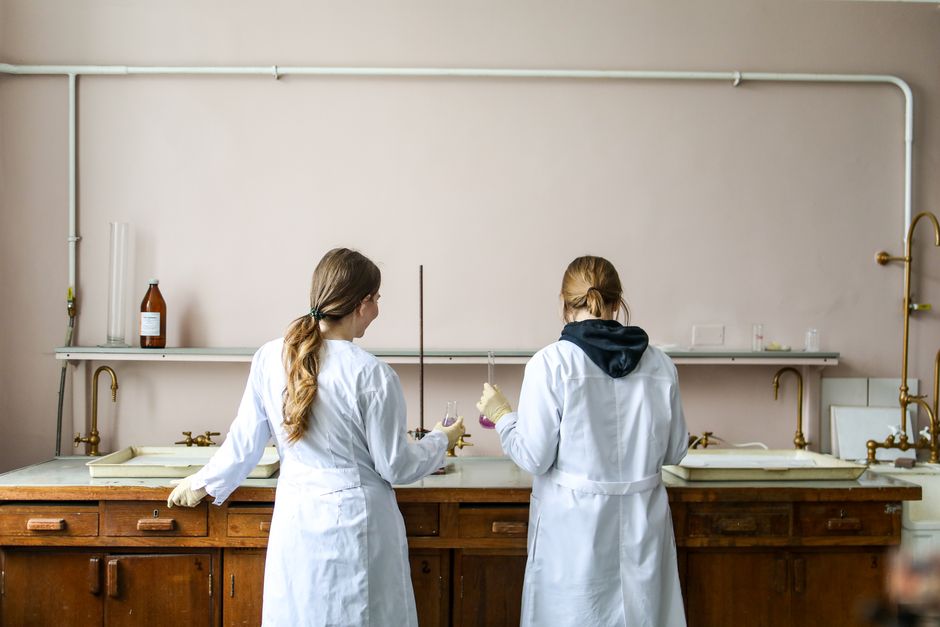
Photo by Polina Tankilevitch on Pexels
- Observation: Notice something interesting in the world.
- Question: Formulate a question about your observation. Why does this happen? What causes it?
- Hypothesis: Propose a testable explanation or prediction to answer your question. This should be an "If... then... because..." statement.
- Experiment: Design and conduct a fair test to see if your hypothesis is supported or refuted.
- Analysis: Examine the data you collected during your experiment. Look for patterns and relationships.
- Conclusion: Summarize your findings and state whether your data supports or refutes your hypothesis.
Experimental Design Essentials

Photo by Ivan S on Pexels
A well-designed experiment ensures that your results are valid and reliable. Key components include:
- Variables:
- Independent Variable (IV): The one thing you deliberately change or vary in the experiment. You control this.
- Dependent Variable (DV): The thing you measure or observe. It's what depends on the independent variable.
- Controlled Variables: Everything else that must be kept the same to ensure a fair test. If these aren't controlled, you won't know if your IV or something else caused the change in your DV.
- Control Group: A group in an experiment that does not receive the treatment or change in the independent variable. It serves as a baseline for comparison.
- Experimental Group(s): The group(s) that receive the treatment or change in the independent variable.
- Repeated Trials: Conducting the experiment multiple times to increase the reliability of your results and reduce the impact of random errors.
- Sample Size: The number of subjects or items included in your experimental and control groups. A larger sample size generally leads to more reliable results.
Here's how the steps of scientific inquiry connect:
graph TD
    A["Make Observation"] --> B["Ask a Question"]
    B --> C["Formulate Hypothesis (If...then...because)"]
    C --> D["Design & Conduct Experiment"]
    D --> E["Collect & Analyze Data"]
    E --> F["Draw Conclusion"]
    F -- "Hypothesis Supported?" --> G{"Yes"}
    F -- "Hypothesis Refuted?" --> H{"No"}
    G --> I["Share Results / Further Inquiry"]
    H --> C
3. Worked Example
Let's say you notice that one of your house plants, a peace lily, seems to grow much faster when you play classical music near it compared to your other peace lily in a quiet room.
- Observation: Peace lilies seem to grow differently with music.
- Question: Does classical music affect the growth rate of peace lilies?
- Hypothesis: If peace lilies are exposed to classical music for several hours a day, then they will grow faster than those not exposed to music, because sound waves from music might stimulate cellular activity.
- Experiment Design:
- Independent Variable (IV): Presence/absence of classical music.
- Dependent Variable (DV): Plant growth rate (e.g., measured by height increase in cm per week, or number of new leaves).
- Controlled Variables:
- Type of plant (peace lily)
- Amount of water
- Type of soil
- Amount of sunlight/light intensity
- Room temperature
- Pot size
- Duration of experiment
- Volume of music (if music is present)
- Control Group: 5 peace lilies in a quiet room.
- Experimental Group: 5 peace lilies with classical music playing for 8 hours a day.
- Repeated Trials/Sample Size: You'll use 5 plants in each group (10 plants total) and measure growth weekly for 4 weeks.
- Analysis: After 4 weeks, you measure all the plants. You calculate the average growth for the music group and the quiet group. You might find the music group grew an average of 5 cm, while the quiet group grew 4.8 cm.
- Conclusion: The data showed a slight difference, but it might not be significant enough to definitively support your hypothesis. You'd conclude that based on your experiment, classical music did not have a strong effect on the growth rate of peace lilies. You might then refine your hypothesis or experiment, perhaps trying different types of music or different volumes.
4. Key Takeaways
- Scientific inquiry is a flexible, iterative process that helps us understand the natural world.
- A strong hypothesis is testable and often includes a proposed reason (the "because").
- Identifying and controlling variables is crucial for ensuring your experiment tests what you intend it to.
- The independent variable is what you change, and the dependent variable is what you measure.
- A control group provides a baseline for comparison, showing what happens without the experimental treatment.
- Repeating trials and having an adequate sample size increases the reliability and validity of your results.
Common Mistakes to Avoid:
- Changing multiple variables at once: This makes it impossible to know which variable caused the observed effect.
- Lack of a control group: Without a control group, you can't be sure your independent variable caused the change.
- Biased observations or measurements: Be objective when collecting data and avoid letting your expectations influence what you see.
- Insufficient sample size or trials: Too few trials or subjects can lead to results that are due to chance, not a real effect.
5. Now Try It
Think of a common observation you've made (e.g., "plants near the window grow taller," "my phone battery drains faster when I play games").
- Turn that observation into a specific, testable question.
- Formulate a hypothesis using the "If... then... because..." structure.
- Identify the independent variable, dependent variable, and at least three controlled variables for an experiment to test your hypothesis.
- Describe what your control group and experimental group would be.
Success looks like clearly identifying all these components for your chosen observation, demonstrating you understand how to break down an inquiry into its testable parts.
Frequently asked about Scientific Inquiry and Experimental Design
Study this next
Get the full biology, chemistry and physics curriculum
Clone the complete plan to your dashboard for unlimited AI-generated notes, practice quizzes, and a personalised revision schedule.
Save this course free