Transport Mechanisms in Biology
From the biology, chemistry and physics curriculum
TL;DR
Cells move substances across their membranes using various transport mechanisms to maintain essential functions. These mechanisms can be passive, like diffusion and osmosis, which don't require energy, or active, which do. Understanding these processes is key to how organisms get nutrients and remove waste.
1. The Mental Model
Think of a cell membrane as a bouncer at a club, deciding who gets in and out. Sometimes, things can just slip through if they're small enough or flow with the crowd (passive). Other times, the bouncer has to actively push things out or pull them in, which takes effort (active).
2. The Core Material
Transport mechanisms are how cells manage the movement of ions, molecules, and other substances across the cell membrane. This movement is critical for everything from nutrient uptake to waste removal and maintaining cell volume.
Passive Transport
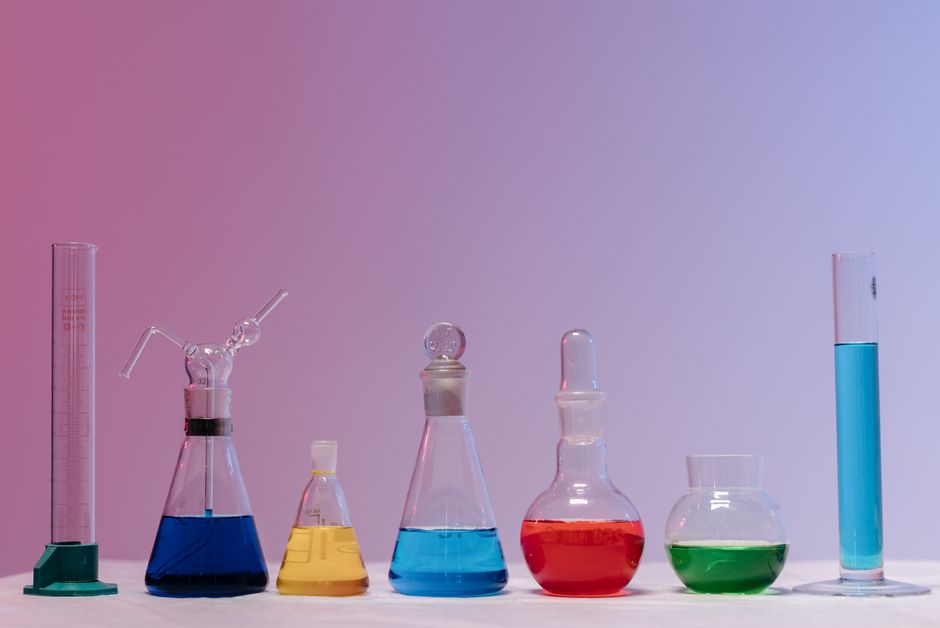
Photo by Pavel Danilyuk on Pexels
Passive transport doesn't require the cell to use its own energy (ATP). Substances move down their concentration gradient—from an area of higher concentration to an area of lower concentration.
-
Diffusion: The net movement of particles from an area of higher concentration to an area of lower concentration. This happens until the concentration is even everywhere. Think of spraying perfume in a room; eventually, you smell it everywhere.
- Simple Diffusion: Small, uncharged molecules (like O₂, CO₂) and lipid-soluble substances can pass directly through the lipid bilayer of the cell membrane.
- Facilitated Diffusion: Larger molecules (like glucose) or charged ions (like Na⁺) need help from carrier proteins or channel proteins embedded in the membrane to cross. They still move down their concentration gradient, so no energy is needed.
-
Osmosis: This is a special type of facilitated diffusion referring specifically to the movement of water molecules across a selectively permeable membrane. Water moves from an area of higher water potential (lower solute concentration) to an area of lower water potential (higher solute concentration). This equalizes the solute concentration on both sides.
Active Transport
Photo by Ron Lach on Pexels
Active transport requires the cell to expend energy (usually in the form of ATP) to move substances. This often happens against the concentration gradient—from an area of lower concentration to an area of higher concentration. This allows cells to accumulate necessary substances or remove unwanted ones.
- Primary Active Transport: Uses ATP directly to power protein pumps that move substances across the membrane. A classic example is the sodium-potassium pump, which pumps 3 Na⁺ ions out of the cell and 2 K⁺ ions into the cell for every ATP molecule used. This is vital for nerve impulses and maintaining cell volume.
- Secondary Active Transport (Co-transport): Doesn't directly use ATP. Instead, it uses the electrochemical gradient established by primary active transport to move another substance. For example, the gradient created by the Na⁺/K⁺ pump can be used to co-transport glucose into the cell along with Na⁺ ions.
Bulk Transport
Photo by Vadym Alyekseyenko on Pexels
For very large molecules or whole particles, cells use bulk transport mechanisms, which involve packaging substances into vesicles.
- Endocytosis: The cell takes in substances by engulfing them in a vesicle formed from its membrane.
- Phagocytosis: "Cell eating"—ingesting large particles (e.g., bacteria by white blood cells).
- Pinocytosis: "Cell drinking"—ingesting liquids and dissolved solutes.
- Receptor-mediated endocytosis: Specific molecules bind to receptors on the cell surface, triggering the formation of a vesicle.
- Exocytosis: The cell releases substances (e.g., hormones, waste products) by fusing vesicles with the cell membrane, expelling their contents.
Here's a visual of how these mechanisms relate:
graph TD
    A["Transport Across Cell Membrane"] --> B["Passive Transport (No Energy)"]
    A --> C["Active Transport (Requires Energy)"]

    B --> D["Diffusion"]
    D --> D1["Simple Diffusion"]
    D --> D2["Facilitated Diffusion"]
    B --> E["Osmosis (Water Specific)"]

    C --> F["Primary Active Transport (Direct ATP)"]
    C --> G["Secondary Active Transport (Indirect ATP)"]
    C --> H["Bulk Transport"]

    H --> H1["Endocytosis"]
    H1 --> H1a["Phagocytosis"]
    H1 --> H1b["Pinocytosis"]
    H1 --> H1c["Receptor-mediated"]
    H --> H2["Exocytosis"]
3. Worked Example
Imagine a red blood cell placed in pure water.
1. The cell's cytoplasm has various solutes (salts, proteins), so it has a lower water potential than the pure water outside.
2. Water molecules will move by osmosis from the area of higher water potential (outside the cell) to the area of lower water potential (inside the cell) across the selectively permeable cell membrane.
3. As water enters the cell, the cell will swell. If too much water enters, the cell membrane can burst, a process called hemolysis. This shows the critical role of osmosis in maintaining cell volume and how different environments impact cells.
4. Key Takeaways
- Passive transport moves substances down their concentration gradient without cellular energy.
- Active transport moves substances against their concentration gradient, requiring cellular energy (ATP).
- Diffusion is the net movement of any particles from high to low concentration.
- Osmosis is the specific diffusion of water across a selectively permeable membrane.
- Facilitated diffusion uses membrane proteins but still follows the concentration gradient.
- Primary active transport directly uses ATP, like the sodium-potassium pump.
- Bulk transport (endocytosis and exocytosis) moves large molecules or particles using vesicles.
- The cell membrane's selective permeability is crucial for controlling what enters and leaves the cell.
Common Mistakes to Avoid:
- Confusing diffusion with osmosis; remember osmosis is specifically about water.
- Forgetting that facilitated diffusion is still passive, even though it uses proteins.
- Mixing up "against" and "down" a concentration gradient for active vs. passive transport.
- Underestimating the energy cost of active transport for the cell.
5. Now Try It
Think about how a plant root cell absorbs mineral ions from the soil. The concentration of these ions is usually lower in the soil than inside the root cell.
1. Identify whether this process likely involves passive or active transport.
2. Explain why, referring to concentration gradients and energy requirements.
3. Name the specific type of transport mechanism you think is most likely involved.
Success looks like clearly explaining the need for energy and how it relates to the direction of ion movement.
Frequently asked about Transport Mechanisms in Biology
Study this next
Get the full biology, chemistry and physics curriculum
Clone the complete plan to your dashboard for unlimited AI-generated notes, practice quizzes, and a personalised revision schedule.
Save this course free