Foundations of Biochemistry: Molecules of Life
From the biochemistry curriculum
TL;DR
Biochemistry explores life's chemical basis, focusing on four major classes of macromolecules: carbohydrates, lipids, proteins, and nucleic acids. These large molecules are built from smaller repeating units, called monomers, through specific chemical reactions, forming the structural and functional components of cells. Understanding their structure and function is key to comprehending all biological processes.
1. The Mental Model
Imagine a LEGO set where you have a few types of basic bricks. You can combine these bricks in different ways to build incredibly complex structures, from a simple house to a giant spaceship. In biochemistry, these "basic bricks" are monomers, and the "complex structures" are macromolecules, each with unique roles in a cell.
2. The Core Material
Life at its most fundamental level is chemistry. Biochemistry bridges biology and chemistry, revealing how the molecules within living organisms interact to sustain life. We're going to focus on the "big four" macromolecules that are essential for all known life forms.
The Four Major Macromolecules

Photo by DΛVΞ GΛRCIΛ on Pexels
-
Carbohydrates: These are your sugars and starches, primarily used for energy and structural support. They're built from monosaccharides (simple sugars like glucose) linked together.
- Monosaccharide: A single sugar unit (e.g., glucose, fructose).
- Disaccharide: Two monosaccharides joined (e.g., sucrose = glucose + fructose).
- Polysaccharide: Many monosaccharides joined (e.g., starch, glycogen for energy storage; cellulose for plant structure).
-
Lipids: Fats, oils, steroids, and phospholipids. They are diverse but all share the characteristic of being largely hydrophobic (water-fearing). Lipids are crucial for energy storage, cell membrane structure, and signaling.
- Fatty Acids: Long hydrocarbon chains.
- Triglycerides: Three fatty acids linked to a glycerol molecule (primary form of energy storage).
- Phospholipids: Similar to triglycerides but with a phosphate group, forming the basic structure of cell membranes.
- Steroids: Unique ring structures (e.g., cholesterol, hormones).
-
Proteins: The workhorses of the cell, performing almost every function. They are polymers of amino acids, linked by peptide bonds. Proteins can be enzymes, transporters, structural components, or signaling molecules.
- Amino Acids: 20 different types, each with a unique "R-group" that gives it specific properties (e.g., polar, nonpolar, charged).
- Polypeptide: A chain of many amino acids.
- Protein Structure: Has four levels:
- Primary: The linear sequence of amino acids.
- Secondary: Local folding patterns (alpha-helices and beta-sheets) stabilized by hydrogen bonds.
- Tertiary: The overall three-dimensional shape of a single polypeptide chain, due to interactions between R-groups.
- Quaternary: The arrangement of multiple polypeptide chains in a protein complex.
-
Nucleic Acids: DNA (deoxyribonucleic acid) and RNA (ribonucleic acid). These molecules carry genetic information and are essential for heredity and protein synthesis. They are polymers of nucleotides.
- Nucleotide: Composed of a pentose sugar (deoxyribose in DNA, ribose in RNA), a phosphate group, and a nitrogenous base (Adenine, Guanine, Cytosine, Thymine in DNA; Uracil replaces Thymine in RNA).
- DNA: Double helix, stores genetic information.
- RNA: Single-stranded, involved in gene expression (mRNA, tRNA, rRNA).
Building and Breaking Down Macromolecules
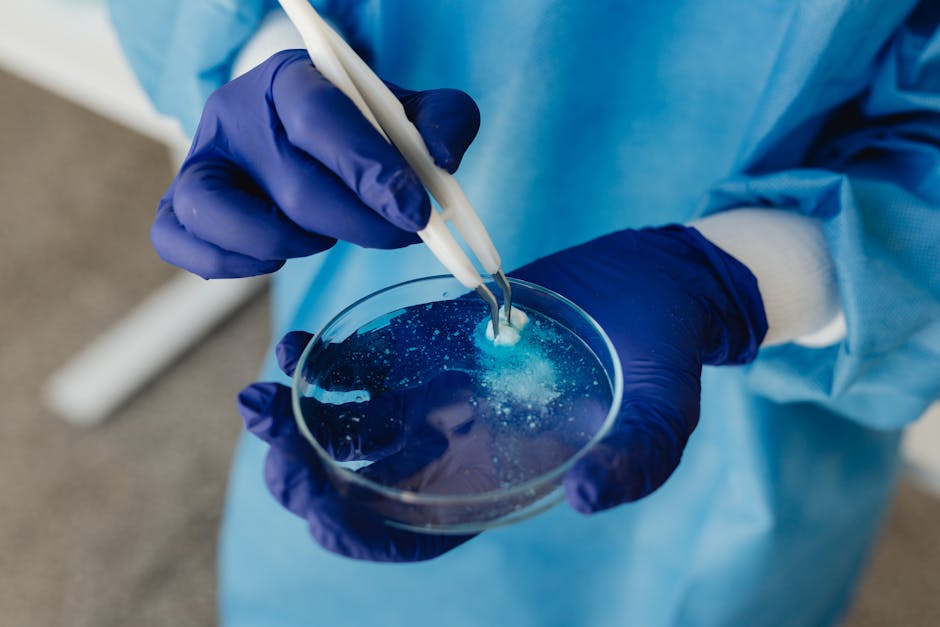
Photo by https://kaboompics.com/ on Pexels
The formation and breakdown of these macromolecules involve two key reactions:
- Dehydration Synthesis (or Condensation Reaction): Monomers join together to form a polymer, releasing a water molecule in the process. This is how you build larger molecules.
- Hydrolysis: A polymer is broken down into its monomers by the addition of a water molecule. This is how you break down larger molecules.
graph TD
    M1["Monomer 1"] -->|Dehydration Synthesis (H2O removed)| P["Polymer"]
    M2["Monomer 2"] -->|Dehydration Synthesis (H2O removed)| P
    P -->|Hydrolysis (H2O added)| M1
    P -->|Hydrolysis (H2O added)| M2
    P -- "Example: Glucose + Glucose --> Maltose + H2O" --> C["Carbohydrate Formation"]
    P -- "Example: Amino Acid + Amino Acid --> Dipeptide + H2O" --> PR["Protein Formation"]
3. Worked Example
Let's consider the formation of a disaccharide, specifically maltose, from two glucose monomers.
- Starting Materials: Two molecules of glucose (monosaccharides). Each glucose molecule has hydroxyl (-OH) groups.
- Reaction: During dehydration synthesis, a hydroxyl group from one glucose molecule and a hydrogen atom from a hydroxyl group of the other glucose molecule are removed.
- Bond Formation: The remaining oxygen atom on one glucose forms a glycosidic bond with a carbon atom on the other glucose.
- Product: This forms a maltose molecule (a disaccharide) and a molecule of water (H₂O) is released.
If you needed to break down maltose back into glucose, you'd perform a hydrolysis reaction, adding a water molecule across the glycosidic bond, which would then cleave the bond and restore the original glucose monomers.
4. Key Takeaways
- Biochemistry studies the chemical processes and substances that occur within living organisms.
- The four major classes of macromolecules are carbohydrates, lipids, proteins, and nucleic acids.
- Carbohydrates are primarily for energy and structure, made of monosaccharides.
- Lipids are hydrophobic, used for energy storage, membranes, and signaling.
- Proteins are diverse functional molecules, built from amino acids.
- Nucleic acids (DNA/RNA) carry genetic information, made of nucleotides.
- Dehydration synthesis builds polymers from monomers by removing water.
- Hydrolysis breaks down polymers into monomers by adding water.
Common Mistakes to Avoid

Photo by KATRIN BOLOVTSOVA on Pexels
- Confusing monomers with polymers (e.g., glucose is a monomer, starch is a polymer).
- Mixing up the functions of different macromolecules (e.g., thinking lipids store genetic info).
- Forgetting that dehydration synthesis removes water and hydrolysis adds water.
- Not understanding the impact of R-groups on protein folding and function.
- Thinking all lipids are just "fats"; they include steroids and phospholipids which have distinct roles.
5. Now Try It
Spend 15 minutes reviewing the structure of each macromolecule. For each of the four types, try to:
1. Name its basic monomer unit.
2. Identify at least two specific examples (e.g., for carbohydrates, glucose and starch).
3. State its primary function in a living organism.
Success means you can confidently list the monomer, two examples, and a main function for carbohydrates, lipids, proteins, and nucleic acids without looking at your notes.
Frequently asked about Foundations of Biochemistry: Molecules of Life
Study this next
Get the full biochemistry curriculum
Clone the complete plan to your dashboard for unlimited AI-generated notes, practice quizzes, and a personalised revision schedule.
Save this course free