Introduction to Atomic Structure and Radiation
From the particle physics curriculum
TL;DR
Atoms are made of a nucleus (protons and neutrons) orbited by electrons, and their specific arrangement determines an element's identity and behavior. Radiation occurs when unstable atomic nuclei spontaneously decay, releasing energy and particles to become more stable. Understanding this structure and decay helps us comprehend how elements behave and the nature of radioactive processes.
1. The Mental Model
Think of an atom like a tiny solar system: a heavy nucleus in the center acts like the sun, and much lighter electrons orbit around it like planets. When these "suns" (nuclei) are unstable, they can throw off pieces, which is what we call radiation.
2. The Core Material
Atomic Structure: The Basics

Photo by Steve A Johnson on Pexels
Every atom has two main parts: the nucleus and the electron cloud.
- Nucleus: This is the dense, central part of the atom. It contains two types of particles:
- Protons (p+): Positively charged particles. The number of protons defines the element (its atomic number, Z). For example, all carbon atoms have 6 protons.
- Neutrons (n0): Neutrally charged particles. They add mass to the nucleus but don't change the element's identity. Atoms of the same element with different numbers of neutrons are called isotopes.
- Electron Cloud: This is the region surrounding the nucleus where negatively charged electrons (e-) are found. In a neutral atom, the number of electrons equals the number of protons.
The mass of an atom is primarily determined by its protons and neutrons (collectively called nucleons), as electrons are much, much lighter. The mass number (A) is the total number of protons and neutrons in the nucleus.
Unstable Nuclei and Radiation
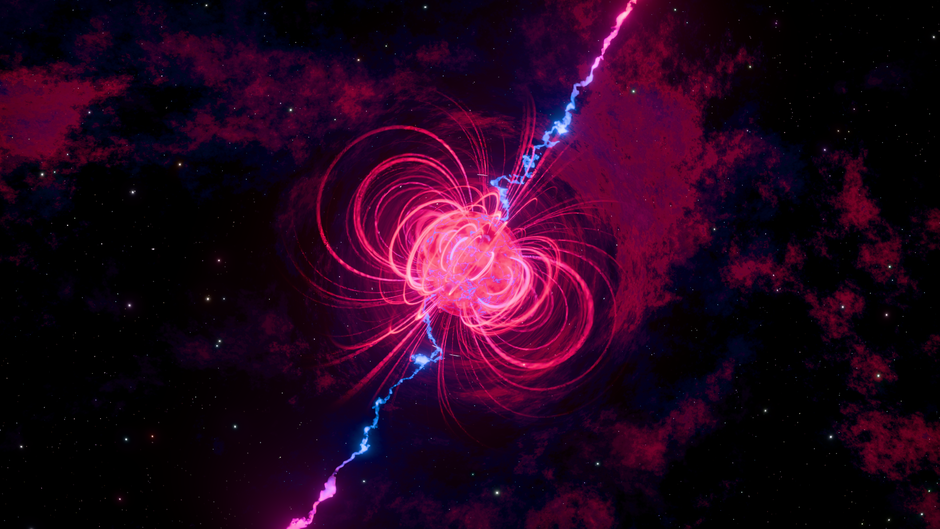
Photo by Nicola Narracci on Pexels
Some atomic nuclei are unstable, meaning their combination of protons and neutrons isn't balanced. To achieve a more stable configuration, these unstable nuclei undergo radioactive decay, releasing energy and particles in the process. This emitted energy and particles are what we call radiation.
There are several types of radioactive decay, but the most common include:
- Alpha (α) decay: An unstable nucleus emits an alpha particle, which is identical to a helium nucleus (2 protons, 2 neutrons). This reduces the atomic number by 2 and the mass number by 4. Alpha particles are relatively large and heavy, so they don't penetrate materials very far.
- Beta (β) decay: This involves the transformation of a neutron into a proton (emitting an electron, beta-minus decay, β-) or a proton into a neutron (emitting a positron, beta-plus decay, β+).
- Beta-minus (β-): A neutron turns into a proton, and an electron (β-) is emitted from the nucleus. The atomic number increases by 1, and the mass number stays the same.
- Beta-plus (β+): A proton turns into a neutron, and a positron (β+) is emitted. The atomic number decreases by 1, and the mass number stays the same.
- Gamma (γ) decay: Often occurs after alpha or beta decay when the nucleus is left in an excited (higher energy) state. It releases a high-energy photon (gamma ray) to return to its ground state. Gamma rays have no mass or charge and are very penetrating.
Here's how an unstable nucleus changes through different decay types:
graph TD
    A["Unstable Nucleus"] --> B["Alpha Decay"]
    A --> C["Beta Decay"]
    B --> D["New Nucleus (Z-2, A-4)"]
    C --> E["New Nucleus (Z+1, A) for β-"]
    C --> F["New Nucleus (Z-1, A) for β+"]
    D --> G["Potential Gamma Emission"]
    E --> G
    F --> G
    G --> H["Stable Nucleus"]
Half-Life
Half-life (t½) is a fundamental concept in radioactivity. It's the time it takes for half of the radioactive nuclei in a sample to decay. It's a characteristic property for each specific radioisotope and is independent of external factors like temperature or pressure.
3. Worked Example
Let's look at the decay of Carbon-14 (C-14), a common radioisotope used in carbon dating.
Carbon-14 has 6 protons and 8 neutrons (mass number = 14). It undergoes beta-minus decay (β- decay).
- Initial State: Carbon-14 (⁶¹⁴C) - 6 protons, 8 neutrons.
- Decay Process: One neutron in the C-14 nucleus transforms into a proton, emitting an electron (beta particle).
- Neutron (n) → Proton (p) + Electron (e-)
- Final State: The nucleus now has 7 protons and 7 neutrons (the original 8 neutrons minus the one that converted, plus the original 6 protons plus the new one). An element with 7 protons is Nitrogen. So, Carbon-14 decays into Nitrogen-14 (⁷¹⁴N).
- Equation: ⁶¹⁴C → ⁷¹⁴N + ⁰₋₁e (where ⁰₋₁e represents the electron/beta particle)
Notice how the mass number (14) remains the same, but the atomic number (Z) increases by 1 (from 6 to 7).
4. Key Takeaways
- Atoms consist of a central nucleus (protons, neutrons) and orbiting electrons.
- The number of protons defines the element, while the total protons and neutrons give its mass number.
- Isotopes are atoms of the same element with different numbers of neutrons.
- Radiation is the emission of energy and particles from unstable atomic nuclei during radioactive decay.
- Alpha decay reduces both atomic and mass numbers significantly.
- Beta decay changes a neutron to a proton (or vice versa), altering the atomic number but not the mass number.
- Gamma decay releases pure energy (photons) without changing the nucleus's composition, often following other decays.
- Half-life is the time required for half of a radioactive sample to decay.
Common Mistakes to Avoid:
- Don't confuse atomic number (protons) with mass number (protons + neutrons).
- Remember that beta decay changes the element's identity, even though the mass number usually stays the same.
- Don't think of electrons as being "inside" the nucleus; they orbit around it.
- Never assume half-life depends on external factors; it's a constant for a given isotope.
5. Now Try It
Imagine you have a sample of Iodine-131 (⁵³¹³¹I), which undergoes beta-minus (β-) decay and has a half-life of 8 days.
- Determine the new element formed after one Iodine-131 nucleus undergoes beta-minus decay. Write the decay equation.
- If you start with 100 grams of Iodine-131, how much Iodine-131 would remain after 16 days?
Success means you've correctly identified the new element and its mass number, and calculated the remaining mass after two half-lives.
Frequently asked about Introduction to Atomic Structure and Radiation
Study this next
Get the full particle physics curriculum
Clone the complete plan to your dashboard for unlimited AI-generated notes, practice quizzes, and a personalised revision schedule.
Save this course free