Revision and Practice Exams
From the I'm a Diploma cst 2nd semester students. My exam in 30 days, curriculum
TL;DR
With 30 days until your Diploma CST 2nd semester exam, a structured revision plan using past papers is key to success. Focus on understanding concepts, practicing problems, and managing your time effectively. Regular self-assessment through mock exams will pinpoint weak areas and boost your confidence.
1. The Mental Model
Think of revision as building a strong bridge: you first reinforce the core supports (understanding concepts), then test its strength with real-world loads (practice problems), and finally check for any weak spots before the big day.
2. The Core Material
Effective revision isn't just re-reading notes; it's actively engaging with the material. Practice exams are your most valuable tool because they expose you to the actual exam format, question types, and time constraints.
How to Use Practice Exams Effectively
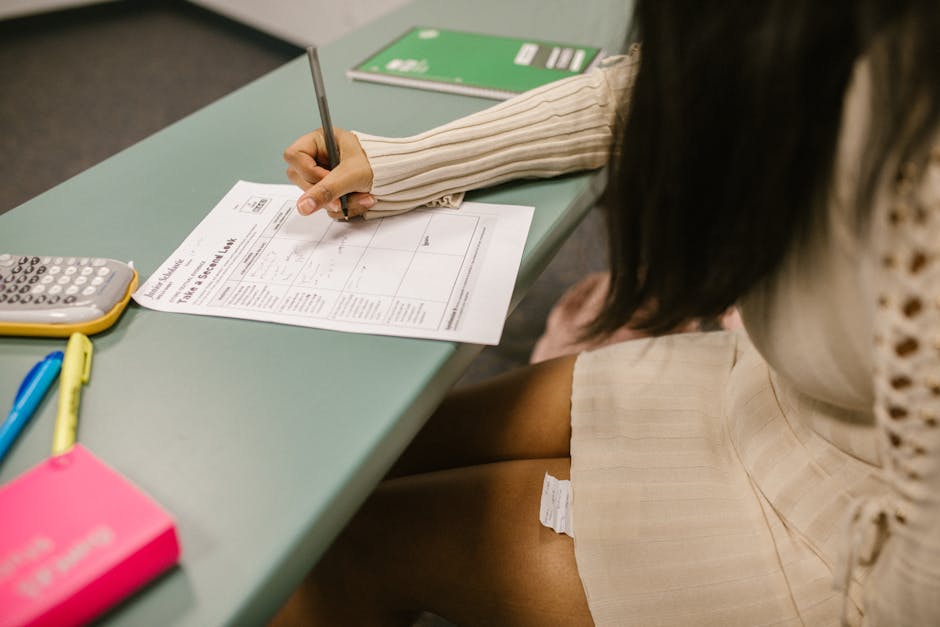
Photo by RDNE Stock project on Pexels
- Identify Topics: Before diving into papers, list all the subjects/modules from your 2nd semester syllabus.
- Initial Scan: Glance through a past paper to get a feel for the structure and common question patterns. Don't try to solve anything yet.
- Targeted Revision: Based on your initial scan and syllabus, prioritize topics. Spend time reviewing your notes, textbooks, and class exercises for these specific areas.
- Timed Practice: Once you've revised a topic, attempt relevant questions from a practice paper under timed conditions.
- Review and Learn: After attempting, rigorously check your answers against solutions. Understand why you got something wrong, not just that it was wrong.
- Full Mock Exams: As you get closer to the exam, simulate the actual exam environment. Set a timer, use only allowed materials (e.g., pen, paper), and don't take breaks.
Here's a process flow for integrating practice exams into your revision:
graph TD
    A["Start: 30 Days Out"] --> B["List All Syllabus Topics"]
    B --> C["Get Past Exam Papers"]
    C --> D{"Scan Paper: Understand Format"}
    D -- Yes, I see common questions --> E["Identify Weak/Unclear Topics"]
    D -- No, still confused --> C
    E --> F["Targeted Revision (Notes, Textbooks)"]
    F --> G{"Attempt Practice Questions (Topic-by-Topic)"}
    G -- Done a few questions --> H["Review Answers & Understand Mistakes"]
    H --> I{"Are all topics covered?"}
    I -- No --> E
    I -- Yes --> J["Perform Full Mock Exam (Timed)"]
    J --> K["Analyze Mock Exam Performance"]
    K --> L{"Identify Remaining Gaps"}
    L -- Yes --> F
    L -- No --> M["Repeat Mock Exams (if time permits)"]
    M --> N["Exam Day Confidence!"]
Time Management Strategies

Photo by Tima Miroshnichenko on Pexels
With 30 days, you need a daily or weekly schedule. Allocate specific slots for different subjects, revision, and practice exams. Break down large topics into smaller, manageable chunks.
Active Recall & Spaced Repetition

Photo by Markus Winkler on Pexels
Instead of passively reading, actively test yourself. After revising a concept, try to explain it in your own words or draw a diagram without looking at your notes. Revisit topics at increasing intervals (e.g., after 1 day, then 3 days, then a week) to strengthen memory.
3. Worked Example
Let's say one of your modules is "Data Structures using C++". You have a past paper.
- Scan: You notice frequent questions on linked lists, trees, and sorting algorithms.
- Revision: You spend 2 days reviewing your notes on different types of linked lists (singly, doubly, circular), tree traversals (inorder, preorder, postorder), and sorting algorithms (bubble, selection, insertion, quick, merge). You specifically re-do your in-class examples for these.
- Practice Questions: From the past paper, you pick out all questions related to linked lists, trees, and sorting. You set a timer for 45 minutes and attempt them.
- Review: You find you correctly implemented a singly linked list insertion but struggled with a binary search tree deletion. You also mixed up the time complexity of quick sort in the worst case.
- Targeted Rework: You go back to your textbook/notes specifically on binary search tree deletion and quick sort's worst-case scenario. You might look up different explanations online or practice similar problems until you're confident.
4. Key Takeaways
- Start early: Don't wait until the last minute; 30 days is a good window if used wisely.
- Use past papers: They are the best indicator of what to expect and where to focus your revision.
- Active learning over passive reading: Test yourself, explain concepts aloud, and solve problems.
- Understand your mistakes: Don't just find the right answer; understand why your initial answer was wrong.
- Time yourself: Practice working under exam conditions to improve speed and pressure management.
- Prioritize weak areas: Spend more time on topics you struggle with rather than just re-revising what you already know well.
- Take breaks: Regular short breaks prevent burnout and improve retention.
Common Mistakes to Avoid:
- Only reading notes: This gives a false sense of security; you need to apply the knowledge.
- Avoiding difficult topics: Procrastinating on challenging areas will hurt you most in the exam.
- Not practicing under timed conditions: You might know the material but run out of time in the actual exam.
- Cramming: Trying to learn everything in the last few days is inefficient and stressful.
5. Now Try It
Take one complete past exam paper for any subject from your Diploma CST 2nd semester. Dedicate 3 hours to this task (or the actual exam duration if different). Treat it like the real exam: no notes, no internet, just you and the paper. Afterwards, spend another 1 hour thoroughly reviewing your answers against solutions. Identify at least 3 specific topics or question types where you struggled. Your success will be seeing clear patterns in your mistakes, which will guide your next week of targeted revision.
Frequently asked about Revision and Practice Exams
More from I'm a Diploma cst 2nd semester students. My exam in 30 days,
Get the full I'm a Diploma cst 2nd semester students. My exam in 30 days, curriculum
Clone the complete plan to your dashboard for unlimited AI-generated notes, practice quizzes, and a personalised revision schedule.
Save this course free