The Renaissance to Industrial Revolution: Print Culture Emerges
From the Graphic Art History curriculum
TL;DR
The invention of the printing press during the Renaissance radically transformed how information was created and shared, moving from handwritten scarcity to mass-produced abundance. This shift, known as the emergence of print culture, democratized knowledge and profoundly influenced art, science, and politics, paving the way for the Industrial Revolution. By standardizing texts and increasing literacy, print culture became a cornerstone of modern society.
1. The Mental Model
Imagine knowledge as a slow, expensive trickle before the Renaissance, accessible only to a few. The printing press was like building a massive pipeline, transforming that trickle into a flood that could reach many more people, much faster and cheaper. This fundamental change in how we access and share information is what "print culture" is all about.
2. The Core Material
The period from the Renaissance (roughly 14th-17th century) to the Industrial Revolution (late 18th-19th century) witnessed a monumental shift in how information, images, and ideas were disseminated. Before Gutenberg's movable type printing press (c. 1450s), books were painstakingly copied by hand, making them rare, expensive, and prone to errors. The printing press changed everything, giving rise to what we call "print culture."
The Impact of the Printing Press

Photo by Wendelin Jacober on Pexels
The printing press wasn't just a machine; it was a catalyst for massive societal change.
- Democratization of Knowledge: Books became cheaper and more accessible. No longer confined to monasteries or the ultra-wealthy, knowledge began to spread among a wider populace. This fueled literacy rates and encouraged intellectual curiosity.
- Standardization of Texts: With multiple identical copies, texts became standardized. This was crucial for scientific advancement (accurate diagrams, consistent data) and religious reform (standardized Bibles).
- Rise of the Public Sphere: The proliferation of printed materials—newspapers, pamphlets, broadsides—created spaces for public discourse and debate. People could read and discuss shared information, leading to the formation of public opinion.
- Influence on Art and Science: Print allowed for the mass reproduction of artistic images (engravings, woodcuts), spreading styles and techniques. In science, it enabled the sharing of observations, diagrams, and theories, accelerating discovery.
- Language and National Identity: The printing press helped standardize national languages as particular dialects gained dominance through printed materials, contributing to the formation of national identities.
From Renaissance to Industrial Revolution
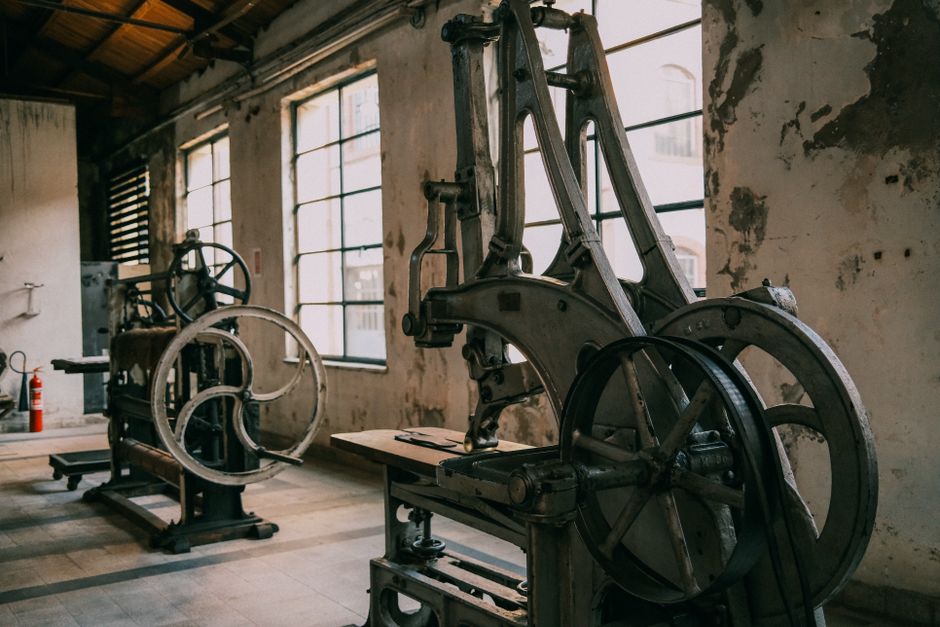
Photo by Sami TÜRK on Pexels
Print culture evolved significantly. During the Renaissance, it focused on religious texts, classical literature, and early scientific works. By the time of the Industrial Revolution, print had diversified into newspapers, novels, educational materials, and technical manuals. The ability to mass-produce information facilitated the spread of technological innovations and economic ideas central to the Industrial Revolution, creating a feedback loop where print culture supported industrial growth, and industrial advances (like steam-powered presses) further boosted print production.
Here's how the key aspects connect:
graph TD
    A["Gutenberg's Printing Press (c. 1450s)"] --> B["Mass Production of Texts & Images"]
    B --> C1["Lower Costs & Increased Accessibility"]
    B --> C2["Standardization of Information"]
    C1 --> D1["Increased Literacy Rates"]
    C2 --> D2["Facilitated Scientific & Artistic Exchange"]
    D1 --> E1["Emergence of Public Discourse (Newspapers, Pamphlets)"]
    D2 --> E2["Rapid Spread of New Ideas & Innovations"]
    E1 --> F["Rise of Print Culture"]
    E2 --> F
    F --> G["Foundation for the Industrial Revolution (Knowledge Dissemination)"]
    G --> H["Industrial Advances (e.g., Steam-powered Presses)"]
    H --> F;
3. Worked Example
Imagine the early 16th century, the height of the Protestant Reformation. Before the printing press, Martin Luther's "Ninety-five Theses" (1517) would have remained a niche academic debate, known only to a few scholars. However, thanks to the printing press, copies were quickly disseminated across Europe. Within weeks, thousands of pamphlets containing his arguments were being read and discussed by ordinary people, not just academics. This rapid spread of his ideas, fueled by print, was absolutely crucial to the success and speed of the Reformation, making it a mass movement rather than an isolated theological dispute.
4. Key Takeaways
- The printing press transformed information dissemination from a slow, manual process to a rapid, mechanical one.
- Print culture significantly lowered the cost and increased the availability of books and other printed materials.
- This led to a surge in literacy rates and democratized access to knowledge across different social strata.
- Standardization of texts facilitated the rapid progress of science, art, and religion.
- The emergence of a "public sphere" through newspapers and pamphlets fostered critical thinking and public debate.
- Print culture was a fundamental prerequisite and accelerant for the intellectual and technological changes of the Industrial Revolution.
- The ability to share technical drawings and scientific findings efficiently was vital for industrial innovation.
Common mistakes to avoid:
- Don't underestimate the sheer effort and cost of pre-print book production; it's hard to grasp how radical the change was.
- Avoid thinking of print culture as just about "books"; pamphlets, broadsides, and engravings were equally important.
- Don't assume the impact was immediate and uniform; it took centuries for print culture to fully mature and spread.
- Don't forget the reciprocal relationship: print culture enabled the Industrial Revolution, which in turn refined printing technology.
5. Now Try It
Spend 15 minutes researching how printed maps or anatomical illustrations changed between the 15th and 18th centuries. Focus on how the ability to mass-produce accurate, consistent images impacted exploration, warfare, or medical understanding. Success looks like being able to explain one specific example of a printed map or illustration and how its widespread availability profoundly influenced a particular field.
Frequently asked about The Renaissance to Industrial Revolution: Print Culture Emerges
Study this next
Get the full Graphic Art History curriculum
Clone the complete plan to your dashboard for unlimited AI-generated notes, practice quizzes, and a personalised revision schedule.
Save this course free