Introduction to Wave Optics
From the engineering physics curriculum
TL;DR
Wave optics explores light's behavior using its wave nature, explaining phenomena like interference and diffraction that particle theory can't. Understanding these wave properties is crucial for technologies like lasers and fiber optics. It moves beyond ray optics to describe how light truly spreads and interacts.
1. The Mental Model
Imagine light not as tiny balls, but as ripples spreading on a pond. These ripples can combine, cancel out, or bend around corners. Wave optics is about understanding light through this "rippling" lens.
2. The Core Material
For a long time, people thought of light as a stream of particles. This "ray optics" worked well for explaining things like reflection and refraction (why a spoon looks bent in water). But it couldn't explain everything. When light interacts in certain ways, like when two light beams cross, it behaves in a way that only makes sense if it's a wave.
The two main phenomena that highlight light's wave nature are interference and diffraction.
What is Interference?
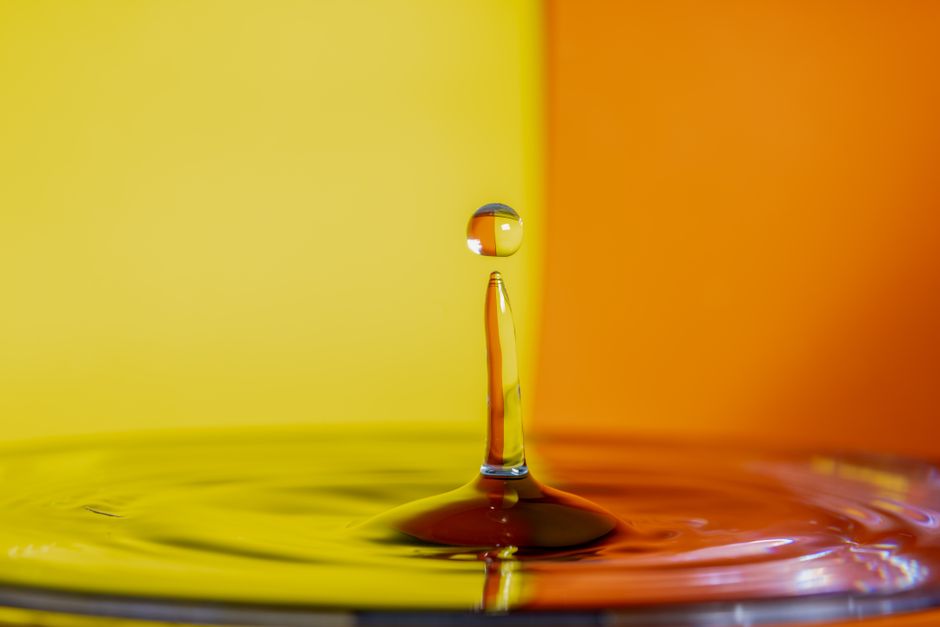
Photo by Rafael Minguet Delgado on Pexels
Interference happens when two or more waves overlap. When their crests meet crests, they add up, making a brighter spot (constructive interference). When crests meet troughs, they cancel out, making a darker spot (destructive interference). Think about two sets of ripples in water: where they cross, you'll see bigger waves in some spots and flat water in others.
The key condition for stable interference patterns is that the light sources must be coherent. This means they must have a constant phase relationship (like two people swinging in sync). Lasers are excellent coherent light sources.
What is Diffraction?
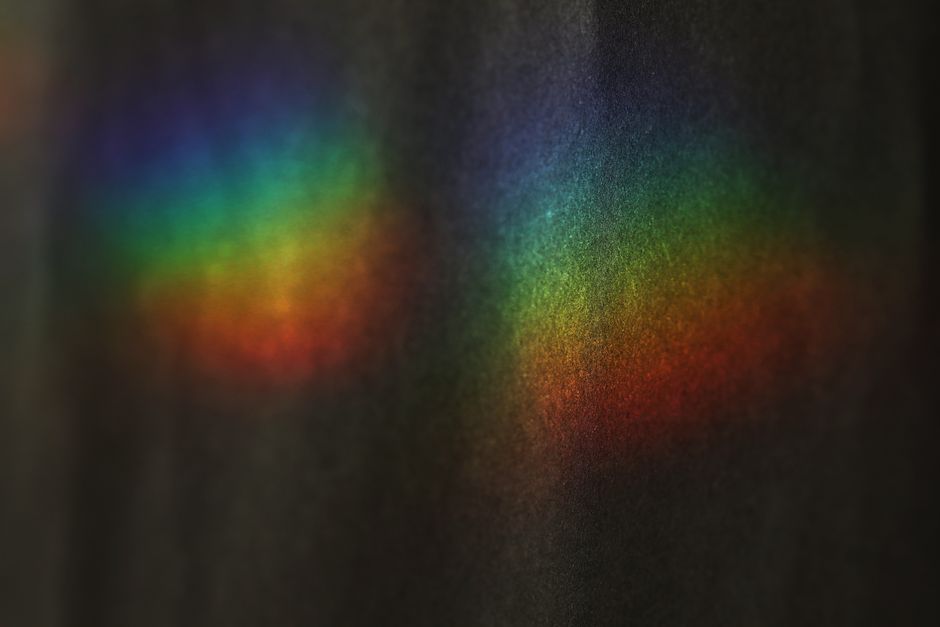
Photo by Nop Viwat on Pexels
Diffraction is the bending of waves as they pass around the edge of an obstacle or through an opening. If light were purely particles, it would just cast a sharp shadow or pass straight through an opening without spreading. But because it's a wave, it actually bends and spreads out. The amount of bending depends on the wavelength of the light and the size of the obstacle or opening. The smaller the opening or obstacle relative to the wavelength, the more noticeable the diffraction.
Here's how these concepts build on each other:
graph TD
    A["Light behaves like a wave"] --> B["Leads to phenomena like:"]
    B --> C{"Interference"}
    B --> D{"Diffraction"}
    C --> C1["When waves overlap"]
    C --> C2["Requires coherent sources (e.g., lasers)"]
    C1 --> C3["Constructive: waves add (bright spots)"]
    C1 --> C4["Destructive: waves cancel (dark spots)"]
    D --> D1["Waves bend around obstacles or through openings"]
    D --> D2["Creates patterns of light and dark areas"]
    D1 --> D3["Amount of bending depends on wavelength and opening/obstacle size"]
Wavefronts and Huygens' Principle
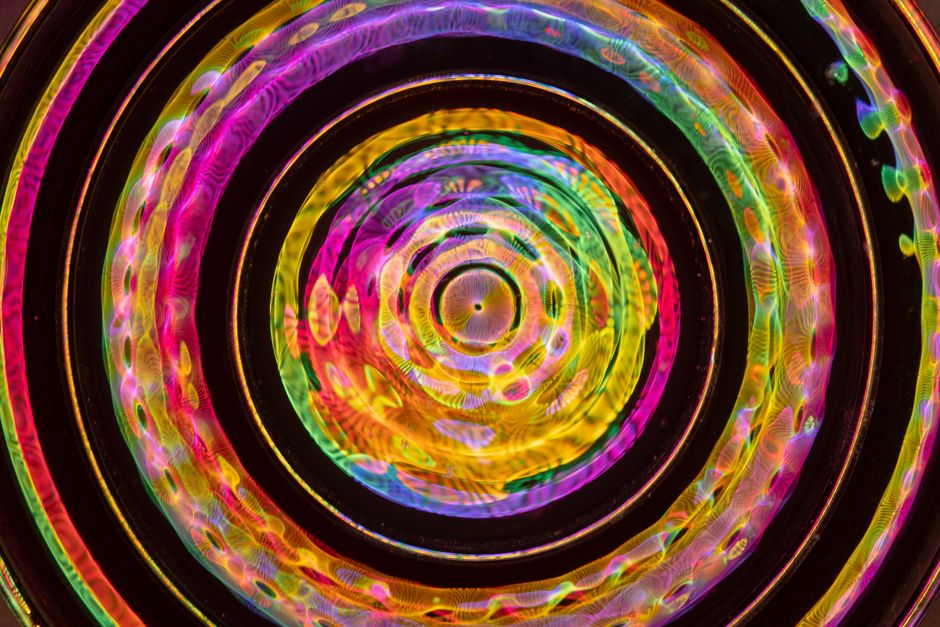
Photo by Merlin Lightpainting on Pexels
To visualize light waves, we often talk about wavefronts. A wavefront is an imaginary surface connecting points of constant phase on a wave. For example, if you drop a pebble in water, the expanding circles are wavefronts.
Huygens' Principle is a simple but powerful way to understand how wavefronts propagate. It states that:
1. Every point on a wavefront can be considered as a source of tiny secondary wavelets.
2. These wavelets spread out in all directions.
3. The new wavefront at a later time is the envelope (the tangent surface) of all these secondary wavelets.
This principle helps explain both the straight-line propagation of light (in ray optics terms) and its bending due to diffraction.
3. Worked Example
Imagine you're trying to see a light source through a very tiny pinhole.
Scenario 1: Using Ray Optics (Incorrect for this case)
If light were just particles, you'd expect a very sharp, tiny bright spot on a screen behind the pinhole, exactly the same shape as the pinhole.
Scenario 2: Using Wave Optics (Correct)
When you actually do this experiment with a tiny pinhole, what you see isn't just a tiny spot. You'll see a central bright spot, but then alternating dark and bright rings around it. The central spot is actually larger than the pinhole itself, and its edges aren't sharp.
This is a classic example of diffraction. The light waves bend as they pass through the small opening, spreading out and interfering with each other to create this complex pattern of light and dark, known as an Airy pattern if the pinhole is circular. This pattern is directly due to the wave nature of light, something ray optics simply cannot explain.
4. Key Takeaways
- Wave optics describes light using its wave properties, unlike ray optics which uses particles/rays.
- Interference occurs when two or more coherent light waves combine, leading to brighter (constructive) or darker (destructive) regions.
- Diffraction is the bending and spreading of light waves as they pass through openings or around obstacles.
- Huygens' Principle helps explain how light waves propagate by treating each point on a wavefront as a source of secondary wavelets.
- Phenomena like interference and diffraction provide strong evidence for the wave nature of light.
Common Mistakes to Avoid

Photo by KATRIN BOLOVTSOVA on Pexels
- Don't confuse interference and diffraction; they are related but distinct phenomena.
- Don't apply ray optics principles to situations where wave effects (like small openings or multiple sources) are significant.
- Don't forget that for stable interference, the light sources must be coherent.
- Don't assume light always travels in perfectly straight lines; diffraction shows it bends.
5. Now Try It
Think about why sunglasses work, and then consider why you sometimes see rainbow-like patterns on oil slicks or soap bubbles. For sunglasses, explain how ray optics could describe their function. Then, for the oil slicks/soap bubbles, describe why only wave optics can fully explain the colorful patterns you see. What specific wave phenomenon is at play there? What would success look like? You'd be able to clearly distinguish between situations where ray optics is sufficient and where wave optics is necessary, specifically naming the wave phenomenon (or phenomena) involved for the oil slick/soap bubble.
Frequently asked about Introduction to Wave Optics
Study this next
Get the full engineering physics curriculum
Clone the complete plan to your dashboard for unlimited AI-generated notes, practice quizzes, and a personalised revision schedule.
Save this course free