Pressure and Volume Effects on Gaseous Equilibria
From the Le Chatelier's Principle curriculum
TL;DR
When you change the pressure or volume of a gaseous system at equilibrium, the system will shift to relieve that stress. This shift always favors the side of the reaction with fewer moles of gas when pressure increases (or volume decreases). Conversely, the equilibrium shifts towards more moles of gas when pressure decreases (or volume increases).
1. The Mental Model
Imagine a tug-of-war between the reactants and products. If you "squeeze" the rope (increase pressure/decrease volume), the side that takes up less space tries to pull harder to minimize the squeeze. If you "loosen" the rope (decrease pressure/increase volume), the side that takes up more space pulls harder to fill that extra room.
2. The Core Material
Le Chatelier's Principle states that if you change the conditions of a system at equilibrium, the system will shift in a direction that counteracts the change. For gaseous reactions, changes in pressure or volume are closely related because of the ideal gas law ($PV=nRT$).
How Pressure Changes Affect Equilibrium
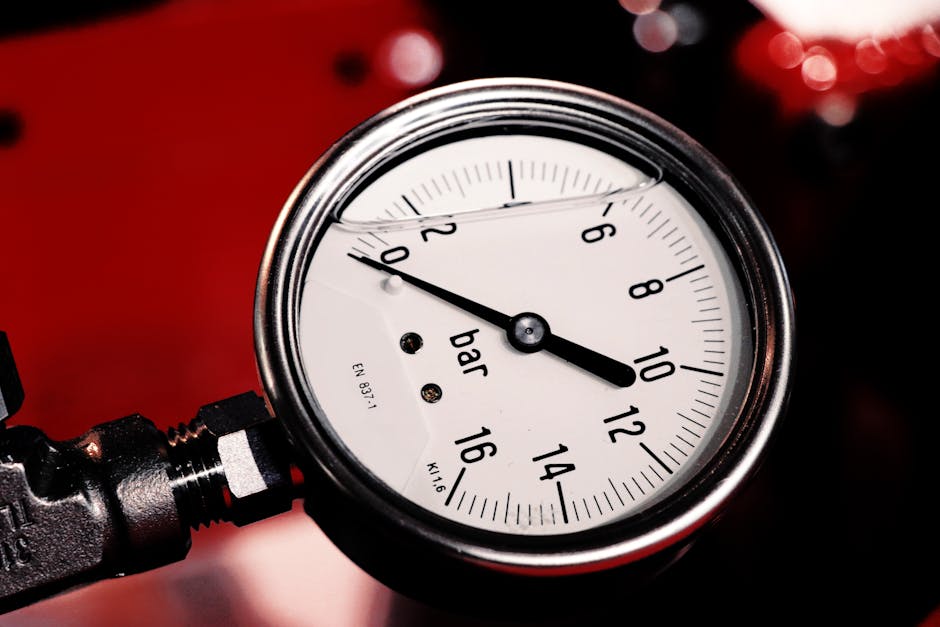
Photo by Amir Ghoorchiani on Pexels
When you increase the total pressure of a gaseous equilibrium system, the system responds by trying to reduce that pressure. It does this by shifting the equilibrium towards the side of the reaction with fewer moles of gas. This is because fewer gas molecules exert less pressure.
If you decrease the total pressure, the system tries to increase the pressure by shifting towards the side with more moles of gas.
Important Note: Adding an inert gas (like argon) to a constant volume container will increase the total pressure, but it won't change the partial pressures of the reacting gases. Therefore, it won't cause a shift in equilibrium. For a pressure change to cause a shift, it must alter the concentrations (or partial pressures) of the reacting gases.
How Volume Changes Affect Equilibrium

Photo by Rafael Minguet Delgado on Pexels
Pressure and volume are inversely related.
* Decreasing the volume of a gaseous system is equivalent to increasing the pressure. The system will shift to the side with fewer moles of gas.
* Increasing the volume of a gaseous system is equivalent to decreasing the pressure. The system will shift to the side with more moles of gas.
Essentially, changing volume is just another way to change the partial pressures of the gases involved.
Here's a breakdown of how these changes cause a shift:
graph TD
    A["Change in System Condition"] --> B{"Is it a Pressure/Volume Change?"}
    B -- Yes --> C{"Does it change Partial Pressures?"}
    B -- No (e.g., add inert gas at constant volume) --> Z["No Equilibrium Shift"]
    C -- Yes --> D{"Count Moles of Gas (Reactants vs. Products)"}
    C -- No --> Z["No Equilibrium Shift"]
    D --> E{Increased Pressure / Decreased Volume}
    D --> F{Decreased Pressure / Increased Volume}
    E --> G["Shift Towards Fewer Moles of Gas"]
    F --> H["Shift Towards More Moles of Gas"]
    G --> I["New Equilibrium Position"]
    H --> I
What if Moles of Gas are Equal on Both Sides?
Photo by Ron Lach on Pexels
If the number of moles of gaseous reactants equals the number of moles of gaseous products (e.g., H₂(g) + Cl₂(g) ⇌ 2HCl(g)), then a change in pressure or volume will not cause a shift in equilibrium. The system can't relieve the stress by favoring one side over the other because both sides occupy the same "amount" of space.
3. Worked Example
Consider the following reversible reaction:
N₂(g) + 3H₂(g) ⇌ 2NH₃(g)
Let's analyze what happens if we change the pressure or volume:
a) Increase the pressure of the system (e.g., by decreasing the volume).
- Step 1: Count moles of gas on each side.
- Reactant side: 1 mole N₂ + 3 moles H₂ = 4 moles of gas
- Product side: 2 moles of gas NH₃
- Step 2: Determine the shift.
- Increasing pressure favors the side with fewer moles of gas.
- Since the product side (2 moles) has fewer moles than the reactant side (4 moles), the equilibrium will shift to the right, favoring the formation of more NH₃.
b) Decrease the pressure of the system (e.g., by increasing the volume).
- Step 1: Count moles of gas on each side (same as above).
- Reactant side: 4 moles of gas
- Product side: 2 moles of gas
- Step 2: Determine the shift.
- Decreasing pressure favors the side with more moles of gas.
- Since the reactant side (4 moles) has more moles than the product side (2 moles), the equilibrium will shift to the left, favoring the decomposition of NH₃ back into N₂ and H₂.
4. Key Takeaways
- Increasing pressure (or decreasing volume) causes a gaseous equilibrium to shift towards the side with fewer moles of gas.
- Decreasing pressure (or increasing volume) causes a gaseous equilibrium to shift towards the side with more moles of gas.
- Only changes that alter the partial pressures of the reacting gases will cause a shift; adding an inert gas at constant volume won't.
- If the number of moles of gaseous reactants equals the number of moles of gaseous products, pressure/volume changes will not affect the equilibrium position.
- These shifts are Le Chatelier's Principle in action, minimizing the stress on the system.
Common mistakes you should avoid:
- Confusing total pressure changes with partial pressure changes; inert gases don't shift equilibrium.
- Forgetting to count only gaseous moles when comparing sides.
- Not recognizing that increasing volume is the same as decreasing pressure, and vice-versa.
- Assuming a shift will always occur; sometimes the moles of gas are equal on both sides.
5. Now Try It
Consider the reaction: 2SO₂(g) + O₂(g) ⇌ 2SO₃(g). Predict the effect on the equilibrium position if:
a) The volume of the container is decreased.
b) The volume of the container is increased.
c) An inert gas like helium is added at constant volume.
What success looks like: You can clearly state the direction of the shift (left, right, or no shift) for each scenario and explain why, based on the number of moles of gas on each side of the equation.
Frequently asked about Pressure and Volume Effects on Gaseous Equilibria
Study this next
Get the full Le Chatelier's Principle curriculum
Clone the complete plan to your dashboard for unlimited AI-generated notes, practice quizzes, and a personalised revision schedule.
Save this course free