Introduction to Plant Organs and Photosynthesis
From the Leaf as an organ external structure and T/S trough aeaf curriculum
TL;DR
Plants have specialized organs like roots, stems, and leaves, each with unique jobs. Leaves are especially important because they're the primary sites for photosynthesis. Photosynthesis is the process where plants use sunlight, water, and carbon dioxide to make their own food (sugars) and release oxygen.
1. The Mental Model
Imagine a plant as a tiny factory. It needs different parts to do its work: roots to anchor and get water, a stem to support and transport, and leaves to capture sunlight and make food. Photosynthesis is like the plant's special kitchen where it cooks up its energy.
2. The Core Material
Plants are complex organisms, but we can understand them better by looking at their main parts, called organs. Just like animals have organs (like a heart or lungs), plants have roots, stems, and leaves, each with a specific function crucial for survival.
- Roots: These are usually underground. Their main jobs are to anchor the plant firmly in the soil and absorb water and nutrients from the soil.
- Stems: Stems provide structural support for the plant, holding up the leaves and flowers. They also act like pipelines, transporting water and nutrients from the roots up to the leaves, and sugars (food) made in the leaves down to other parts of the plant.
- Leaves: Leaves are the plant's primary food factories. They are typically flat and green, designed to capture as much sunlight as possible.
The most critical process happening in leaves is photosynthesis. This is how plants create their own food. It's a chemical reaction that uses simple ingredients (carbon dioxide and water) and energy from sunlight to produce sugar (glucose) and oxygen.
Here's a simplified way to think about the inputs and outputs:
graph TD
    A["Sunlight Energy"] --> B{Photosynthesis Process}
    C["Carbon Dioxide (CO2)"] --> B
    D["Water (H2O)"] --> B
    B --> E["Glucose (Sugar - Plant Food)"]
    B --> F["Oxygen (O2 - Released)"]
How Photosynthesis Works
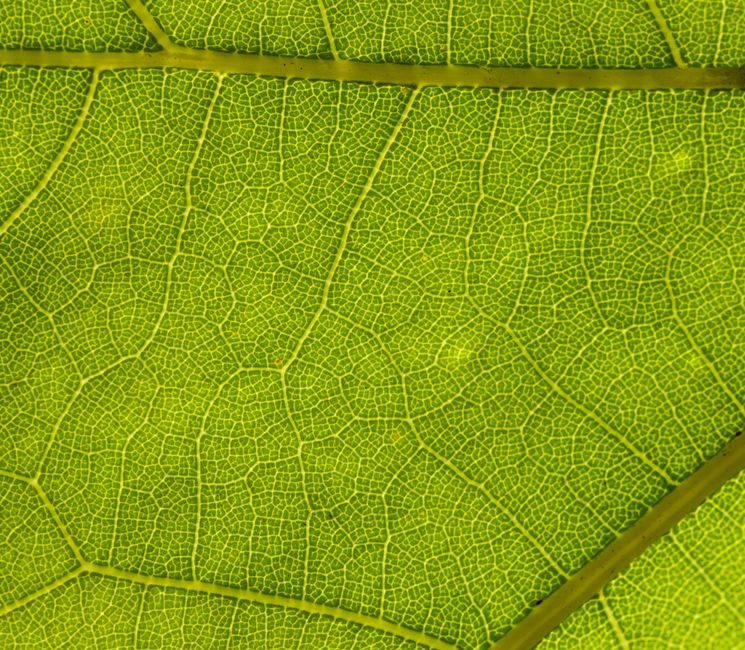
Photo by Petr Ganaj on Pexels
Inside the leaf cells, there are special organelles called chloroplasts. These contain a green pigment called chlorophyll, which is what gives plants their green color and, more importantly, absorbs sunlight energy.
- Light Absorption: Chlorophyll captures light energy from the sun.
- Water Uptake: Water is absorbed by the roots and transported through the stem to the leaves.
- Carbon Dioxide Intake: Carbon dioxide from the air enters the leaf through tiny pores called stomata (singular: stoma), usually found on the underside of the leaf.
- Sugar Production: Using the absorbed light energy, water, and carbon dioxide, the plant converts these into glucose (a type of sugar) and oxygen.
- Oxygen Release: The oxygen produced as a byproduct is released back into the atmosphere through the stomata.
- Sugar Usage/Storage: The glucose is either used immediately by the plant for energy to grow and perform other functions, or it's stored (often as starch) for later use.
So, leaves are perfectly designed for this vital process, often having a broad, flat shape to maximize surface area for light absorption and a network of veins to efficiently transport water and sugars.
3. Worked Example
Let's trace the journey of a water molecule and a carbon dioxide molecule during photosynthesis in a leaf:
- A water molecule (H₂O) is absorbed by the plant's root hairs from the soil.
- It travels up through the stem's vascular tissue (xylem) into the leaf.
- A carbon dioxide molecule (CO₂) from the atmosphere enters the leaf through an open stoma on the leaf's underside.
- Both the water and carbon dioxide molecules move into a chloroplast within a leaf cell.
- Inside the chloroplast, with the energy from sunlight (captured by chlorophyll), these molecules are chemically rearranged.
- The atoms from the water and carbon dioxide are used to form a glucose molecule (C₆H₁₂O₆).
- As a byproduct, oxygen atoms from the water and carbon dioxide combine to form an oxygen molecule (O₂), which then exits the leaf through the stomata.
4. Key Takeaways
- Plant organs (roots, stems, leaves) each have specialized roles for the plant's survival.
- Leaves are the primary sites for photosynthesis, the process of converting light energy into chemical energy.
- Photosynthesis uses sunlight, water, and carbon dioxide as inputs.
- The outputs of photosynthesis are glucose (plant food) and oxygen.
- Chlorophyll in chloroplasts absorbs light energy for photosynthesis.
- Stomata are tiny pores on leaves that allow for gas exchange (CO₂ in, O₂ out).
Common mistakes to avoid: - Don't confuse transpiration (water vapor release) with photosynthesis.
- Don't forget that plants also respire, consuming oxygen and releasing CO₂, just like animals.
- Thinking that roots or stems are the main sites of food production; that's the leaves' job.
- Forgetting that light is essential for photosynthesis.
5. Now Try It
Draw a simple diagram of a plant and label its three main organs: root, stem, and leaf. Next to the leaf, write down the inputs and outputs for photosynthesis. For a bonus challenge, try to indicate where in the leaf (or cell) each input is taken in and each output is released. Success means your diagram clearly shows the plant organs and accurately lists the ingredients and products of photosynthesis for the leaf.
Frequently asked about Introduction to Plant Organs and Photosynthesis
Study this next
Get the full Leaf as an organ external structure and T/S trough aeaf curriculum
Clone the complete plan to your dashboard for unlimited AI-generated notes, practice quizzes, and a personalised revision schedule.
Save this course free