Introduction to Value Added Tax (VAT) System
From the TAXATION 1 curriculum
TL;DR
VAT is a consumption tax charged on goods and services at each stage of production and distribution, ultimately borne by the final consumer. Businesses act as collection agents for the government, remitting the difference between VAT charged on sales (output VAT) and VAT paid on purchases (input VAT). Its multi-stage nature avoids cascading tax effects and ensures broad-based revenue collection.
1. The Mental Model
Think of VAT as a relay race for taxes. Each business in the supply chain passes the "tax baton" to the next, adding its own value, until the final consumer crosses the finish line, paying the total tax. The government simply collects the baton at various stages.
2. The Core Material
VAT, or Value Added Tax, is a common indirect tax system used in many countries. Unlike a sales tax, which is typically collected only at the final point of sale, VAT is levied at each stage of the production and distribution chain.
Here's how it generally works:
What is Value Added Tax (VAT)?
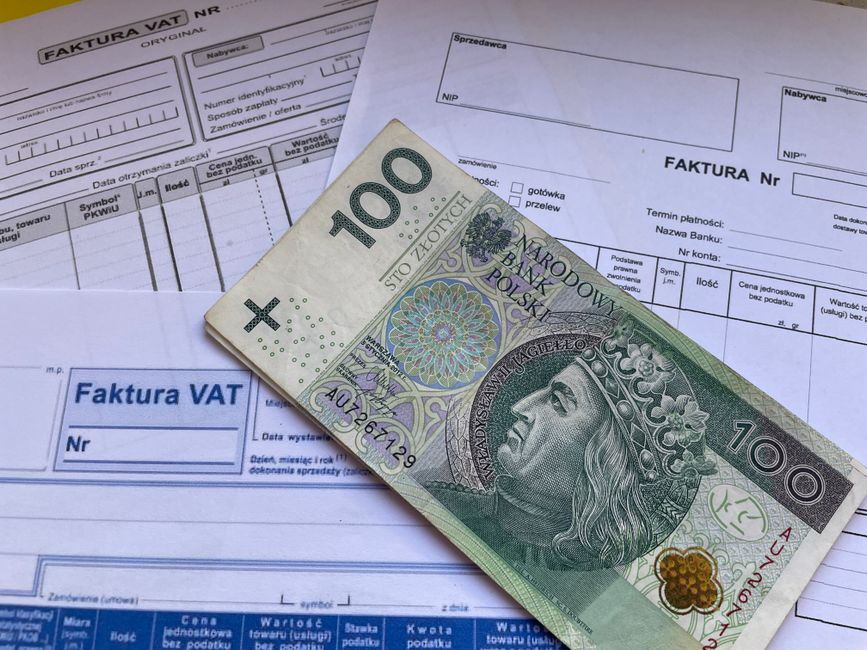
Photo by Niepoddawajsie.pl Luk on Pexels
VAT is a tax on consumption. This means the person who ultimately uses or consumes the good or service is the one who effectively pays the tax. Businesses don't bear the cost of VAT themselves; they collect it from their customers and then pay it to the government.
Key Concepts:

Photo by Nataliya Vaitkevich on Pexels
- Output VAT (VAT on Sales): This is the VAT a business charges its customers when it sells goods or services. It's revenue for the government, collected by the business.
- Input VAT (VAT on Purchases): This is the VAT a business pays to its suppliers when it buys goods or services for its own operations. It's effectively a credit against the output VAT the business collects.
- VAT Payable/Refundable: At the end of a tax period (e.g., monthly or quarterly), a business calculates the difference between its total Output VAT and its total Input VAT.
- If Output VAT > Input VAT, the business remits the difference to the tax authority (VAT payable).
- If Input VAT > Output VAT, the business gets a refund from the tax authority (VAT refundable).
How VAT Works Through the Supply Chain

Photo by Tima Miroshnichenko on Pexels
The magic of VAT is that it avoids "tax on tax" or cascading effects, which can happen with other indirect tax systems. Each business only pays tax on the value it adds to the product or service.
Here's a simplified flow:
graph LR
    A["Raw Material Supplier (Stage 1)"] --> B["Manufacturer (Stage 2)"]
    B --> C["Wholesaler (Stage 3)"]
    C --> D["Retailer (Stage 4)"]
    D --> E["Final Consumer (Stage 5)"]

    subgraph VAT Flow
        A -- "Charges VAT to B" --> B
        B -- "Charges VAT to C" --> C
        C -- "Charges VAT to D" --> D
        D -- "Charges VAT to E (includes all previous VAT)" --> E
    end

    subgraph Business Role
        A -- "Collects VAT from B, Pays net VAT to Govt." --> Gov["Government"]
        B -- "Collects VAT from C, Pays net VAT to Govt." --> Gov
        C -- "Collects VAT from D, Pays net VAT to Govt." --> Gov
        D -- "Collects VAT from E, Pays net VAT to Govt." --> Gov
    end
Advantages of VAT:

Photo by Ann H on Pexels
- Broad-based: It applies to most goods and services, providing a stable revenue source for the government.
- Neutrality: It generally doesn't distort production or consumption decisions as much as other taxes, as businesses can recover input VAT.
- Self-policing: Each business needs to obtain VAT invoices from its suppliers to claim input VAT, encouraging compliance throughout the chain.
- Export-friendly: Exports are typically zero-rated, meaning no VAT is charged on exported goods/services, making them more competitive internationally.
3. Worked Example
Let's assume a VAT rate of 10%.
-
Farmer (Raw Material): Sells wheat to a Miller for \$100.
- Charges VAT: \$100 * 10% = \$10 (Output VAT)
- Total charged to Miller: \$110
- Farmer's net VAT remitted to government (assuming no input VAT): \$10
-
Miller (Manufacturer): Buys wheat for \$100 + \$10 VAT = \$110. Processes it into flour and sells to a Baker for \$200 (excluding VAT).
- Input VAT: \$10 (paid to Farmer)
- Output VAT: \$200 * 10% = \$20 (charged to Baker)
- Miller's net VAT remitted to government: Output VAT - Input VAT = \$20 - \$10 = \$10
-
Baker (Retailer): Buys flour for \$200 + \$20 VAT = \$220. Bakes bread and sells to the Final Consumer for \$300 (excluding VAT).
- Input VAT: \$20 (paid to Miller)
- Output VAT: \$300 * 10% = \$30 (charged to Final Consumer)
- Baker's net VAT remitted to government: Output VAT - Input VAT = \$30 - \$20 = \$10
-
Final Consumer: Pays \$300 + \$30 VAT = \$330 for the bread. The consumer bears the full \$30 VAT.
Total VAT collected by the government: \$10 (from Farmer) + \$10 (from Miller) + \$10 (from Baker) = \$30. This equals the VAT paid by the final consumer. Each business only remitted tax on the value they added.
4. Key Takeaways
- VAT is an indirect tax on consumption, ultimately paid by the final consumer.
- Businesses act as collection agents, charging VAT on sales (Output VAT) and claiming VAT paid on purchases (Input VAT).
- The net difference between Output VAT and Input VAT is either paid to or refunded by the tax authority.
- VAT avoids "tax on tax" because businesses only pay tax on the value they add.
- Exports are typically zero-rated, making them competitive globally.
- VAT systems are broadly based and provide a stable source of government revenue.
Common mistakes to avoid:
- Confusing VAT with a sales tax; VAT is multi-stage, sales tax is usually single-stage at retail.
- Thinking the business itself pays the VAT; businesses collect it and pass it on.
- Not keeping proper records of input VAT, which can lead to overpayment of VAT to the government.
- Incorrectly applying VAT to exempt or zero-rated goods/services.
5. Now Try It
Imagine you own a small coffee shop. You buy coffee beans for \$500 (plus 15% VAT) from a wholesaler. You then sell coffee drinks to customers, generating \
Frequently asked about Introduction to Value Added Tax (VAT) System
More from TAXATION 1
Get the full TAXATION 1 curriculum
Clone the complete plan to your dashboard for unlimited AI-generated notes, practice quizzes, and a personalised revision schedule.
Save this course free