VAT Application and Calculation Basics
From the TAXATION 1 curriculum
TL;DR
Value Added Tax (VAT) is a consumption tax charged on goods and services at each stage of the supply chain, but ultimately borne by the final consumer. Businesses act as collectors, remitting the difference between VAT charged on sales (Output VAT) and VAT paid on purchases (Input VAT) to the tax authority. Understanding the flow of VAT and how to calculate Net VAT payable or refundable is crucial for compliance.
1. The Mental Model
Think of VAT as a relay race: each business in the supply chain passes the "tax baton" (VAT) to the next, adding their portion, until the final consumer crosses the finish line, paying the total VAT. Businesses just hold the baton temporarily, then pass it on, keeping only their "handling fee" (the VAT they collected on sales less what they paid on purchases).
2. The Core Material
VAT is a multi-stage tax. This means it's levied at each point where value is added, from raw materials to the finished product.
Here's how it generally works:
* Supplier charges VAT to a business. This is Input VAT for the purchasing business.
* Business adds value and sells to another business or final consumer. The business charges VAT on this sale. This is Output VAT for the selling business.
* The business then remits the difference to the tax authority. If Output VAT > Input VAT, you pay the difference. If Input VAT > Output VAT, you get a refund.
VAT Calculation Formula:
The basic calculation for a VAT-registered business is:
Net VAT Payable / (Refundable) = Total Output VAT - Total Input VAT
Understanding Output VAT
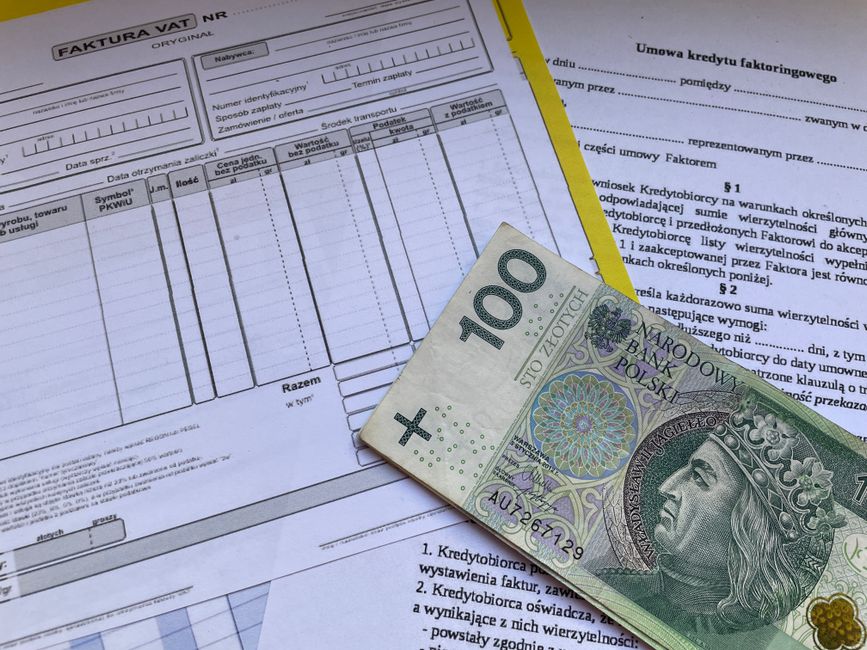
Photo by Niepoddawajsie.pl Luk on Pexels
Output VAT is the VAT you charge on your sales of goods or services. It's calculated as a percentage of your selling price (excluding VAT).
* Example: If you sell a product for \$100 and the VAT rate is 15%, your Output VAT is \$100 * 0.15 = \$15. The customer pays you \$115.
Understanding Input VAT
Photo by Niepoddawajsie.pl Luk on Pexels
Input VAT is the VAT you pay on your purchases of goods or services that are used in your business activities.
* Example: If you buy raw materials for \$50 (excluding VAT) and the VAT rate is 15%, you pay \$50 * 0.15 = \$7.50 in Input VAT. The supplier charges you \$57.50.
The VAT Process Flow

Photo by Pam Crane on Pexels
graph TD
    A["Raw Material Supplier sells to Manufacturer (charges VAT)"] --> B{"Manufacturer pays VAT (Input VAT)"};
    B --> C["Manufacturer sells to Wholesaler (charges VAT)"];
    C --> D{"Wholesaler pays VAT (Input VAT)"};
    D --> E["Wholesaler sells to Retailer (charges VAT)"];
    E --> F{"Retailer pays VAT (Input VAT)"};
    F --> G["Retailer sells to Final Consumer (charges VAT)"];
    G --> H{"Final Consumer pays VAT (no Input VAT offset)"};
    B --> I["Manufacturer remits Net VAT to Tax Authority"];
    D --> J["Wholesaler remits Net VAT to Tax Authority"];
    F --> K["Retailer remits Net VAT to Tax Authority"];
VAT Rates
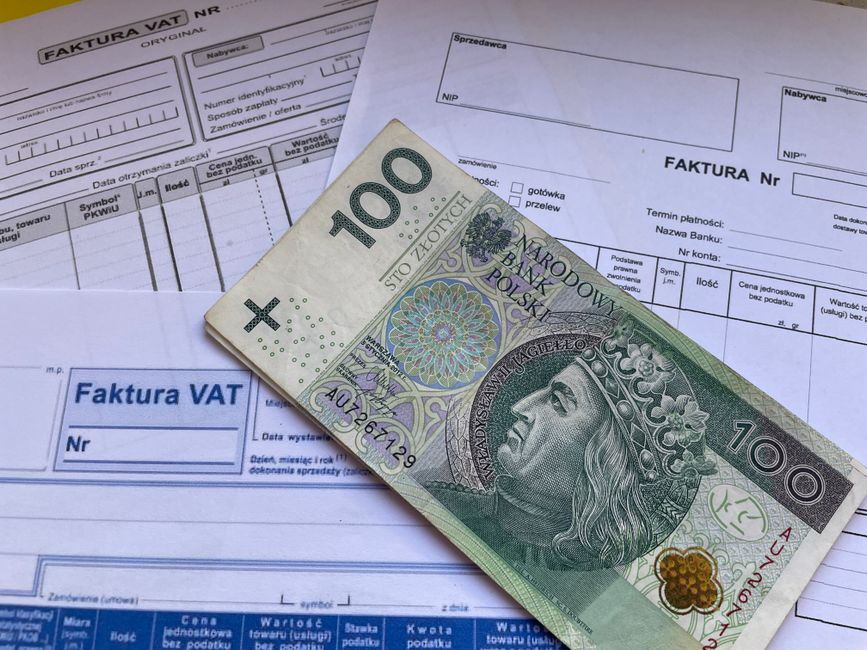
Photo by Niepoddawajsie.pl Luk on Pexels
VAT rates vary by country and often by product/service. You'll typically encounter:
* Standard Rate: The most common rate applied to most goods and services.
* Reduced Rate(s): Applied to specific items like food, books, or utilities.
* Zero-Rated: Goods or services that are subject to VAT at 0% (e.g., exports). You don't charge VAT, but you can still claim Input VAT.
* Exempt: Goods or services not subject to VAT (e.g., financial services, education). You don't charge VAT, and you cannot claim Input VAT on related expenses.
3. Worked Example
Let's say you own "Bright Spanners Ltd.", a tool retailer, and the standard VAT rate is 15%.
Sales in a VAT period:
* You sell tools to customers for a total (excluding VAT) of \$5,000.
* Your Output VAT = \$5,000 * 15% = \$750.
* Total amount collected from customers = \$5,000 + \$750 = \$5,750.
Purchases in the same VAT period:
* You bought tools from a wholesaler for \$3,000 (excluding VAT).
* Your Input VAT = \$3,000 * 15% = \$450.
* Total paid to wholesaler = \$3,000 + \$450 = \$3,450.
* You also bought office supplies for \$200 (excluding VAT).
* Input VAT on office supplies = \$200 * 15% = \$30.
* Total paid for office supplies = \$200 + \$30 = \$230.
* Total Input VAT = \$450 (tools) + \$30 (office supplies) = \$480.
Calculation of Net VAT Payable:
* Net VAT Payable = Total Output VAT - Total Input VAT
* Net VAT Payable = \$750 - \$480 = \$270.
Bright Spanners Ltd. would remit \$270 to the tax authority for this VAT period.
4. Key Takeaways
- VAT is a consumption tax, meaning the final burden falls on the consumer.
- Businesses act as intermediaries, collecting VAT from sales (Output VAT) and paying VAT on purchases (Input VAT).
- The core calculation involves subtracting total Input VAT from total Output VAT.
- Different VAT rates (standard, reduced, zero-rated, exempt) dictate how you charge and claim VAT.
- Understanding the difference between zero-rated (can claim Input VAT) and exempt (cannot claim Input VAT) is critical.
- Maintaining accurate records of all sales and purchases is essential for VAT compliance.
Common Mistakes to Avoid:
- Not differentiating between zero-rated and exempt supplies, leading to incorrect Input VAT claims.
- Forgetting to charge VAT on all taxable sales, resulting in under-remittance.
- Incorrectly calculating VAT on purchases or sales, especially when dealing with inclusive vs. exclusive pricing.
- Failing to keep proper documentation (tax invoices) to support Input VAT claims.
5. Now Try It
Imagine you run a small consulting firm. In a given month, you billed clients \$10,000 for your services (excluding VAT) and your VAT rate is 10%. You also incurred expenses: \$1,500 for a new laptop (excluding VAT) and \$500 for office rent (excluding VAT). Calculate your Net VAT Payable or Refundable for the month.
Success looks like: Arriving at a single correct figure for the Net VAT payable or refundable, clearly showing your Output VAT, Input VAT, and the final calculation.
Frequently asked about VAT Application and Calculation Basics
More from TAXATION 1
Get the full TAXATION 1 curriculum
Clone the complete plan to your dashboard for unlimited AI-generated notes, practice quizzes, and a personalised revision schedule.
Save this course free