Practical Scenarios and Problem Solving
From the TAXATION 1 curriculum
TL;DR
Mastering tax involves applying rules to real-world situations, which often have unique details requiring careful analysis. You'll need a systematic approach to break down complex problems and identify all relevant tax implications. Practice is key to developing your judgment and efficiency in tax problem-solving.
1. The Mental Model
Think of tax problem-solving like being a detective. You're given a set of facts (the scenario), and your job is to uncover all the tax implications by applying the relevant tax laws and principles. It's about finding the correct "puzzle pieces" and fitting them together.
2. The Core Material
When tackling tax problems, a structured approach is your best friend. Don't jump straight to an answer; instead, systematically analyze the situation.
2.1 Understand the Facts

Photo by ugurlu photographer on Pexels
First, read the scenario carefully. Identify the taxpayer(s) involved (individuals, companies, trusts, etc.), the transactions or events that occurred, the dates of these events, and any amounts or values. Sometimes, information might be intentionally vague or missing – note these down as potential areas for assumptions or clarification.
2.2 Identify Key Tax Issues

Photo by Leeloo The First on Pexels
Based on the facts, what tax areas are likely to be relevant? Is it income tax, Capital Gains Tax (CGT), Fringe Benefits Tax (FBT), Goods and Services Tax (GST), or something else? For example, if an asset is sold, think CGT. If an employee receives something non-cash from their employer, think FBT.
2.3 Apply Relevant Tax Law

Photo by Nataliya Vaitkevich on Pexels
Once you've identified the issues, recall the specific sections of the tax law, regulations, or rulings that apply. This is where your knowledge of the tax legislation comes into play. For each issue, ask:
* What is the general rule?
* Are there any specific definitions or conditions that must be met?
* Are there any exceptions, concessions, or exemptions?
2.4 Perform Calculations
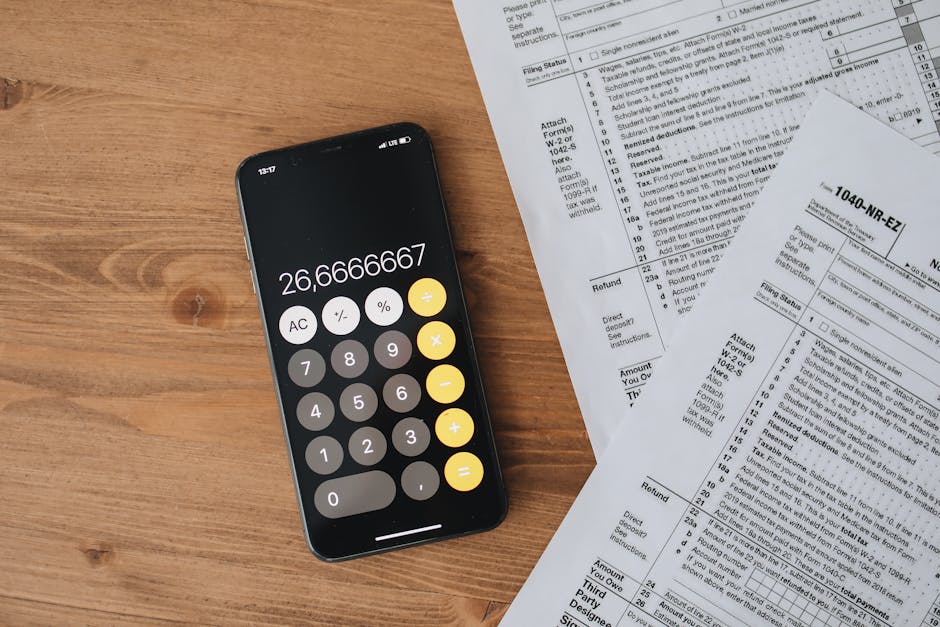
Photo by Polina Tankilevitch on Pexels
If the issue involves a monetary amount, perform the necessary calculations. Be meticulous with numbers and show your working. This often includes calculating assessable income, allowable deductions, capital gains or losses, or tax payable.
2.5 Conclude and Advise
Summarize your findings clearly. State the tax outcome for the taxpayer and, if applicable, provide advice on their obligations or opportunities. Your conclusion should directly answer the question posed in the scenario.
Here's a flowchart to help you visualize the process:
graph TD
    A["Start: Read Scenario"] --> B{"Understand Facts?"}
    B -- "No" --> A
    B -- "Yes" --> C["Identify Key Tax Issues"]
    C --> D{"Which Tax Law Applies?"}
    D -- "Recall specific laws" --> E["Apply Law: Rules, Definitions, Exceptions"]
    E --> F{"Are Calculations Needed?"}
    F -- "Yes" --> G["Perform Calculations (Show Working)"]
    F -- "No" --> H
    G --> H["Formulate Conclusion/Advice"]
    H --> I["End: Present Solution"]
3. Worked Example
Scenario:
Sarah (an individual taxpayer) purchased an investment property on 1 January 2015 for \$500,000. She rented it out for several years. On 30 June 2023, she sold the property for \$750,000. Her selling costs (real estate agent commission, legal fees) amounted to \$20,000. She did not incur any significant capital improvements during her ownership. Assume she has no other capital gains or losses for the year.
Question: Calculate Sarah's net capital gain or loss for the 2022-2023 income year.
Solution:
-
Understand the Facts:
- Taxpayer: Sarah (individual)
- Asset: Investment property
- Acquisition Date: 1 Jan 2015
- Acquisition Cost: \$500,000
- Disposal Date: 30 June 2023
- Disposal Proceeds: \$750,000
- Selling Costs: \$20,000
- Other Info: No capital improvements, no other capital gains/losses.
-
Identify Key Tax Issues: This is clearly a Capital Gains Tax (CGT) event (CGT event A1 - disposal of an asset).
-
Apply Relevant Tax Law:
- Calculate capital proceeds: Selling price less incidental costs of disposal.
- Calculate cost base: Purchase price plus incidental costs of acquisition (none stated here, but generally includes stamp duty, legal fees etc.) and ownership costs if applicable.
- Calculate capital gain = Capital proceeds - Cost base.
- Consider the CGT discount: For individuals, if an asset is held for more than 12 months, a 50% discount applies to the gross capital gain.
- The income year for the gain is when the contract of sale is entered into, which is in the 2022-2023 financial year.
-
Perform Calculations:
-
Step 1: Calculate Capital Proceeds
Capital Proceeds = Sale Price - Selling Costs
Capital Proceeds = \$750,000 - \$20,000
Capital Proceeds = \$730,000 -
Step 2: Calculate Cost Base
Cost Base = Purchase Price (assume no incidental costs of acquisition mentioned)
Cost Base = \$500,000 -
Step 3: Calculate Gross Capital Gain
Gross Capital Gain = Capital Proceeds - Cost Base
Gross Capital Gain = \$730,000 - \$500,000
Gross Capital Gain = \$230,000 -
Step 4: Apply CGT Discount
The property was held from 1 January 2015 to 30 June 2023, which is more than 12 months. Therefore, Sarah is eligible for the 50% CGT discount.
CGT Discount Amount = Gross Capital Gain × 50%
CGT Discount Amount = \$230,000 × 0.50
CGT Discount Amount = \$115,000 -
Step 5: Calculate Net Capital Gain
Net Capital Gain = Gross Capital Gain - CGT Discount Amount
Net Capital Gain = \$230,000 - \$115,000
Net Capital Gain = \$115,000
-
-
Conclusion and Advice:
Sarah's net capital gain for the 2022-2023 income year is \$115,000. This amount will be included in her assessable income for that year.
4. Key Takeaways
- Always start by thoroughly understanding all the facts and details in a scenario.
- Systematically identify all potential tax issues before attempting to solve them.
- Recall and apply the specific sections of tax law relevant to each identified issue.
- Show all your calculations clearly, even for simple steps, to avoid errors and demonstrate your logic.
- Remember to consider any applicable tax concessions, discounts, or exemptions, like the 50% CGT discount for individuals.
- Your final answer should directly address the question asked and provide a clear conclusion.
- Tax law can be ambiguous; sometimes, you might need to state assumptions if facts are unclear.
Common Mistakes to Avoid:
- Rushing to a solution without fully understanding the scenario.
- Overlooking minor details that can significantly impact the tax outcome.
- Forgetting to apply relevant concessions or discounts (e.g., the 50% CGT discount).
- Not showing your working, which makes it hard to identify where errors occurred.
- Confusing different types of tax (e.g., income tax vs. CGT principles).
5. Now Try It
Exercise: Mark, a sole trader, purchased a new laptop for his business on 1 July 2023 for \$3,000. He also spent \$500 on software directly related to his business operations on the same day. His business turnover is less than \$10 million per year.
Question: For the 2023-2024 income year, how much can Mark claim as a deduction for the laptop and software under current immediate deduction rules for small businesses?
What success looks like: You should be able to clearly state the total deductible amount for the laptop and software and explain why that amount is deductible, referencing the relevant tax principles (e.g., immediate deductibility for small business assets).
Frequently asked about Practical Scenarios and Problem Solving
More from TAXATION 1
Get the full TAXATION 1 curriculum
Clone the complete plan to your dashboard for unlimited AI-generated notes, practice quizzes, and a personalised revision schedule.
Save this course free