Temperature and Time Measurements
From the English measurements curriculum
TL;DR
You'll learn about common English units for temperature (Fahrenheit) and time (seconds, minutes, hours, days, weeks, months, years). We'll cover how these units relate to each other and how to convert between them. Understanding these measurements is crucial for everyday tasks and practical applications.
1. The Mental Model
Think of temperature as how hot or cold something is, measured on a specific scale. Time is like a continuous flow, broken down into fixed chunks for easier understanding and tracking.
2. The Core Material
In English measurements, you'll mainly encounter Fahrenheit for temperature and a familiar set of units for time.
Temperature: Fahrenheit

Photo by Jessica Lewis 🦋 thepaintedsquare on Pexels
The Fahrenheit (°F) scale is commonly used in the United States for measuring temperature.
* Water freezes at 32°F.
* Water boils at 212°F.
* A comfortable room temperature is often around 70°F.
While you won't always need to convert, knowing the relationship to Celsius (the metric scale) can be helpful:
* To convert Fahrenheit to Celsius (°C): Subtract 32, then multiply by 5/9.
* Example: (68°F - 32) * 5/9 = 36 * 5/9 = 20°C
* To convert Celsius to Fahrenheit (°F): Multiply by 9/5, then add 32.
* Example: (20°C * 9/5) + 32 = 36 + 32 = 68°F
Time: Units and Conversions
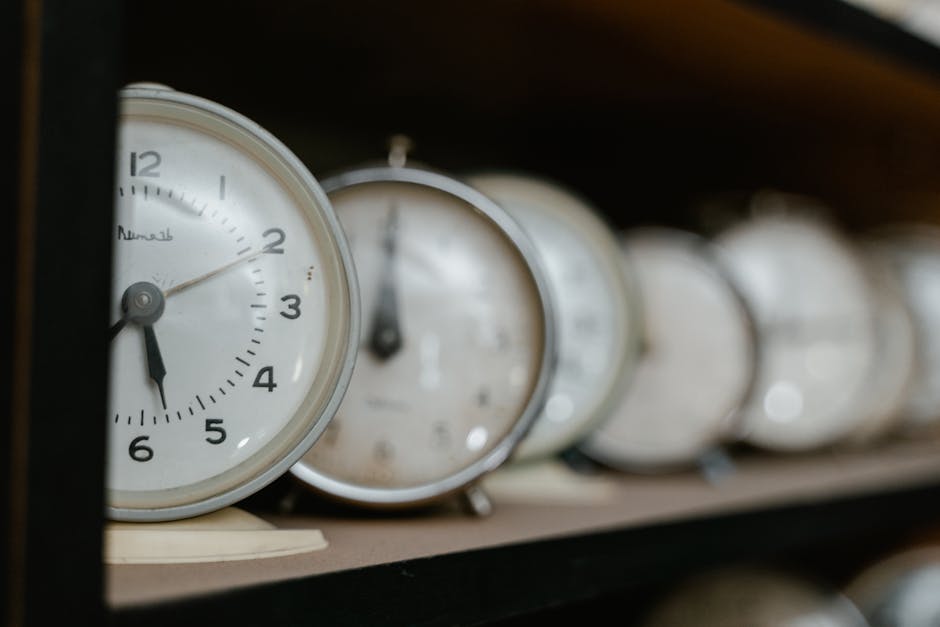
Photo by Tima Miroshnichenko on Pexels
Time measurements are more straightforward as they don't have different scales like temperature. Here's a breakdown:
- Second (s): The basic unit.
- Minute (min): 60 seconds.
- Hour (hr): 60 minutes.
- Day (day): 24 hours.
- Week (wk): 7 days.
- Month (mo): Approximately 30 or 31 days (February has 28 or 29).
- Year (yr): 12 months, or 365 days (366 in a leap year).
Converting between these units usually involves multiplication or division.
graph TD
    A["Second (s)"]
    B["Minute (min)"]
    C["Hour (hr)"]
    D["Day (day)"]
    E["Week (wk)"]
    F["Month (mo)"]
    G["Year (yr)"]

    A -- "x 60" --> B
    B -- "x 60" --> C
    C -- "x 24" --> D
    D -- "x 7" --> E
    E -- "approx x 4" --> F
    F -- "x 12" --> G

    B -- ": 60" --> A
    C -- ": 60" --> B
    D -- ": 24" --> C
    E -- ": 7" --> D
    F -- "approx : 4" --> E
    G -- ": 12" --> F
3. Worked Example
Let's say you're planning a trip. The weather forecast says it will be 77°F, and you need to figure out how many minutes are in 3 and a half hours for your travel time.
-
Temperature Conversion (Fahrenheit to Celsius):
- Forecast is 77°F.
(77 - 32) * 5/9 = 45 * 5/9 = 25°C. So, 77°F is 25°C.
-
Time Conversion (Hours to Minutes):
- You have 3.5 hours.
- First, convert the whole hours:
3 hours * 60 minutes/hour = 180 minutes. - Then, convert the half hour:
0.5 hours * 60 minutes/hour = 30 minutes. - Add them together:
180 minutes + 30 minutes = 210 minutes. - You have 210 minutes for travel.
4. Key Takeaways
- Fahrenheit (°F) is the primary temperature scale in the English system, where water freezes at 32°F and boils at 212°F.
- To convert Fahrenheit to Celsius, subtract 32 and then multiply by 5/9.
- Time units (seconds, minutes, hours, days, weeks, months, years) have fixed relationships, usually based on multiples of 60, 24, 7, or 12.
- Converting time units involves multiplication when going from larger to smaller units (e.g., hours to minutes).
- Converting time units involves division when going from smaller to larger units (e.g., minutes to hours).
- Remember that months have varying lengths, making conversions to days an approximation.
Common Mistakes to Avoid

Photo by KATRIN BOLOVTSOVA on Pexels
- Forgetting the order of operations when converting temperature (subtract 32 before multiplying for F to C).
- Mixing up multiplication and division when converting time (e.g., multiplying by 60 to go from minutes to hours).
- Not accounting for the "approximate" nature of converting months to exact days.
- Assuming all months have 30 days when calculating longer periods.
5. Now Try It
You're baking a cake that needs to bake for 45 minutes at 350°F. If your friend asks you the temperature in Celsius and how many seconds the cake will bake, what would you tell them?
What to do:
1. Convert the baking temperature from 350°F to Celsius.
2. Convert the baking time from 45 minutes to seconds.
What success looks like:
You'll have two numbers: the temperature in Celsius and the total baking time in seconds. Your Celsius answer should be a whole number or have one decimal place.
Frequently asked about Temperature and Time Measurements
Study this next
Get the full English measurements curriculum
Clone the complete plan to your dashboard for unlimited AI-generated notes, practice quizzes, and a personalised revision schedule.
Save this course free