intermediate

Physics Class 12 — Introduction to Ray Optics and Light + 8 more topics

Comprehensive AI-generated study curriculum with 5 detailed note modules.

0 students cloned 3 views 5 notes

Course Syllabus

  1. Introduction to Ray Optics and Light
  2. Reflection by Spherical Mirrors
  3. Refraction at Plane Surfaces
  4. Refraction at Spherical Surfaces and Lenses
  5. Dispersion of Light and Prisms
  6. Optical Instruments: Human Eye
  7. Optical Instruments: Microscopes
  8. Optical Instruments: Telescopes
  9. Review and Problem Solving

Study Notes

Introduction to Ray Optics and Light

Light is fundamentally an electromagnetic wave, meaning it's made up of oscillating electric and magnetic fields that travel through space. It doesn't need a medium (like air or water) to travel, which is why light from the sun reaches us through the vacuum of space. The speed of light in a vacuum, denoted as $c$, is approximately $3 \times 10^8$ meters per second, which is incredibly fast!

Read full note →

Reflection by Spherical Mirrors

When light hits a spherical mirror, it reflects in a predictable way. The shape of the mirror dictates how the light rays behave, which in turn determines the characteristics of the image formed (e.g., its size, orientation, and whether it's real or virtual).

Read full note →

Refraction at Plane Surfaces

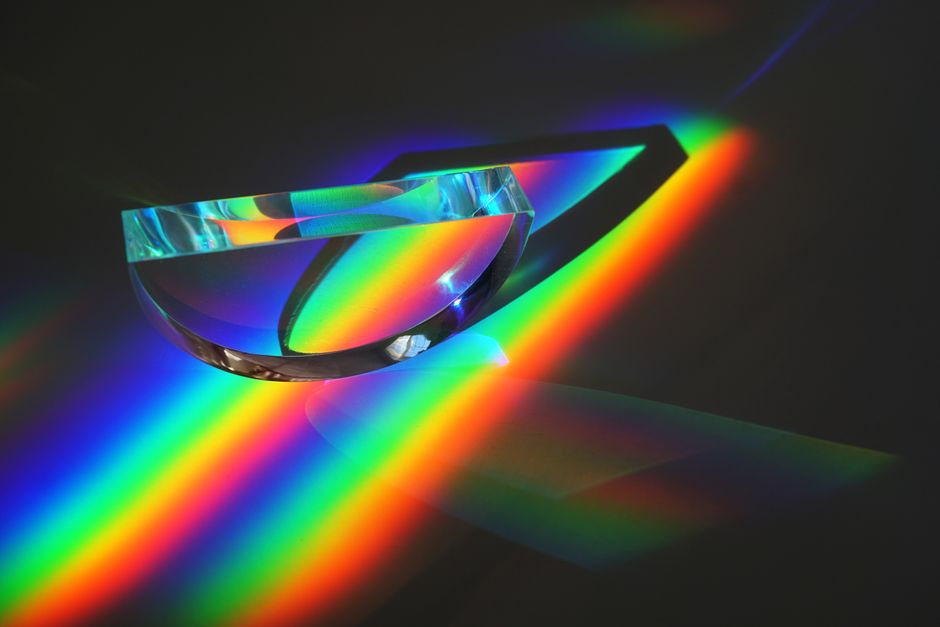
Refraction is the phenomenon where a light ray changes its direction as it passes from one transparent medium to another. This happens because light travels at different speeds in different media.

A colorful spectrum of light refracted through a glass prism creating a rainbow effect.
Photo by Design Bits on Pexels

Read full note →

Refraction at Spherical Surfaces and Lenses

When light travels from one transparent medium to another through a spherical surface, it bends. This bending is called refraction. The key here is that the surface is curved, not flat like a window pane.

We have a formula to describe this:

$$ \frac{n_2}{v} - \frac{n_1}{u} = \frac{n_2 - n_1}{R} $$

Read full note →