Urbanization and Environmental Change
From the Environment science curriculum
TL;DR
Urbanization, the shift of populations from rural to urban areas, significantly alters natural environments. This process leads to habitat loss, increased pollution, and changes in local climates. Understanding these impacts is crucial for developing sustainable urban planning strategies.
1. The Mental Model
Think of a city as a hungry, growing organism constantly consuming resources and expanding its footprint. This growth transforms the natural landscape around it, creating both opportunities and environmental challenges.
2. The Core Material
Urbanization is a global trend where cities grow in size and population. This transformation from natural landscapes (like forests or farmlands) to built environments (like buildings, roads, and infrastructure) has profound environmental consequences.
Land Use Change and Habitat Loss

Photo by Tom Fisk on Pexels
As cities expand, they convert natural habitats into urban areas. This leads to habitat fragmentation (breaking large habitats into smaller, isolated pieces) and habitat loss, directly impacting biodiversity. Animals lose their homes, migration routes are disrupted, and many species cannot adapt to urban conditions, leading to population declines or local extinctions.
Resource Consumption and Pollution

Photo by Pixabay on Pexels
Cities are major consumers of resources. They demand large amounts of water, energy, and raw materials for construction and daily operations. This high consumption generates significant waste (solid waste, wastewater) and pollution (air, water, noise, light).
* Air pollution: From vehicles, industries, and energy generation.
* Water pollution: From industrial discharge, sewage, and urban runoff containing chemicals and waste.
* Noise and light pollution: Disrupts wildlife behavior and human sleep patterns.
Urban Heat Island Effect
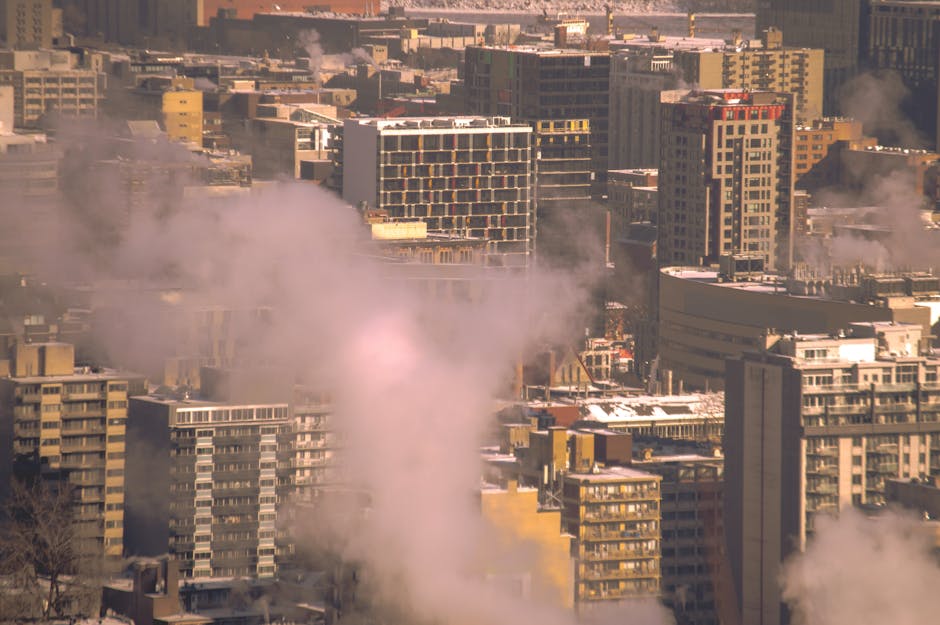
Photo by Lany-Jade Mondou on Pexels
Paved surfaces (roads, sidewalks), buildings, and reduced vegetation in urban areas absorb and retain more solar radiation than natural landscapes. This causes urban temperatures to be significantly warmer than surrounding rural areas, a phenomenon known as the Urban Heat Island (UHI) effect. UHI increases energy demand for cooling, worsens air quality, and can impact human health.
Changes in Hydrology

Photo by quang vinh on Pexels
Urban development alters natural water cycles. Impermeable surfaces like concrete and asphalt prevent rainwater from infiltrating the ground. This increases surface runoff, leading to more frequent and severe flooding during heavy rains, and reduces groundwater recharge. It also carries pollutants into waterways.
Here's how urbanization typically unfolds environmentally:
graph TD
    A["Population Growth & Migration"] --> B["Increased Demand for Space & Resources"]
    B --> C["Land Conversion (Natural to Built)"]
    C --> D1["Habitat Loss & Fragmentation"]
    C --> D2["Reduced Green Spaces & Tree Cover"]
    D1 --> E1["Biodiversity Decline"]
    D2 --> E2["Urban Heat Island Effect"]
    B --> F1["Higher Energy Consumption"]
    B --> F2["More Water Consumption"]
    B --> F3["Increased Waste Generation"]
    F1 --> G1["Air Pollution (GHGs, particulates)"]
    F2 --> G2["Water Scarcity & Pollution"]
    F3 --> G3["Landfill Issues & Water Contamination"]
    C --> H["More Impermeable Surfaces (Paving)"]
    H --> I1["Increased Stormwater Runoff"]
    H --> I2["Reduced Groundwater Recharge"]
    I1 --> J["Local Flooding & Water Pollution"]
    E1 & E2 & G1 & G2 & G3 & J --> K["Overall Environmental Degradation"]
3. Worked Example
Imagine a city planning to expand into an adjacent forested area. This expansion will convert 10 square kilometers of forest into residential neighborhoods and commercial zones.
Environmental Impact Analysis:
1. Habitat Loss: The 10 km² forest was home to various bird species, small mammals, and insects. These species will lose their habitat, leading to displacement, potential mortality, and reduced biodiversity in the region.
2. Increased Runoff: The forest's soil absorbed rainwater. The new development will replace this with roofs, roads, and concrete. During a heavy storm, instead of absorbing, say, 70% of rainfall, the new urban area might absorb only 10%, sending the remaining 90% as runoff into local streams, potentially causing downstream flooding and carrying pollutants.
3. Urban Heat Island Effect: The removal of trees (which provide shade and cooling through evapotranspiration) and the introduction of heat-absorbing materials will increase the local temperature by several degrees Celsius compared to what it would have been if the forest remained. This means residents will use more air conditioning, increasing energy demand and associated emissions.
4. Key Takeaways
- Urbanization directly converts natural landscapes, causing significant habitat loss and fragmentation.
- Cities are hotspots for resource consumption (water, energy, materials) and generate large amounts of pollution (air, water, waste).
- The Urban Heat Island effect makes cities notably warmer than surrounding rural areas due to altered surfaces and reduced vegetation.
- Impermeable surfaces in urban areas disrupt natural water cycles, increasing runoff and potential for flooding.
- Understanding these impacts is fundamental for creating sustainable and resilient urban environments.
Common mistakes you should avoid:
* Assuming urban growth is inherently "bad" without considering potential for sustainable development.
* Underestimating the cumulative impact of many small urban changes over time.
* Focusing solely on visible pollution and ignoring less obvious impacts like habitat fragmentation or groundwater depletion.
* Believing that technology alone can solve all urban environmental problems without changes in policy or behavior.
5. Now Try It
Research a major city you are familiar with (e.g., your hometown or a nearby city). Identify one specific environmental challenge it faces that is directly related to urbanization (e.g., air quality, water scarcity, flooding, habitat loss). For that challenge, describe two ways the city is trying to mitigate or adapt to it.
Success looks like: You've clearly identified an urbanization-related environmental challenge for your chosen city and provided two distinct, real-world solutions or strategies being implemented to address it.
Frequently asked about Urbanization and Environmental Change
More from Environment science
Get the full Environment science curriculum
Clone the complete plan to your dashboard for unlimited AI-generated notes, practice quizzes, and a personalised revision schedule.
Save this course free