Human Population and Environmental Impact
From the Environment science curriculum
TL;DR
The sheer number of people on Earth, combined with how we live, profoundly impacts our environment. Our activities strain natural resources, lead to pollution, and alter ecosystems globally. Understanding these connections is crucial for finding sustainable solutions for our future.
1. The Mental Model
Think of Earth as a house with limited resources. As more people live in it and demand more things, the house's pantry empties faster, its waste bins overflow, and its air gets stuffier.
2. The Core Material
The relationship between human population and environmental impact is complex, but it can be largely understood through a few key concepts. It's not just about how many people there are, but also how much each person consumes and the technology they use.
A widely used model to understand this is the IPAT equation:
$$I = P \times A \times T$$
Where:
* I = Environmental Impact (e.g., resource depletion, pollution, biodiversity loss)
* P = Population (the number of people)
* A = Affluence (per capita consumption; how much each person consumes)
* T = Technology (the environmental impact per unit of consumption; how efficiently resources are used and how much waste is generated by the tech we use)
This equation shows that even if population growth slows, increased affluence or environmentally damaging technologies can still boost our overall impact. Conversely, even with a large population, if affluence is managed and technology is clean and efficient, impact can be lessened.
2.1 Population Growth Patterns

Photo by K on Pexels
Historically, human population growth was slow, but it accelerated dramatically after the Industrial Revolution due to advances in medicine, sanitation, and food production. This led to a demographic transition where birth rates initially remained high while death rates fell, causing rapid growth.
2.2 Resource Depletion

Photo by AGENCE MALD on Pexels
More people generally mean more demand for resources like water, food, energy, and raw materials.
* Water: Over-extraction for agriculture and industry leads to scarcity.
* Food: Increased demand requires more land, fertilizer, and pesticides, often leading to deforestation and soil degradation.
* Energy: Reliance on fossil fuels for energy contributes to climate change.
* Minerals/Timber: Extraction can cause habitat destruction and pollution.
2.3 Pollution and Waste

Photo by Collab Media on Pexels
Every human activity generates waste and pollution.
* Air Pollution: Industrial emissions, vehicle exhaust, and burning fossil fuels lead to smog, acid rain, and greenhouse gas emissions.
* Water Pollution: Agricultural runoff, industrial discharge, and untreated sewage contaminate water bodies, harming aquatic life and human health.
* Land Pollution: Landfills overflowing with municipal and industrial waste, and soil contamination from industrial activities.
2.4 Biodiversity Loss
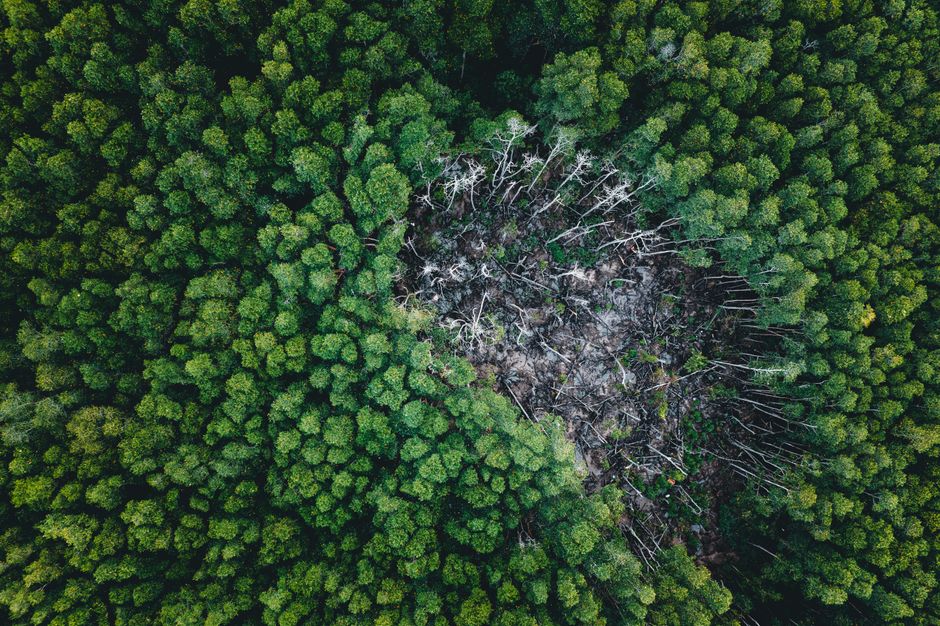
Photo by Pok Rie on Pexels
As human populations expand, natural habitats are converted for agriculture, urbanization, and resource extraction. This directly leads to habitat loss, fragmentation, and species extinction. Pollution and climate change further exacerbate this loss.
Here's a diagram illustrating the cause-and-effect chain of human population's impact:
graph TD
    A["Human Population Growth"] --> B["Increased Resource Demand"]
    A --> C["Increased Consumption & Waste"]
    B --> D["Habitat Destruction"]
    B --> E["Over-extraction (Water, Minerals, Timber)"]
    C --> F["Pollution (Air, Water, Soil)"]
    D --> G["Biodiversity Loss"]
    E --> H["Resource Scarcity"]
    F --> I["Climate Change"]
    F --> J["Ecosystem Degradation"]
    H --> K["Socio-economic Stress"]
    I --> G
    J --> G
3. Worked Example
Let's consider a city with a growing population.
* Scenario 1: Rapid Population Growth with Traditional Practices
* P (Population): Increases by 5% per year.
* A (Affluence): Stays constant, but overall consumption rises due to more people.
* T (Technology): Remains old and inefficient (e.g., coal power plants, lots of plastic packaging, high water usage per household).
* Resulting Impact (I): Significant increase in air pollution, larger landfills, increased demand for freshwater leading to rationing, and clearing of surrounding natural areas for housing and food production. The city's ecological footprint expands rapidly.
- Scenario 2: Stabilized Population Growth with Sustainable Practices
- P (Population): Growth slows to 1% per year.
- A (Affluence): Per capita consumption is managed through policies promoting reuse and reduction.
- T (Technology): Investment in renewable energy (solar, wind), advanced waste recycling, water-efficient appliances, and sustainable agriculture.
- Resulting Impact (I): Even with a growing population, the overall environmental impact might stabilize or even decrease. Air quality improves, waste generation is significantly reduced, water resources are managed sustainably, and urban green spaces are preserved or expanded.
This example shows how technology and affluence (our choices and consumption patterns) can mediate the impact of population size.
4. Key Takeaways
- The IPAT equation helps us understand that environmental impact isn't just about population size but also affluence and technology.
- Rapid human population growth has historically led to increased demand for natural resources, often exceeding Earth's regenerative capacity.
- Our consumption patterns and production methods contribute significantly to pollution of air, water, and soil.
- Habitat loss and fragmentation, driven by human expansion and resource use, are major causes of global biodiversity loss.
- Climate change is a direct consequence of large-scale human activities, particularly greenhouse gas emissions from energy consumption.
- Sustainable development aims to meet present needs without compromising the ability of future generations to meet their own needs.
- Education, access to family planning, and technological innovation can help mitigate our environmental impact.
Common Mistakes to Avoid:
- Blaming only population: Focusing solely on population numbers ignores the critical roles of consumption patterns and technology in environmental impact.
- Ignoring per capita impact: Assuming everyone has the same environmental footprint, when affluence and lifestyle choices vary widely.
- Underestimating technological solutions: Overlooking how green technologies and efficient resource use can significantly reduce impact.
- Thinking environmental problems are isolated: Failing to see how issues like deforestation, water scarcity, and climate change are interconnected and influenced by population dynamics.
5. Now Try It
For 15 minutes, research the ecological footprint of your own country or a country you're interested in. Compare its total ecological footprint with its biocapacity (the ability of its ecosystems to produce resources and absorb waste). What factors (population, affluence, technology) seem to contribute most to the difference, if any? What is one specific policy or technological advancement that could help reduce this footprint? What success looks like: You should be able to identify your chosen country's ecological footprint and biocapacity, understand if it's in an "ecological deficit" or "surplus," and propose one concrete action for improvement based on the IPAT factors.
Frequently asked about Human Population and Environmental Impact
More from Environment science
Get the full Environment science curriculum
Clone the complete plan to your dashboard for unlimited AI-generated notes, practice quizzes, and a personalised revision schedule.
Save this course free