Foundations of Interior Design & History
From the Interior design curriculum
TL;DR
Interior design is about creating functional and aesthetically pleasing spaces that respond to human needs. Understanding its historical development reveals how styles and principles evolved to shape contemporary design. By learning core elements and principles, you'll gain the foundational vocabulary and skills to analyze and create effective designs.
1. The Mental Model
Think of interior design as solving a puzzle where the pieces are elements like color, line, and texture, and the rules are principles like balance and rhythm. History provides a playbook of past solutions and inspirations, showing you how different cultures and eras put these pieces together.
2. The Core Material
Interior design isn't just decorating; it's a discipline focused on enhancing the interior of a building to achieve a healthier and more aesthetically pleasing environment for the people using the space. It combines art and science to understand behavior, culture, and the needs of occupants.
Elements of Design

Photo by Jan van der Wolf on Pexels
These are the building blocks you use to create any interior space.
- Space: The area within a design. It can be two-dimensional (floor plan) or three-dimensional (the room itself). Good design balances positive (filled) and negative (empty) space.
- Line: Creates shape, form, and direction. Lines can be horizontal (stability), vertical (strength), diagonal (movement), or curved (softness).
- Form/Shape: The outline of a three-dimensional object or a two-dimensional area. Geometric forms are precise, while organic forms are more natural.
- Light: Essential for visibility and mood. It can be natural (sunlight) or artificial (fixtures), direct or indirect.
- Color: The most impactful element, influencing mood, perception of space, and temperature. It's defined by hue, saturation, and value.
- Texture: The perceived surface quality of an object. It can be tactile (felt) or visual (seen).
- Pattern: Repetition of a decorative motif. It adds visual interest and can be used on surfaces, textiles, or objects.
Principles of Design

Photo by Mikhail Nilov on Pexels
These are the rules or guidelines for how you arrange and combine the elements.
- Balance: Creates a feeling of equilibrium. Can be symmetrical (mirror image), asymmetrical (unequal but visually weighted), or radial (elements arranged around a central point).
- Emphasis: Creates a focal point, drawing attention to a specific area or object.
- Rhythm: Creates movement and flow through repetition, progression, or alternation of elements.
- Proportion and Scale: Relates to the size of elements in relation to each other and to the overall space. Proportion is about the harmonious relationship of parts, while scale is about how an object relates to a human body or its surroundings.
- Harmony/Unity: The feeling that all elements of a design belong together, creating a cohesive and complete look.
- Contrast: Juxtaposition of different elements (e.g., light and dark, rough and smooth) to create interest and break monotony.
graph TD
    A["Interior Design Foundations"] --> B["Elements of Design"]
    A --> C["Principles of Design"]
    A --> D["Historical Context"]

    B --> B1["Space"]
    B --> B2["Line"]
    B --> B3["Form/Shape"]
    B --> B4["Light"]
    B --> B5["Color"]
    B --> B6["Texture"]
    B --> B7["Pattern"]

    C --> C1["Balance"]
    C --> C2["Emphasis"]
    C --> C3["Rhythm"]
    C --> C4["Proportion & Scale"]
    C --> C5["Harmony/Unity"]
    C --> C6["Contrast"]

    D --> D1["Ancient Civilizations (Egypt, Greece, Rome)"]
    D --> D2["Medieval & Renaissance"]
    D --> D3["Baroque & Rococo"]
    D --> D4["Neoclassical & Victorian"]
    D --> D5["Arts & Crafts & Art Deco"]
    D --> D6["Modern & Contemporary"]
A Brief History of Interior Design
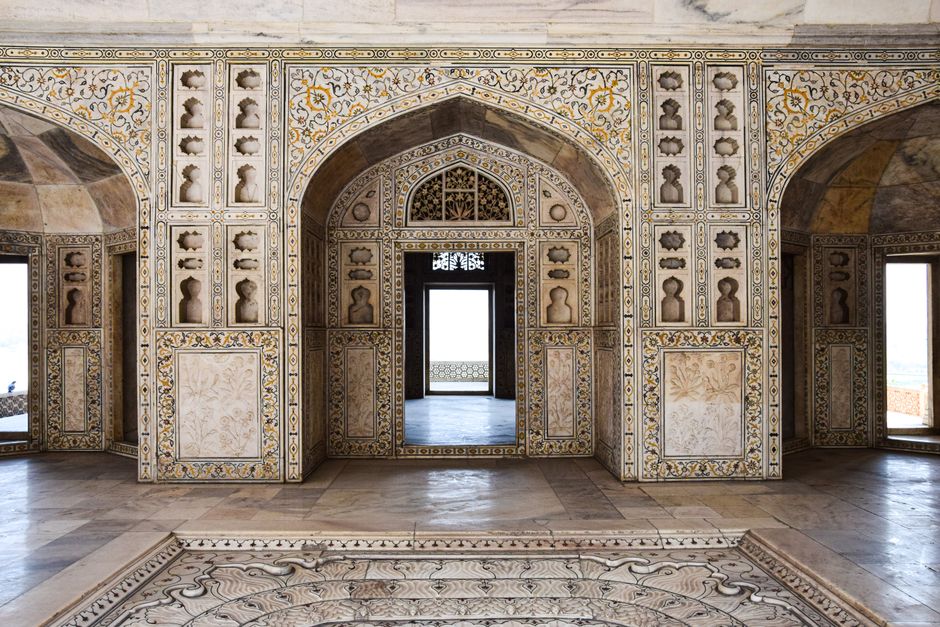
Photo by AXP Photography on Pexels
Understanding history isn't just for trivia; it shows you the evolution of ideas and influences.
- Ancient Civilizations (e.g., Egypt, Greece, Rome): Early examples focused on functionality, status, and connection to religion/nature. Think elaborate tomb murals, ordered Greek temples, and Roman frescoes.
- Medieval (5th-15th Century): Dominated by religious influence. Interiors were often dark, heavy, and functional in castles; later, cathedrals became more ornate.
- Renaissance (14th-17th Century): Revival of classical ideals (Greece and Rome). Emphasis on symmetry, proportion, and order. Grand scale, rich materials, and classical motifs were common.
- Baroque (17th-early 18th Century): Dramatic, opulent, and grand. Intricate ornamentation, rich colors, and elaborate details meant to impress.
- Rococo (18th Century): A lighter, more playful evolution of Baroque. Delicate curves, pastels, and asymmetrical designs. Focus on comfort and intimate spaces.
- Neoclassical (late 18th-early 19th Century): Reaction against Rococo's excess, returning to classical Greek and Roman simplicity, order, and dignity.
- Victorian (19th Century): Eclectic and often cluttered. Industrial Revolution allowed mass production. Dark woods, rich fabrics, and an abundance of decorative objects.
- Arts & Crafts (late 19th-early 20th Century): Reaction against industrialization. Emphasized handmade quality, simple forms, and natural materials.
- Art Deco (1920s-1930s): Glamorous, luxurious, and modern. Geometric patterns, streamlined forms, rich colors, and exotic materials.
- Modernism (mid-20th Century): "Form follows function." Clean lines, minimal ornamentation, open plans, and new materials like steel and glass.
- Contemporary (late 20th Century-Present): Often blends styles, focusing on comfort, sustainability, and personal expression. Can be minimalist, maximalist, or anything in between.
3. Worked Example
Imagine you're designing a small, modern living room. You want it to feel open, light, and functional, with a clear focal point.
- Problem: Small space, needs to feel larger and inviting.
- Elements Applied:
- Space: Keep furniture minimal and multi-functional to maximize negative space. Use light-colored walls and flooring to make the room feel expansive.
- Line: Employ clean, straight lines in furniture (e.g., a modern sofa, rectangular coffee table) to reinforce the contemporary feel and avoid visual clutter.
- Color: A neutral palette (grays, whites, light wood tones) for walls and large furniture. Introduce a pop of accent color (e.g., a vibrant teal cushion or artwork) for interest.
- Light: Maximize natural light with sheer curtains. Add recessed ceiling lights for general illumination and a floor lamp with a sculptural form for ambient light and visual interest.
- Texture: Combine smooth finishes (glass table) with soft textures (wool rug, linen throw) to add warmth without heaviness.
- Principles Applied:
- Emphasis: A unique piece of abstract art above the sofa serves as the focal point, drawing the eye.
- Balance: Use asymmetrical balance; for example, a larger sofa on one wall balanced by a smaller armchair and a tall plant on the opposite wall.
- Proportion & Scale: Ensure all furniture pieces are appropriately scaled for the small room – no oversized pieces that overwhelm the space.
- Harmony/Unity: The consistent use of modern forms and a neutral base color palette creates a cohesive, harmonious look.
- Contrast: The vibrant accent color provides contrast against the neutral background, making the focal point stand out. The mix of smooth and soft textures also adds contrast.
This approach uses fundamental elements and principles to solve a design challenge, creating a space that is both aesthetically pleasing and functional for its size.
4. Key Takeaways
- Interior design combines art and science to create functional and beautiful human-centered spaces.
- The seven elements of design (space, line, form, light, color, texture, pattern) are your basic building blocks.
- The six principles of design (balance, emphasis, rhythm, proportion/scale, harmony/unity, contrast) are the rules for arranging those blocks effectively.
- History shows how different cultures and eras interpreted these elements and principles, offering inspiration and context.
- Good design always considers both aesthetics and the practical needs of the people using the space.
- Understanding these foundations gives you a framework to analyze and articulate design choices.
Common Mistakes to Avoid:
- Overlooking the importance of negative space, leading to cluttered designs.
- Ignoring proper scale and proportion, resulting in furniture that feels too big or too small for a room.
- Using too many competing focal points, making a room feel chaotic.
- Forgetting about the impact of lighting, which can make or break a design.
5. Now Try It
Choose a room in your own home or apartment. For about 15 minutes, critically analyze it based on the elements and principles of design. Identify at least one element that is working well and one principle that seems to be missing or could be improved. For example, "The natural light is fantastic (element: light), but the furniture feels off-balance (principle: balance)." Think about how a change in color, arrangement, or the addition/removal of an object could improve it. Success looks like being able to clearly articulate specific design strengths and weaknesses using the vocabulary you've just learned.
Frequently asked about Foundations of Interior Design & History
Study this next
Get the full Interior design curriculum
Clone the complete plan to your dashboard for unlimited AI-generated notes, practice quizzes, and a personalised revision schedule.
Save this course free