Chemical Energy and Reactions
From the science curriculum
TL;DR
Chemical reactions involve breaking and forming chemical bonds, which either release or absorb energy. Energy changes determine if a reaction is spontaneous and how much useful work it can do. Understanding these energy changes helps predict and control chemical processes.
1. The Mental Model
Think of chemical bonds as tiny springs holding atoms together; breaking them takes energy, and forming new, stronger ones releases energy. The overall energy change tells you if a reaction will feel hot or cold, and if it's likely to happen on its own.
2. The Core Material
Chemical reactions are all about energy. When atoms rearrange to form new substances, chemical bonds are broken and new ones are formed. This process always involves changes in energy.
Energy Changes in Reactions

Photo by Jahra Tasfia Reza on Pexels
There are two main types of reactions based on their energy change:
- Exothermic Reactions: These reactions release energy, usually as heat or light, into the surroundings. This means the products have lower energy than the reactants. Think of burning wood – it releases heat and light.
- Endothermic Reactions: These reactions absorb energy, usually as heat, from the surroundings. This means the products have higher energy than the reactants. An example is an instant cold pack, which gets cold because it absorbs heat from its surroundings.
The energy difference between reactants and products is called the enthalpy change ($\Delta H$).
* For exothermic reactions, $\Delta H$ is negative (energy released).
* For endothermic reactions, $\Delta H$ is positive (energy absorbed).
Activation Energy

Photo by Ron Lach on Pexels
Even if a reaction is exothermic and releases energy, it often needs an initial 'push' to get started. This initial energy input is called activation energy. It's like pushing a ball over a small hill before it can roll down a long slope. Catalysts can lower this activation energy, making reactions happen faster without changing the overall energy released or absorbed.
Energy Diagrams

Photo by Diana ✨ on Pexels
You can visualize these energy changes using diagrams:
graph TD
    A["Reactants (Higher Energy)"] -->|Activation Energy| B["Transition State"]
    B --> C["Products (Lower Energy)"]
    C --> D{"Energy Released (Exothermic)"}
In this diagram, the reactants start at a higher energy level. They need to overcome the activation energy to reach the transition state, and then they fall to a lower energy level as products, releasing the excess energy. For an endothermic reaction, the products would be at a higher energy level than the reactants.
Bond Energy
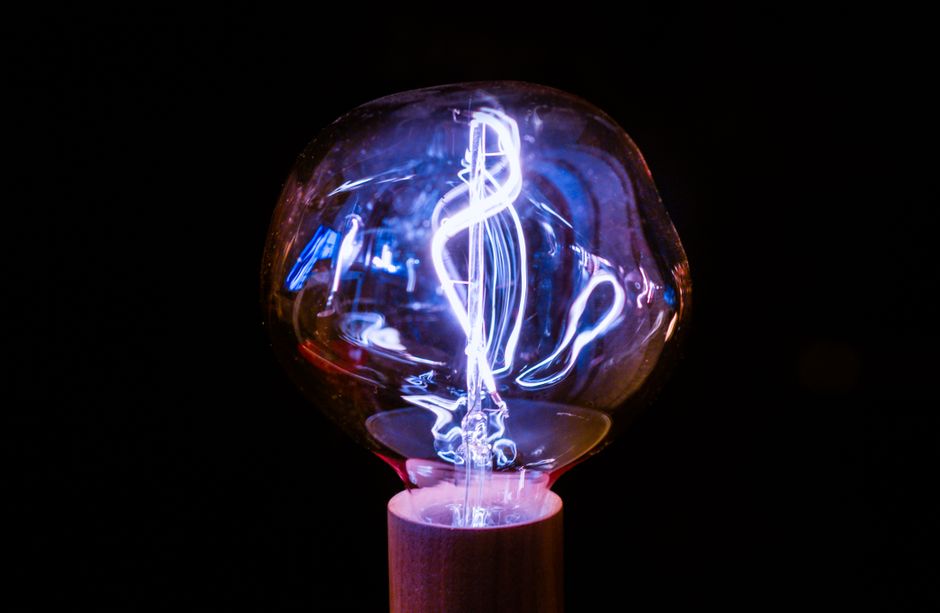
Photo by ClickerHappy on Pexels
The energy stored in a chemical bond is called bond energy.
* Breaking bonds requires energy.
* Forming bonds releases energy.
The net energy change ($\Delta H$) for a reaction is roughly the sum of energy required to break bonds minus the sum of energy released when new bonds are formed.
$\Delta H \approx \sum (\text{bond energies of bonds broken}) - \sum (\text{bond energies of bonds formed})$
If more energy is released by forming new bonds than is absorbed to break old bonds, the reaction is exothermic. If the opposite is true, it's endothermic.
3. Worked Example
Let's look at the combustion of methane (CH$_4$) with oxygen (O$_2$) to form carbon dioxide (CO$_2$) and water (H$_2$O).
CH$_4$(g) + 2O$_2$(g) $\rightarrow$ CO$_2$(g) + 2H$_2$O(g)
We'll use approximate bond energies (in kJ/mol):
* C-H: 413 kJ/mol
* O=O: 498 kJ/mol
* C=O: 799 kJ/mol (in CO$_2$)
* O-H: 463 kJ/mol
Bonds Broken (Energy Input):
* In CH$_4$: 4 x C-H bonds = 4 x 413 kJ/mol = 1652 kJ/mol
* In 2O$_2$: 2 x O=O bonds = 2 x 498 kJ/mol = 996 kJ/mol
Total energy input = 1652 + 996 = 2648 kJ/mol
Bonds Formed (Energy Released):
* In CO$_2$: 2 x C=O bonds = 2 x 799 kJ/mol = 1598 kJ/mol
* In 2H$_2$O: 4 x O-H bonds (each H$_2$O has 2 O-H bonds, so 2 * 2 = 4 total) = 4 x 463 kJ/mol = 1852 kJ/mol
Total energy released = 1598 + 1852 = 3450 kJ/mol
Net Energy Change ($\Delta H$):
$\Delta H = \text{Energy to break bonds} - \text{Energy released by forming bonds}$
$\Delta H = 2648 \text{ kJ/mol} - 3450 \text{ kJ/mol} = -802 \text{ kJ/mol}$
Since $\Delta H$ is negative, this reaction is exothermic, meaning it releases a significant amount of heat – which makes sense, as burning methane (natural gas) is used for heating!
4. Key Takeaways
- Chemical reactions involve breaking existing bonds and forming new ones.
- Exothermic reactions release energy (usually heat) and have a negative $\Delta H$.
- Endothermic reactions absorb energy (usually heat) and have a positive $\Delta H$.
- Activation energy is the initial energy input required to start a reaction.
- Bond energies help calculate the overall energy change: $\Delta H \approx \text{energy in (broken)} - \text{energy out (formed)}$.
- Catalysts speed up reactions by lowering activation energy, not by changing the overall $\Delta H$.
Common Mistakes to Avoid
- Confusing energy released with a positive $\Delta H$ (it's negative).
- Forgetting that breaking bonds requires energy and forming bonds releases energy.
- Thinking that catalysts are consumed in a reaction or change the final energy of products.
- Ignoring activation energy when considering if a reaction will happen.
5. Now Try It
Choose a simple reaction like the formation of water from hydrogen and oxygen (2H$_2$(g) + O$_2$(g) $\rightarrow$ 2H$_2$O(g)). Look up the approximate bond energies for H-H, O=O, and O-H bonds. Then, calculate the approximate $\Delta H$ for this reaction and determine if it's exothermic or endothermic.
Success looks like: A clear calculation showing the total energy absorbed to break bonds, the total energy released from forming bonds, and a final $\Delta H$ value with the correct sign indicating whether the reaction is exothermic or endothermic.
Frequently asked about Chemical Energy and Reactions
Study this next
Get the full science curriculum
Clone the complete plan to your dashboard for unlimited AI-generated notes, practice quizzes, and a personalised revision schedule.
Save this course free