Electrochemistry: Electrolytic Cells and Corrosion
From the Oxidation and reduction reaction curriculum
TL;DR
Electrolytic cells use external electrical energy to drive non-spontaneous redox reactions, forcing electrons to flow in the non-favored direction. This process is crucial for applications like electroplating and metal refining, but it's also fundamental to understanding corrosion, which is an undesirable electrochemical process. Corrosion, often seen as rust, is the deterioration of a material, usually a metal, due to its reaction with its environment.
1. The Mental Model
Imagine an electrolytic cell as a chemical reaction that needs a 'push' to happen, like pushing a ball uphill. You're supplying energy (electricity) to make something occur that wouldn't spontaneously. Corrosion is like that ball slowly rolling downhill, but it's a destructive process you usually want to prevent.
2. The Core Material
Electrolytic Cells
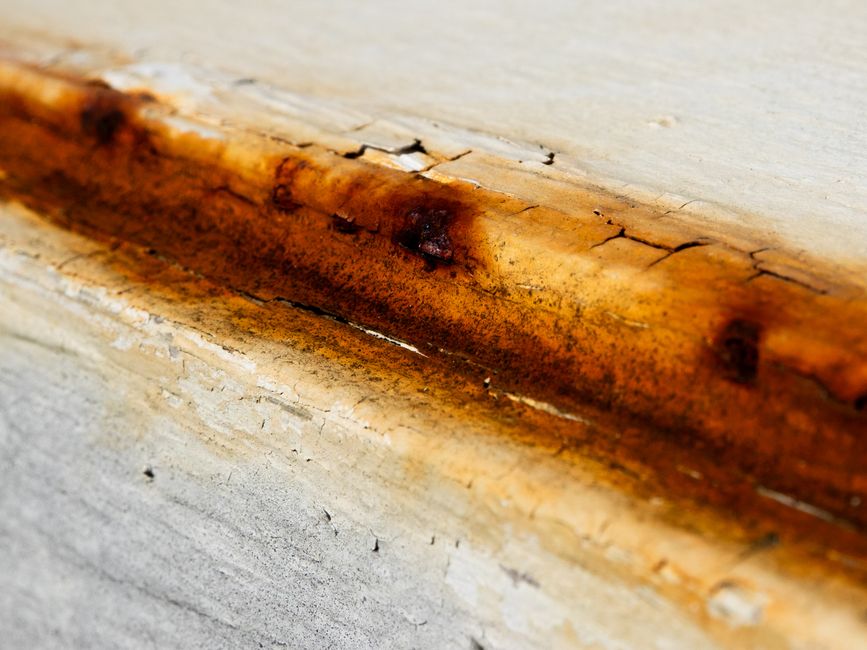
Photo by Lara Burley on Pexels
Unlike galvanic (voltaic) cells, which produce electricity from spontaneous reactions, electrolytic cells consume electricity to drive non-spontaneous redox reactions. This means the overall cell potential ($\text{E}^\circ_\text{cell}$) for an electrolytic cell is negative.
Here's how it works:
* An external power source (like a battery) provides the electrical energy.
* The anode is still where oxidation occurs, but in an electrolytic cell, it's connected to the positive terminal of the power source. This positive charge attracts anions and repels electrons produced during oxidation.
* The cathode is still where reduction occurs, but it's connected to the negative terminal of the power source. This negative charge attracts cations and supplies electrons for reduction.
* Electrons flow from the anode to the cathode through the external circuit, driven by the external power source.
* Ions in the electrolyte migrate to maintain charge neutrality.
Key difference: In galvanic cells, the anode is negative and the cathode is positive. In electrolytic cells, the anode is positive and the cathode is negative. Think of it as forcing the electrons to go where they don't want to spontaneously.
A common application is electrolysis of molten NaCl:
* At the anode (positive): $2\text{Cl}^- \text{(l)} \rightarrow \text{Cl}_2 \text{(g)} + 2\text{e}^-$ (Oxidation)
* At the cathode (negative): $2\text{Na}^+ \text{(l)} + 2\text{e}^- \rightarrow 2\text{Na (l)}$ (Reduction)
* Overall: $2\text{NaCl (l)} \rightarrow 2\text{Na (l)} + \text{Cl}_2 \text{(g)}$
Corrosion
Corrosion is the natural process that converts a refined metal into a more stable form, such as its oxide, hydroxide, or sulfide. It's essentially an unwanted electrochemical reaction. The most common example is the rusting of iron.
For corrosion to occur, you typically need:
1. Anode: The metal that gets oxidized (e.g., iron).
2. Cathode: Another part of the metal or a different, less active metal where reduction occurs (e.g., oxygen reduction).
3. Electrolyte: A medium that conducts ions (e.g., water, moisture, salt solution).
4. Electrical connection: The anode and cathode must be in electrical contact.
For iron rusting:
* Anode (Oxidation of iron): $\text{Fe (s)} \rightarrow \text{Fe}^{2+} \text{(aq)} + 2\text{e}^-$
* Cathode (Reduction of oxygen, in presence of water): $\text{O}_2 \text{(g)} + 2\text{H}_2\text{O (l)} + 4\text{e}^- \rightarrow 4\text{OH}^- \text{(aq)}$
* The $\text{Fe}^{2+}$ then reacts with $\text{OH}^-$ and more oxygen to form hydrated iron(III) oxide ($\text{Fe}_2\text{O}_3 \cdot n\text{H}_2\text{O}$), which is rust.
Here's a diagram showing the basic process in an electrolytic cell:
graph TD
    A["External Power Supply (Battery)"]
    B["Anode (Positive electrode)"]
    C["Cathode (Negative electrode)"]
    D["Electrolyte (Molten Salt / Solution)"]
    E["Oxidation (at Anode)"]
    F["Reduction (at Cathode)"]
    G["Anions"]
    H["Cations"]

    A -- "Forces electrons" --> B
    B -- "Electrons released" --> A
    A -- "Electrons supplied" --> C
    C -- "Electrons consumed" --> A

    B -- "Oxidation products" --> D
    C -- "Reduction products" --> D

    D -- "Anions move to" --> B
    D -- "Cations move to" --> C

    B -- "Process" --> E
    C -- "Process" --> F

    subgraph External Circuit
        A --- B
        A --- C
    end

    subgraph Electrochemical Cell
        B --- D
        C --- D
    end
Preventing Corrosion
Photo by Lara Burley on Pexels
- Protective coatings: Paint, grease, plastic act as barriers.
- Galvanizing: Coating iron with a more reactive metal, usually zinc. Zinc corrodes preferentially, acting as a "sacrificial anode."
- $\text{Zn (s)} \rightarrow \text{Zn}^{2+} \text{(aq)} + 2\text{e}^-$ (Zinc oxidizes instead of iron)
- Cathodic protection: Connecting the metal to be protected to a more easily oxidized metal (sacrificial anode) or an external power source that forces the metal to act as a cathode.
- Alloying: Mixing metals (e.g., stainless steel, which contains chromium).
3. Worked Example
Let's consider the electrolysis of an aqueous solution of $\text{CuCl}_2$.
1. Identify possible species:
* From $\text{CuCl}_2$: $\text{Cu}^{2+}$ and $\text{Cl}^-$
* From water: $\text{H}_2\text{O}$, $\text{H}^+$, $\text{OH}^-$
2. Possible oxidation reactions (at anode, positive electrode):
* $2\text{Cl}^- \text{(aq)} \rightarrow \text{Cl}_2 \text{(g)} + 2\text{e}^- \quad (\text{E}^\circ = +1.36 \text{ V})$
* $2\text{H}_2\text{O (l)} \rightarrow \text{O}_2 \text{(g)} + 4\text{H}^+ \text{(aq)} + 4\text{e}^- \quad (\text{E}^\circ = +1.23 \text{ V})$
* Note: The actual potential for $\text{O}_2$ evolution is often higher due to overpotential. Generally, the species that is easier to oxidize (less positive or more negative standard oxidation potential, or less positive reduction potential) will react. Here, with overpotential, $\text{Cl}^-$ is more likely to oxidize.
3. Possible reduction reactions (at cathode, negative electrode):
* $\text{Cu}^{2+} \text{(aq)} + 2\text{e}^- \rightarrow \text{Cu (s)} \quad (\text{E}^\circ = +0.34 \text{ V})$
* $2\text{H}_2\text{O (l)} + 2\text{e}^- \rightarrow \text{H}_2 \text{(g)} + 2\text{OH}^- \text{(aq)} \quad (\text{E}^\circ = -0.83 \text{ V at pH 7})$
* The species that is easier to reduce (more positive standard reduction potential) will react. Copper(II) ions are much easier to reduce than water.
4. Overall reaction:
* Anode (Oxidation): $2\text{Cl}^- \text{(aq)} \rightarrow \text{Cl}_2 \text{(g)} + 2\text{e}^-$
* Cathode (Reduction): $\text{Cu}^{2+} \text{(aq)} + 2\text{e}^- \rightarrow \text{Cu (s)}$
* Overall: $\text{CuCl}_2 \text{(aq)} \rightarrow \text{Cu (s)} + \text{Cl}_2 \text{(g)}$
In this example, copper metal would deposit on the cathode, and chlorine gas would bubble off the anode.
4. Key Takeaways
- Electrolytic cells use external electrical energy to drive non-spontaneous redox reactions.
- In electrolytic cells, the anode is positive (oxidation) and the cathode is negative (reduction).
- Corrosion is the undesirable electrochemical deterioration of materials, typically metals.
- Rusting of iron requires iron, oxygen, and water, acting as an electrochemical cell.
- Sacrificial anodes and cathodic protection are common methods to prevent corrosion.
- Electrolysis has practical applications in metal refining, electroplating, and chemical production.
Common mistakes to avoid:
* Confusing anode/cathode polarity between galvanic and electrolytic cells – remember the power source dictates the electrolytic polarity.
* Forgetting that electrolytic reactions are non-spontaneous and require energy input.
* Not considering all possible species (especially water) when predicting electrolysis products in aqueous solutions.
* Assuming corrosion only happens with iron; many metals corrode, just differently (e.g., tarnishing of silver).
5. Now Try It
You're setting up an electroplating bath to deposit silver onto a spoon. You have an aqueous solution of $\text{AgNO}_3$, a silver electrode, and a spoon. Describe how you would set up the electrolytic cell (which electrode is the anode/cathode, their polarity, and what reactions occur at each), and explain why this process would deposit silver on the spoon. What would you use for your external power source?
Success looks like: Correctly identifying the anode (silver electrode, positive, where silver is oxidized), cathode (spoon, negative, where silver ions are reduced to silver metal), and the role of the external power source in driving this non-spontaneous deposition.
Frequently asked about Electrochemistry: Electrolytic Cells and Corrosion
Study this next
Get the full Oxidation and reduction reaction curriculum
Clone the complete plan to your dashboard for unlimited AI-generated notes, practice quizzes, and a personalised revision schedule.
Create Free Account