Organic Chemistry Fundamentals
From the sec chemistry curriculum
TL;DR
Organic chemistry is the study of carbon compounds, which form the basis of all known life. These compounds are incredibly diverse due to carbon's unique bonding abilities, primarily forming stable covalent bonds with itself and other non-metals. Understanding functional groups and isomers is key to predicting the properties and reactions of organic molecules.
1. The Mental Model
Think of carbon as LEGO bricks. It can connect in countless ways (chains, rings, branches) and attach different "accessories" (other atoms/groups) to build an incredible array of structures, each with unique properties.
2. The Core Material
Organic chemistry focuses on molecules containing carbon. Carbon's special ability to form four strong covalent bonds, especially with other carbon atoms, leads to the vast diversity of organic compounds.
What Makes Carbon Special?

Photo by Malte Luk on Pexels
Carbon has 4 valence electrons, allowing it to form 4 covalent bonds. This means it can:
* Form single, double, or triple bonds.
* Bond with other carbon atoms to create long chains, branched structures, or rings.
* Bond with other non-metals like hydrogen, oxygen, nitrogen, sulfur, and halogens.
Hydrocarbons: The Simplest Organic Molecules

Photo by Steve A Johnson on Pexels
These are compounds made only of carbon and hydrogen.
* Alkanes: Contain only carbon-carbon single bonds. They're "saturated" because they have the maximum number of hydrogens possible. They're generally unreactive. (e.g., methane CH₄, ethane C₂H₆)
* Alkenes: Contain at least one carbon-carbon double bond. They're "unsaturated" and more reactive due to the double bond. (e.g., ethene C₂H₄)
* Alkynes: Contain at least one carbon-carbon triple bond. Also "unsaturated" and very reactive. (e.g., ethyne C₂H₂)
Functional Groups: The "Reactive Parts"
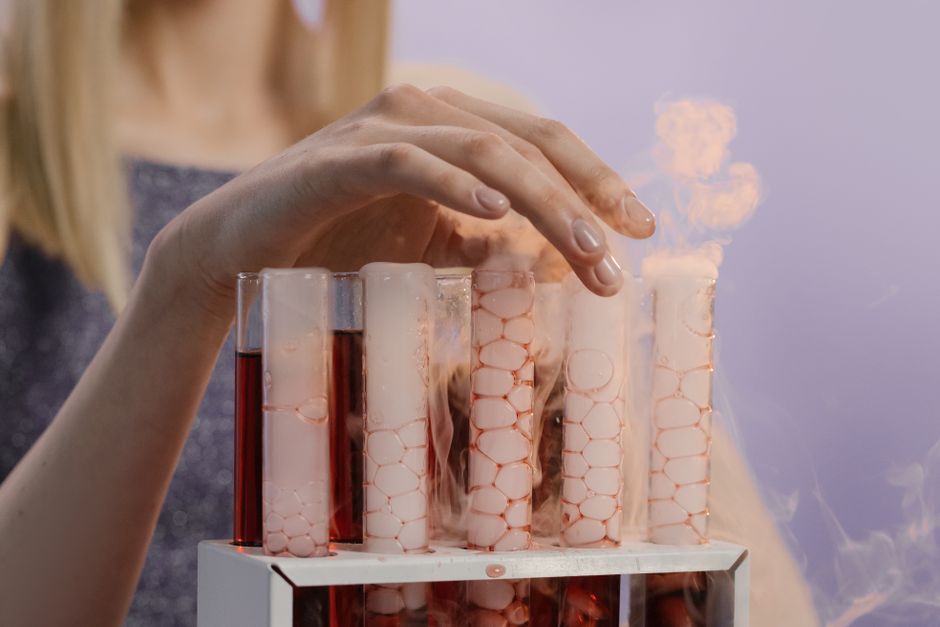
Photo by cottonbro studio on Pexels
A functional group is a specific arrangement of atoms within a molecule that determines its characteristic chemical reactions. When you see a functional group, you can often predict how the molecule will behave.
graph TD
    A["Organic Compound"] --> B["Hydrocarbons"]
    A --> C["Compounds with Functional Groups"]

    B --> B1["Alkanes (C-C single bonds)"]
    B --> B2["Alkenes (C=C double bonds)"]
    B --> B3["Alkynes (C≡C triple bonds)"]

    C --> C1["Alcohols (-OH)"]
    C --> C2["Carboxylic Acids (-COOH)"]
    C --> C3["Esters (-COO-)"]
    C --> C4["Amines (-NH₂)"]
    C --> C5["Halogenoalkanes (-X, where X is F, Cl, Br, I)"]
- Alcohols (-OH): The hydroxyl group makes molecules polar and allows for hydrogen bonding, increasing boiling points and solubility in water.
- Carboxylic Acids (-COOH): The carboxyl group makes these compounds acidic.
- Esters (-COO-): Formed from alcohols and carboxylic acids; often have fruity smells.
- Amines (-NH₂): Nitrogen-containing groups that are typically basic.
- Halogenoalkanes (-X, where X = F, Cl, Br, I): Halogen atoms attached to an alkane chain. The halogen's electronegativity makes the C-X bond polar and reactive.
Isomers: Same Formula, Different Structure
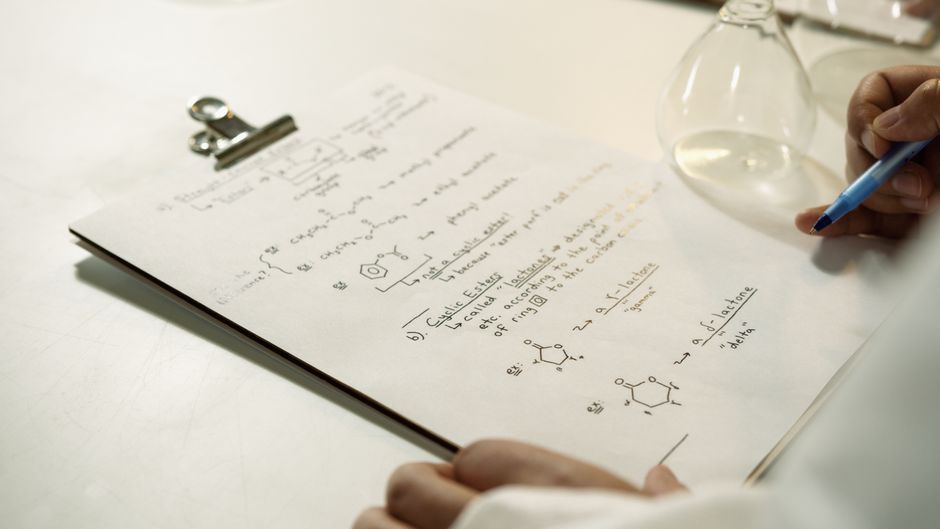
Photo by Artem Podrez on Pexels
Isomers are molecules that have the same molecular formula but different structural arrangements of atoms. This difference in arrangement leads to different physical and chemical properties.
- Structural Isomers (Constitutional Isomers): Atoms are connected in a different order.
- Chain isomers: Different arrangement of the carbon skeleton (e.g., straight vs. branched).
- Positional isomers: Functional group or substituent is in a different position on the carbon chain.
- Functional group isomers: Different functional groups entirely.
3. Worked Example
Let's consider the molecular formula C₄H₁₀. Can you draw all possible structural isomers?
-
Start with a straight chain:
- CH₃-CH₂-CH₂-CH₃ (Butane) - All carbons are in a continuous chain.
-
Try branching the chain:
- Take one carbon from the end of the straight chain and move it to act as a branch on the second carbon.
- CH₃-CH(CH₃)-CH₃ (2-methylpropane, also known as isobutane) - The longest continuous chain is 3 carbons, with a methyl group on the second carbon.
These are the only two structural isomers for C₄H₁₀. They both have the same molecular formula (C₄H₁₀) but different structures, leading to slightly different boiling points and other properties.
4. Key Takeaways
- Carbon's ability to form four strong covalent bonds and bond with itself creates the vast diversity of organic compounds.
- Hydrocarbons (alkanes, alkenes, alkynes) are the simplest organic molecules, differing by the types of carbon-carbon bonds present.
- Functional groups are specific atomic arrangements that dictate a molecule's chemical reactivity and properties.
- Isomers have the same molecular formula but different structural arrangements, leading to different properties.
- Understanding bonding (single, double, triple) is crucial for classifying hydrocarbons.
- Recognizing common functional groups is essential for predicting organic reactions.
- The concept of isomerism highlights that structure is as important as formula in organic chemistry.
Common mistakes you should avoid:
* Forgetting carbon always forms four bonds – this is key to drawing correct structures.
* Confusing alkanes, alkenes, and alkynes – remember the number of bonds between carbons.
* Not being able to identify common functional groups by their structure.
* Thinking all molecules with the same formula are the same – remember isomers exist!
5. Now Try It
Draw all possible structural isomers for the molecular formula C₃H₈O. For each isomer, identify the functional group present and state its name (e.g., alcohol, ether).
What success looks like: You should be able to draw three distinct structures, each correctly showing 3 carbons, 8 hydrogens, and 1 oxygen, and correctly identifying the functional group for each. (Hint: Think about where the oxygen can go and what groups it can form).
Frequently asked about Organic Chemistry Fundamentals
Study this next
Get the full sec chemistry curriculum
Clone the complete plan to your dashboard for unlimited AI-generated notes, practice quizzes, and a personalised revision schedule.
Create Free Account