Scientific Revolution: Astronomy and Innovation
From the The renaissance curriculum
Scientific Revolution: Astronomy and Innovation
TL;DR
The Scientific Revolution in astronomy dramatically shifted humanity's understanding of the universe, moving from an Earth-centered view to a Sun-centered one. This change was driven by new observations and mathematical models, paving the way for modern science. Key figures like Copernicus, Galileo, and Kepler challenged old ideas and introduced innovative tools and methods.
1. The Mental Model
Imagine you're trying to figure out how a complex clock works without being able to open it up. You can only watch the hands move. For centuries, people thought Earth was the fixed center. Then, brilliant thinkers proposed the clock's center was actually the Sun, which explained the hand movements much more elegantly.
2. The Core Material
Before the Scientific Revolution (roughly 1500s-1700s), the prevailing view of the cosmos was geocentric, meaning Earth was believed to be the unmoving center of the universe. This model, largely based on Aristotle and Ptolemy, seemed to fit everyday observations and religious doctrines. However, some planetary movements, especially retrograde motion (planets appearing to move backward in the sky), were hard to explain without incredibly complex and clunky systems of "epicycles" (small circles within larger circles).
The Copernican Revolution: A Sun-Centered Universe
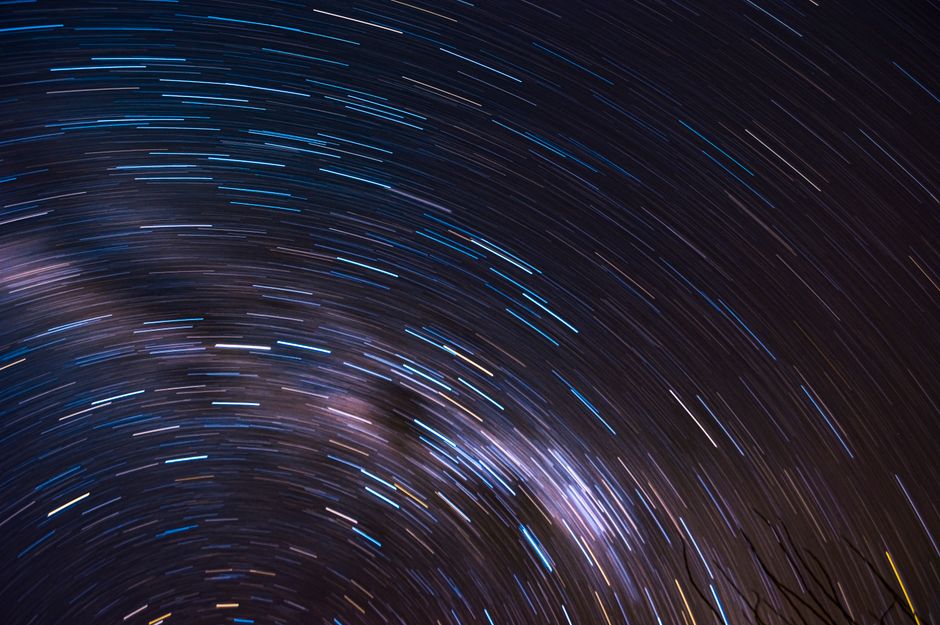
Photo by Francis Seura on Pexels
Nicolaus Copernicus (1473-1543) was a Polish astronomer who dared to challenge this established view. He proposed a heliocentric model, placing the Sun at the center of the solar system with Earth and other planets revolving around it. His monumental work, De Revolutionibus Orbium Coelestium (On the Revolutions of the Heavenly Spheres), published in 1543, was revolutionary. While it simplified the explanation of retrograde motion, Copernicus still used perfect circles for orbits, which introduced other inaccuracies.
Tycho Brahe: Precise Observations
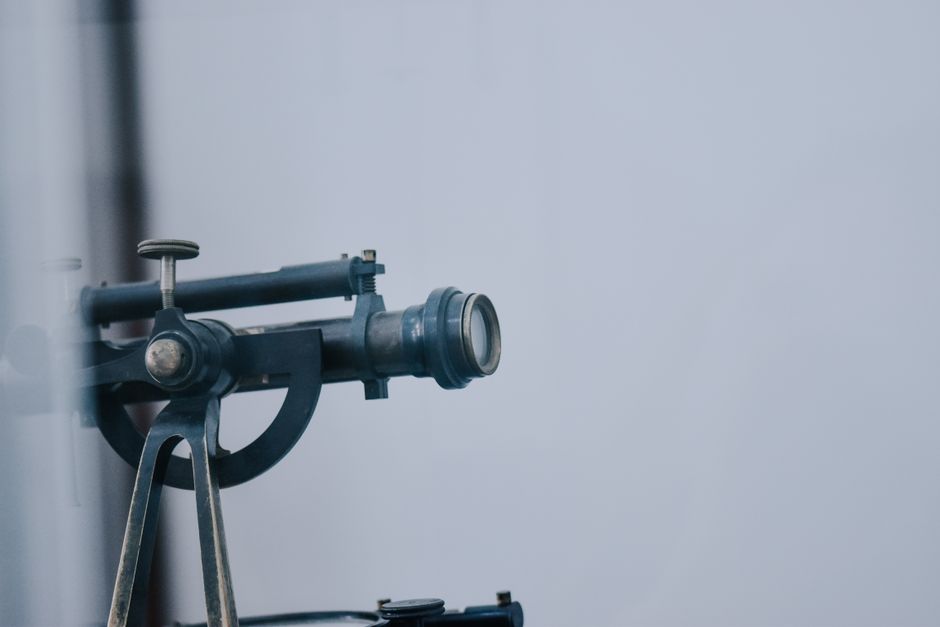
Photo by Diana ✨ on Pexels
Tycho Brahe (1546-1601) was a Danish nobleman and astronomer who, without telescopes (which hadn't been invented yet), built an observatory and made the most accurate and comprehensive naked-eye astronomical observations of his time. His meticulous data on planetary positions, spanning decades, became invaluable. Although he attempted a hybrid geo-heliocentric model (planets orbited the Sun, but the Sun orbited Earth), his data laid the groundwork for future discoveries.
Johannes Kepler: Laws of Planetary Motion
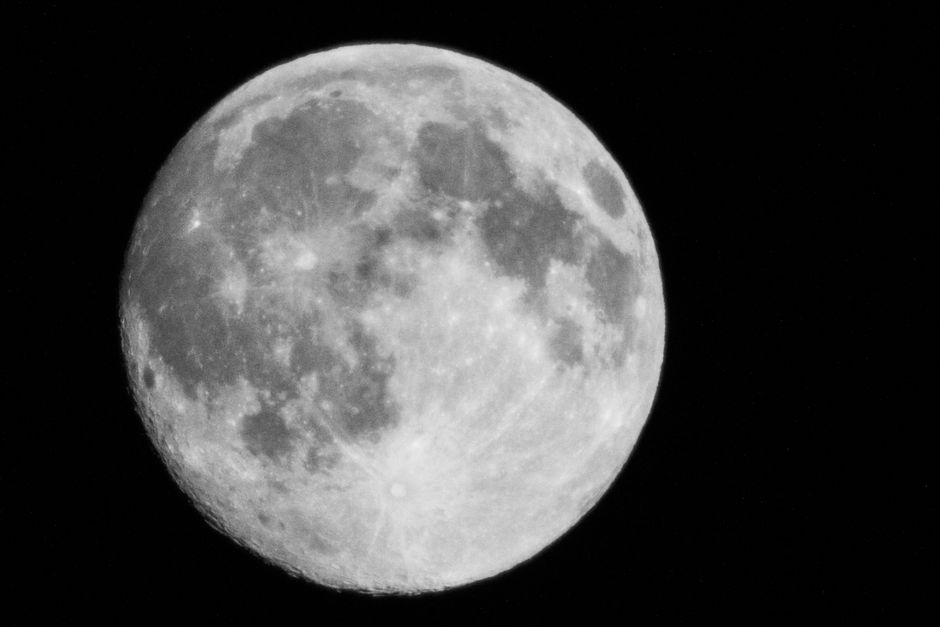
Photo by Luke Greenwood 💫 on Pexels
Brahe's assistant, Johannes Kepler (1571-1630), inherited his vast data. Kepler, a German mathematician and astronomer, spent years analyzing Mars's orbit and eventually formulated his three Laws of Planetary Motion:
1. Planets orbit the Sun in ellipses, not perfect circles, with the Sun at one focus.
2. A line connecting a planet to the Sun sweeps out equal areas in equal times (meaning planets move faster when closer to the Sun).
3. The square of a planet's orbital period is proportional to the cube of the semi-major axis of its orbit (a mathematical relationship between a planet's distance from the Sun and the time it takes to orbit).
Kepler's laws provided a mathematically elegant and accurate description of planetary movement, fundamentally breaking with the ancient ideal of circular orbits.
Galileo Galilei: The Telescope and Empirical Evidence
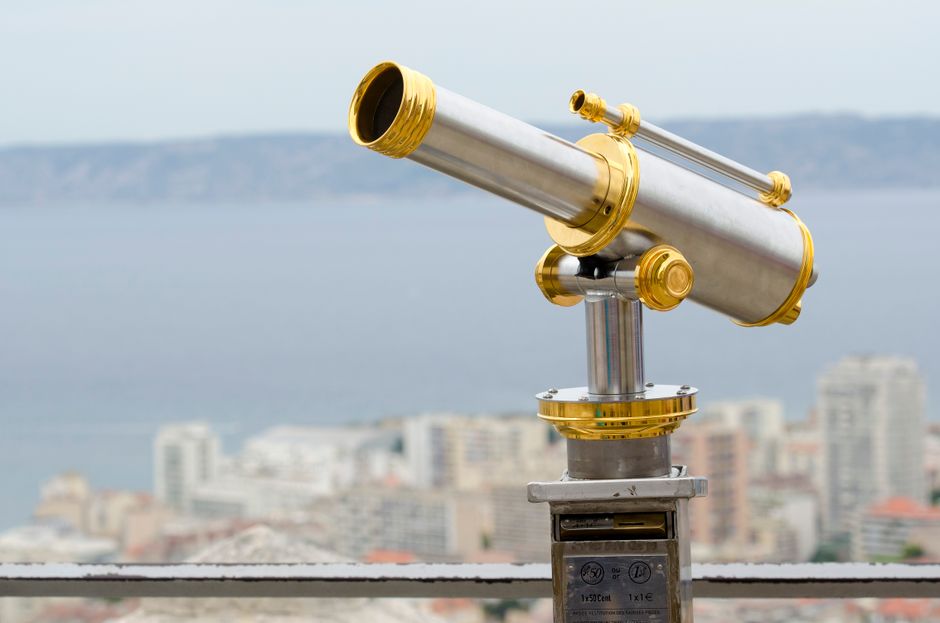
Photo by Jan van der Wolf on Pexels
Galileo Galilei (1564-1642), an Italian physicist and astronomer, is often called the "father of observational astronomy." He didn't invent the telescope, but he significantly improved it and was among the first to use it for astronomical observation. His discoveries provided crucial empirical evidence supporting the heliocentric model:
* Moons of Jupiter: He observed four moons orbiting Jupiter, demonstrating that not everything orbited Earth. This challenged the idea of Earth as the sole center of motion.
* Phases of Venus: He saw that Venus exhibited a full set of phases, just like the Moon. This could only be explained if Venus orbited the Sun, not Earth, and was illuminated by the Sun from different angles.
* Lunar Craters and Sunspots: His observations showed that the Moon was not a perfect, unblemished sphere, and the Sun had spots. This challenged the Aristotelian idea of perfect heavenly bodies.
Galileo's outspoken support for the Copernican system, backed by his observations, led to conflict with the Catholic Church, resulting in his trial and house arrest.
graph TD
    A["Ancient (Ptolemaic) Model"] --> B{"Problem: Retrograde Motion"};
    B --> C["Copernicus's Heliocentric Model (1543)"]
    C -- "Aimed to simplify, still used circles" --> D["Tycho Brahe's Meticulous Observations"]
    D -- "Data used by" --> E["Kepler's Laws of Planetary Motion (1609-1619)"]
    E -- "Elliptical orbits, mathematical precision" --> F["Galileo's Telescopic Observations (1609 onward)"]
    F -- "Moons of Jupiter, Phases of Venus, etc." --> G["Empirical Evidence for Heliocentrism"]
    G --> H["Shift from Geocentric to Heliocentric Worldview"];
    H --> I["Foundation for Newtonian Physics"];
Innovations Beyond Astronomy
The Scientific Revolution wasn't just about astronomy; it also fostered a new way of thinking – the scientific method. This involved observation, hypothesis, experimentation, and analysis. New instruments like the telescope, microscope, barometer, and pendulum clock emerged, expanding human senses and measurement capabilities. This era saw a move away from reliance on ancient authorities towards empirical evidence and mathematical reasoning.
3. Worked Example
Let's look at Kepler's Third Law. It states that the square of a planet's orbital period (T) is proportional to the cube of its average distance from the Sun (r). Mathematically, this is often written as $T^2 \propto r^3$, or $T^2 = k \cdot r^3$, where k is a constant.
Imagine you know Earth's orbital period is roughly 1 year, and its average distance from the Sun (Astronomical Unit or AU) is 1 AU. So, for Earth: $1^2 = k \cdot 1^3 \Rightarrow 1 = k \cdot 1 \Rightarrow k = 1$ (when using years for T and AU for r).
Now, let's find the orbital period of Mars. We know Mars's average distance from the Sun is about 1.52 AU. Using Kepler's Third Law with our constant $k=1$:
$T^2 = (1.52)^3$
$T^2 = 1.52 \times 1.52 \times 1.52$
$T^2 \approx 3.51$
$T = \sqrt{3.51}$
$T \approx 1.87$ years
So, Mars takes approximately 1.87 Earth years to orbit the Sun, a value very close to its actual orbital period. This simple calculation demonstrates the predictive power of Kepler's mathematical laws.
4. Key Takeaways
- The geocentric model, placing Earth at the center, was the dominant view before the Scientific Revolution.
- Copernicus proposed the heliocentric model, placing the Sun at the center, simplifying planetary motion explanations.
- Tycho Brahe provided vast amounts of precise astronomical data through meticulous naked-eye observations.
- Kepler used Brahe's data to formulate his three Laws of Planetary Motion, describing elliptical orbits and varying speeds.
- Galileo's telescopic observations of Jupiter's moons and Venus's phases offered strong empirical evidence for heliocentrism.
- The Scientific Revolution fostered the scientific method and led to the invention of crucial scientific instruments.
- This era fundamentally shifted human understanding of the cosmos, moving from philosophical speculation to empirical, data-driven science.
Common Mistakes to Avoid:
- Don't confuse who invented the telescope (Dutch lensmakers) with who first used it extensively for astronomy (Galileo).
- Don't think Copernicus proved heliocentrism; he proposed it as a simpler model, but still used perfect circles.
- Don't assume the shift was immediate or universally accepted; it was a gradual process with significant resistance.
- Don't forget that Brahe's extensive, accurate data was crucial for Kepler's later mathematical breakthroughs.
5. Now Try It
Spend 15 minutes researching how the concept of "retrograde motion" was explained in the geocentric (Ptolemaic) model using epicycles and deferents. Then, describe in your own words how the heliocentric model naturally explains retrograde motion without needing complex extra circles. What success looks like: You can clearly articulate the core difference in explanation between the two models.
Frequently asked about Scientific Revolution: Astronomy and Innovation
More from The renaissance
Get the full The renaissance curriculum
Clone the complete plan to your dashboard for unlimited AI-generated notes, practice quizzes, and a personalised revision schedule.
Create Free Account