beginner

The renaissance — 7-topic bundle

Comprehensive AI-generated study curriculum with 7 detailed note modules.

93 views 7 notes

Course Syllabus

  1. Introduction to the Renaissance and Humanism
  2. Renaissance Art: Characteristics and Techniques
  3. Master Artists of the Italian Renaissance
  4. Political Thought and Literature of the Renaissance
  5. The Northern Renaissance and its Distinctions
  6. Scientific Revolution: Astronomy and Innovation
  7. The Printing Press and its Impact

Study Notes

Master Artists of the Italian Renaissance

Free model

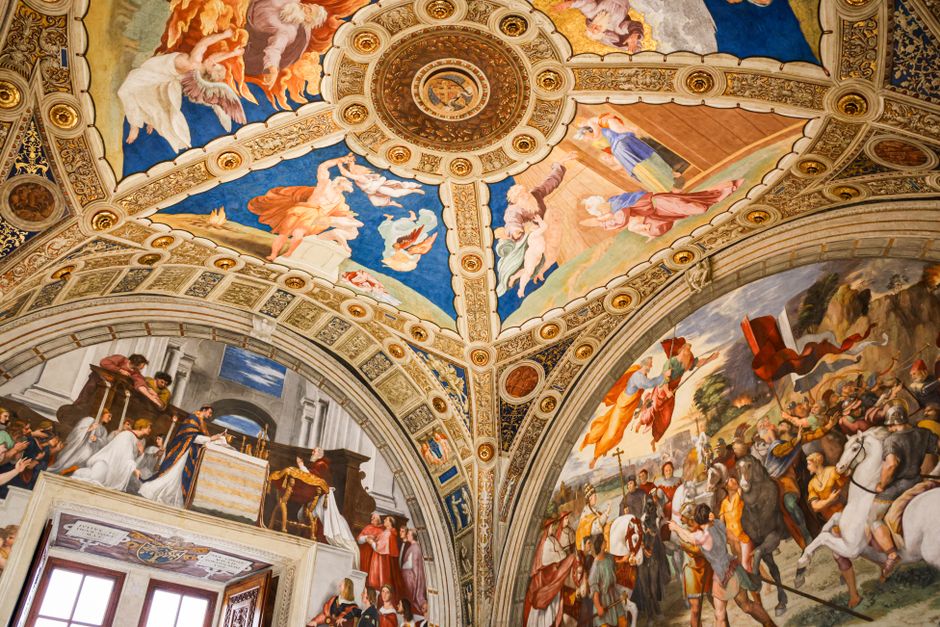
The Italian Renaissance (roughly 1400-1600) was a period of intense cultural and artistic innovation, deeply influenced by the rediscovery of classical Greek and Roman ideas. Patrons like the Medici family and the Popes heavily funded the arts, allowing artists to experiment and create. While many contributed, three figures stand out as true masters, defining the High Renaissance (circa 1490-1527): Leonardo da Vinci, Michelangelo Buonarroti, and Raphael Sanzio.

Read full note →

The Northern Renaissance and its Distinctions

Free model

The Renaissance is often thought of as a single event, but it manifested differently across Europe. While the Italian Renaissance (Florence, Rome, Venice) rediscovered classical antiquity and emphasized human potential, the Northern Renaissance, primarily in areas like Flanders, the Netherlands, Germany, and England, took on its own character.

Read full note →

The Printing Press and its Impact

Free model

Before the printing press, books were luxuries. Monks and scribes painstakingly copied texts, a process that was slow, expensive, and prone to errors. This meant books were rare, primarily owned by churches, wealthy nobles, and universities, limiting access to knowledge for the vast majority of people.

Read full note →

Scientific Revolution: Astronomy and Innovation

Free model

Before the Scientific Revolution (roughly 1500s-1700s), the prevailing view of the cosmos was geocentric, meaning Earth was believed to be the unmoving center of the universe. This model, largely based on Aristotle and Ptolemy, seemed to fit everyday observations and religious doctrines. However, some planetary movements, especially retrograde motion (planets appearing to move backward in the sky), were hard to explain without incredibly complex and clunky systems of "epicycles" (small circles within larger circles).

Read full note →