Historical Context and Origins of the Korean War
From the korean war curriculum
Historical Context and Origins of the Korean War
TL;DR
The Korean War started because of a complex mix of Cold War tensions, Korea's division after World War II, and internal Korean political conflicts. The Soviet Union and the United States backed opposing governments, creating a highly volatile situation. Ultimately, North Korea's invasion of the South in June 1950 ignited the full-scale conflict.
1. The Mental Model
Imagine a pressure cooker: World War II created the pot, the Cold War turned up the heat, and Korea's division was the lid clamped down, making an explosion inevitable. It wasn't just one country fighting another; it was a proxy battle in a much larger global struggle.
2. The Core Material
You're trying to understand why the Korean War happened. It wasn't a sudden event but the result of decades of historical forces, primarily the end of Japanese colonial rule, the division of Korea by major powers, and the escalating Cold War.
Japanese Colonial Rule (1910-1945)
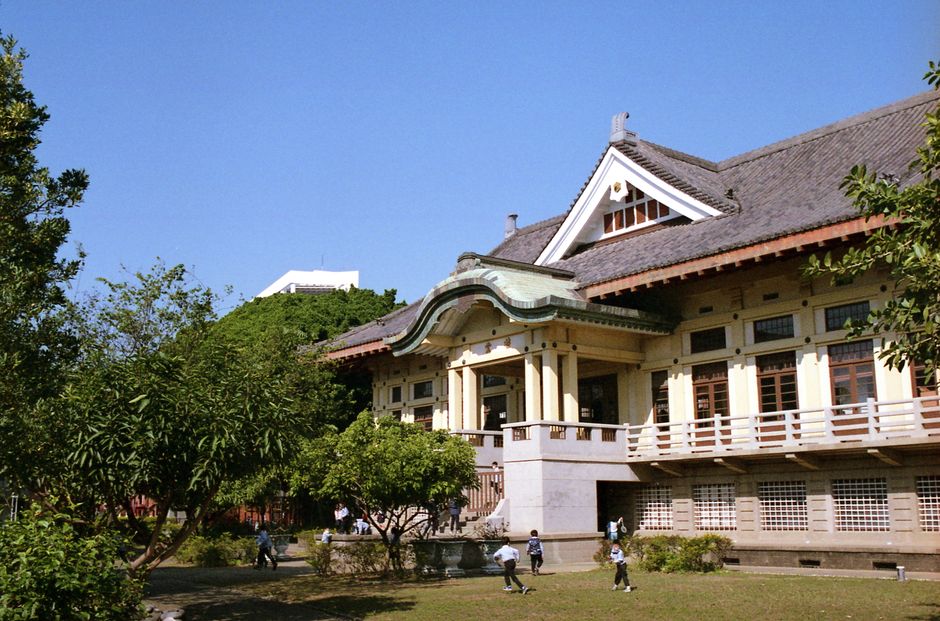
Photo by Alan Wang on Pexels
For 35 years, Korea was under harsh Japanese rule. This period saw Korean nationalism grow, but also deep societal divisions. When Japan surrendered in World War II, Koreans expected independence. However, the world powers had other plans.
Division of Korea (1945)

Photo by Michael Pointner on Pexels
At the end of WWII, with Japan's defeat, the Soviet Union declared war on Japan and quickly moved into northern Korea. The United States, concerned about Soviet expansion, proposed dividing Korea temporarily at the 38th parallel to accept Japanese surrender. The Soviets would accept surrender north of this line, and the Americans south of it. This temporary division quickly became permanent.
The two superpowers then established governments sympathetic to their own ideologies:
* North Korea (Democratic People's Republic of Korea - DPRK): Backed by the Soviet Union, led by Kim Il Sung, a communist guerrilla fighter. They established a communist state.
* South Korea (Republic of Korea - ROK): Backed by the United States, led by Syngman Rhee, an anti-communist nationalist. They established a capitalist, authoritarian state.
Both leaders, Kim Il Sung and Syngman Rhee, wanted to unify Korea under their rule and viewed the other side as illegitimate. This created immense internal pressure for conflict.
The Cold War Context

Photo by Hub JACQU on Pexels
The division of Korea occurred during the early stages of the Cold War, a global ideological and geopolitical rivalry between the United States and the Soviet Union. Neither superpower wanted the other to gain a strategic advantage in Asia. Korea became a crucial battleground in this broader struggle.
- Soviet Support for North Korea: Stalin initially hesitated but eventually approved Kim Il Sung's invasion plans, providing military aid and training, seeing an opportunity to expand communist influence.
- US Withdrawal and Re-engagement: The US initially withdrew many troops from South Korea and famously excluded it from its "defensive perimeter" in a 1950 speech by Secretary of State Dean Acheson. This might have led North Korea to believe the US wouldn't intervene, but when the invasion happened, the US quickly rallied UN support.
- China's Role: With Mao Zedong's communist victory in 1949, China also became a key player, sharing a border with North Korea and fearing a US-aligned Korea on its doorstep.
Here's a diagram showing the cause-and-effect chain leading to the invasion:
graph LR
    A["Japanese Colonial Rule (1910-1945)"] --> B["Korean Nationalism & Internal Divisions"];
    C["WWII End & Japan's Defeat"] --> D["US/USSR Agreement to Divide Korea (38th parallel)"];
    B --> E["Desire for Unified, Independent Korea"];
    D --> F["Establishment of North Korea (DPRK)"];
    D --> G["Establishment of South Korea (ROK)"];
    F --> H["Kim Il Sung's desire to unify by force"];
    G --> I["Syngman Rhee's desire to unify by force"];
    J["Cold War Intensification (US vs USSR)"] --> F;
    J --> G;
    K["Soviet Military Aid & Approval for DPRK"] --> H;
    L["US Defensive Perimeter Speech (excluding S. Korea)"] --> H;
    H --> M["North Korean Invasion of South Korea (June 1950)"];
    I --> M;
    M --> N["Korean War Begins"];
North Korean Invasion (June 25, 1950)
Photo by Ramaz Bluashvili on Pexels
Kim Il Sung, with Stalin's eventual approval and significant Soviet military backing, launched a surprise full-scale invasion across the 38th parallel into South Korea. This was the immediate trigger for the war.
3. Worked Example
Let's look at the "defensive perimeter" speech. On January 12, 1950, US Secretary of State Dean Acheson gave a speech outlining America's defense strategy in Asia. He listed countries considered vital to US security, such as Japan and the Philippines. Crucially, South Korea was not explicitly included within this "defensive perimeter." This omission was widely interpreted, particularly by leaders like Kim Il Sung and possibly Stalin, as a signal that the United States would not militarily intervene if South Korea were attacked. This perception likely emboldened North Korea to proceed with its invasion plans, viewing it as a window of opportunity where US intervention seemed unlikely.
4. Key Takeaways
- The Korean War's roots lie in Japan's colonial rule and Korea's forced division by the US and USSR after WWII.
- The 38th parallel division created two ideologically opposed states, North and South Korea, each seeking to unify the peninsula under its own rule.
- The intensifying Cold War between the United States and the Soviet Union made Korea a proxy battleground.
- Both North Korean leader Kim Il Sung and South Korean leader Syngman Rhee desired unification, but through opposing means.
- Soviet military aid and perceived US disengagement encouraged North Korea's invasion.
- The June 1950 North Korean invasion of South Korea was the immediate spark for the war.
Common mistakes you should avoid:
- Don't assume the war was only about internal Korean issues; superpower involvement was crucial.
- Don't think the 38th parallel was always the border; it was a temporary line that became a permanent division.
- Don't confuse the Korean War as a direct US-Soviet military confrontation; it was a proxy war.
- Don't underestimate the ambition of both Kim Il Sung and Syngman Rhee to unify Korea.
5. Now Try It
Imagine you're an advisor to President Truman in early 1950, before the North Korean invasion. Based on the historical context, what are three specific pieces of advice you'd give him regarding US policy towards Korea to try and prevent a full-scale war, or at least prepare for it?
Success looks like: You've identified specific policy actions or diplomatic strategies that reflect an understanding of the division, the Cold War tensions, and the ambitions of the Korean leaders, rather than just vague suggestions.
Frequently asked about Historical Context and Origins of the Korean War
Study this next
Get the full korean war curriculum
Clone the complete plan to your dashboard for unlimited AI-generated notes, practice quizzes, and a personalised revision schedule.
Create Free Account