Characterization in The General Prologue: The Knight
From the british poetry curriculum
Characterization in The General Prologue: The Knight
TL;DR
Chaucer uses direct description and implied details to build the Knight's character, presenting him as an ideal, virtuous figure. His portrayal sets a moral standard for the other pilgrims in The General Prologue. You'll see how Chaucer's choices create a vivid picture of this noble warrior.
1. The Mental Model
Think of characterization like painting a portrait: Chaucer uses specific brushstrokes (words) to show you what the Knight is like. He tells you directly what virtues the Knight possesses, and also hints at his personality through his actions and appearance.
2. The Core Material
Chaucer's characterization of the Knight is a masterclass in direct description blended with subtle implications. He presents the Knight as almost unequivocally good, a stark contrast to some of the more morally ambiguous characters you'll meet later.
Direct Description

Photo by Brett Jordan on Pexels
Chaucer explicitly lists the Knight's virtues and accomplishments. He tells you the Knight is a "verray, parfit, gentil knyght" – a true, perfect, noble knight. This isn't just an opinion; Chaucer presents it as a fact. He details the Knight's extensive military service, fighting in numerous campaigns across Christendom and beyond, always with honor. This emphasizes his dedication to chivalry and religious duty.
Implied Characterization

Photo by David Peterson on Pexels
While Chaucer tells you a lot, he also shows you through details. The Knight's humble attire – his fustian tunic, stained and dark from his armor – suggests he's not concerned with superficial appearances. He's just returned from battle, indicating his readiness for service and lack of vanity. His politeness and wisdom, mentioned later, aren't explicitly stated as virtues but emerge from his general demeanor. The fact that he joins the pilgrimage immediately after a campaign highlights his devotion.
The Ideal of Chivalry
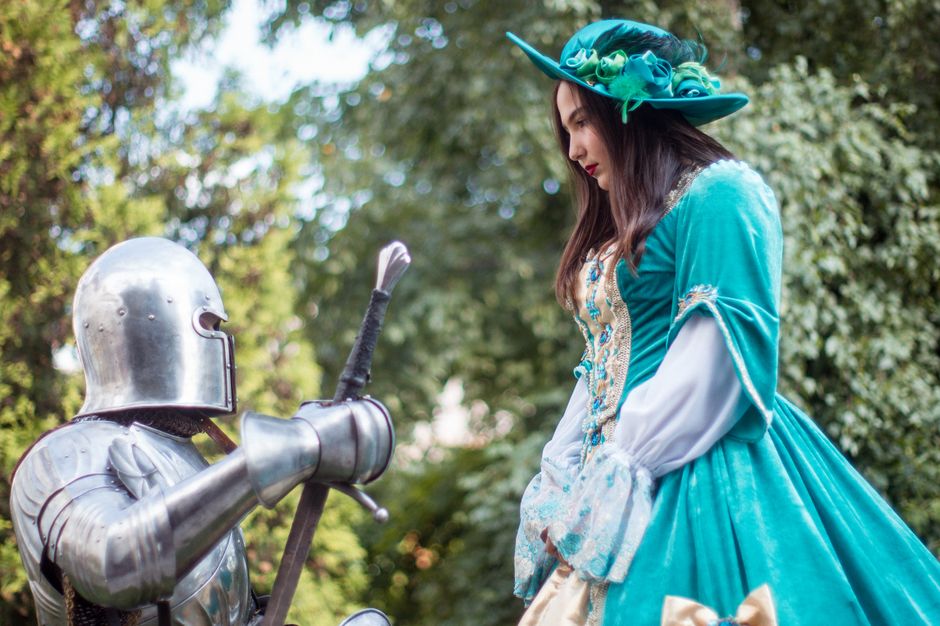
Photo by Berendey_Ivanov / Andrey_Kobysnyn on Pexels
The Knight embodies the chivalric ideal of medieval society. This isn't just about fighting bravely; it also includes truth, honor, generosity, and courtesy. Chaucer uses the Knight to establish a benchmark of moral excellence against which other characters can be compared.
graph TD
    A["Chaucer's Characterization of The Knight"] --> B["Direct Description"]
    A --> C["Implied Characterization"]

    B --> B1["'verray, parfit, gentil knyght'"]
    B --> B2["Extensive Military Service (Christian & Pagan Lands)"]
    B --> B3["Always honored his word, fought for faith"]

    C --> C1["Humble Attire (stained fustian tunic)"]
    C1 --> C1a["Lack of vanity, focus on duty"]
    C --> C2["Immediate Pilgrimage After Battle"]
    C2 --> C2a["Piety, devotion, readiness"]
    C --> C3["Wisdom, Modesty, Courtesy"]
    C3 --> C3a["Benevolent nature"]
Purpose of the Knight's Portrayal

Photo by Thomas Nolte on Pexels
Chaucer places the Knight first in the Prologue for a reason. He's the embodiment of everything good about medieval society, serving as a moral compass. By presenting him early, Chaucer sets a standard of virtue that many subsequent characters will fall short of, subtly inviting you to compare and contrast.
3. Worked Example
Let's look at a few lines about the Knight:
"A Knyght ther was, and that a worthy man,
That fro the tyme that he first bigan
To riden out, he loved chivalrie,
Trouthe and honour, fredom and curteisie."
Here, Chaucer directly tells you the Knight is "worthy" and that he "loved chivalrie, / Trouthe and honour, fredom and curteisie." This is explicit description of his character. He doesn't say "he seemed to love these things" but states it as a definitive truth. This sets a very clear, positive tone for his character. The simple, direct language reinforces the purity of these virtues.
"Of fustian he wered a gypon
Al bismotered with his habergeon,
For he was late ycome from his viage,
And wente for to doon his pilgrymage."
These lines use implied characterization. His "gypon" (tunic) made of "fustian" (a coarse cloth) is "bismotered" (stained) from his "habergeon" (chainmail). This isn't a direct statement about his humility, but it implies it strongly. He hasn't bothered to change into fresh clothes; his priority is his pilgrimage, straight from his military "viage" (journey). This practical, unpretentious appearance speaks volumes about his values without Chaucer explicitly saying "he was humble."
4. Key Takeaways
- Chaucer uses a blend of direct statements and subtle details to characterize the Knight.
- The Knight embodies the ideals of chivalry: truth, honor, generosity, and courtesy.
- His military service is extensive and always conducted with honor and for his faith.
- His humble clothing implies a lack of vanity and a focus on duty over appearance.
- Chaucer positions the Knight first to establish a moral benchmark for other pilgrims.
- The Knight is presented as an almost perfect, idealized figure.
Common mistakes you should avoid:
- Don't assume the Knight is complex or flawed; Chaucer presents him as exceptionally virtuous.
- Don't overlook the significance of his humble attire; it's a key detail for his character.
- Don't forget that his placement at the beginning of the Prologue is intentional and important.
5. Now Try It
Read the description of the Squire, the Knight's son, immediately following the Knight. Identify three ways Chaucer characterizes the Squire in contrast to his father. What does this contrast tell you about their different values or priorities?
Success looks like: You'll be able to point to specific lines or phrases for both direct and implied characterization, and explain how the Squire's traits diverge from the Knight's, highlighting different aspects of chivalry or youth.
Frequently asked about Characterization in The General Prologue: The Knight
Study this next
Get the full british poetry curriculum
Clone the complete plan to your dashboard for unlimited AI-generated notes, practice quizzes, and a personalised revision schedule.
Create Free Account