The Accounting Cycle: Recording Transactions
From the principal accounting 1 curriculum
The Accounting Cycle: Recording Transactions
TL;DR
Recording transactions is the first step in accounting, where you capture every financial event of a business. You use source documents to identify transactions and then record them as debits and credits in the general journal. This structured process ensures accuracy and provides the raw data for financial statements.
1. The Mental Model
Think of recording transactions like keeping a financial diary for a business. Every time money comes in, goes out, or an exchange happens, you write it down immediately and systematically, making sure to note both sides of the story.
2. The Core Material
The accounting cycle begins with identifying and recording financial transactions. A "transaction" is any event that affects a company's financial position and can be reliably measured in monetary terms.
Identifying Transactions

Photo by Tima Miroshnichenko on Pexels
Before you can record anything, you need to know what happened. This is where source documents come in. These are the original records of a transaction.
- Examples of Source Documents:
- Sales invoices (for sales you made)
- Purchase invoices (for purchases you made)
- Cash register tapes (for cash sales)
- Bank statements (for bank activities)
- Checks (for payments)
- Payroll records (for employee salaries)
These documents provide the evidence you need to prove a transaction occurred and to determine its details (date, amount, parties involved).
Analyzing Transactions: The Accounting Equation
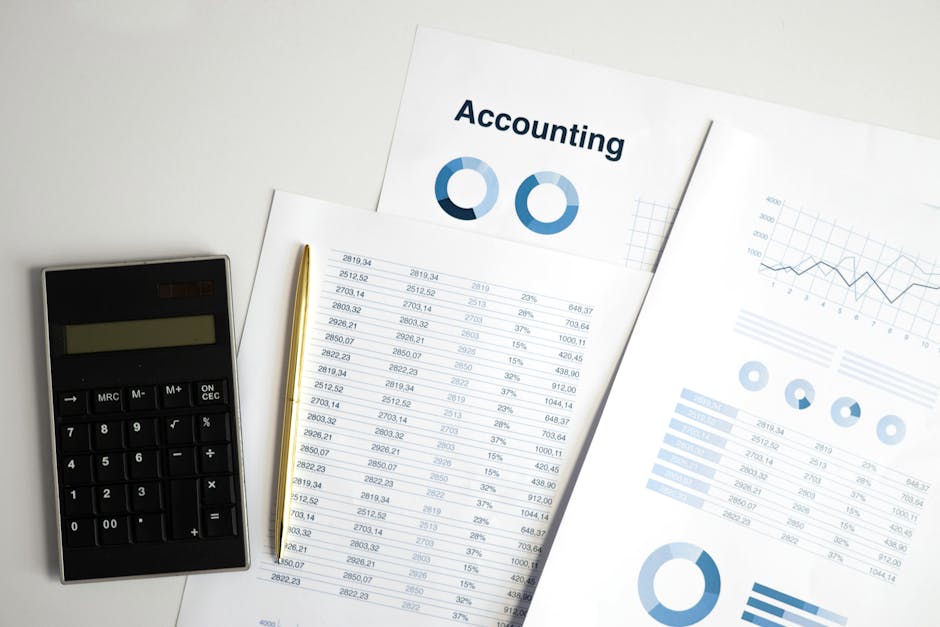
Photo by Artem Podrez on Pexels
Every transaction affects at least two accounts. This is the foundation of double-entry accounting. The key principle here is the accounting equation:
Assets = Liabilities + Equity
When a transaction occurs, this equation must always remain in balance. For example, if you buy a new computer (an Asset), you might pay cash (another Asset decreases) or take out a loan (a Liability increases).
The General Journal

Photo by Towfiqu barbhuiya on Pexels
Once you've identified and analyzed a transaction, you record it in the general journal. This is the book of original entry. It's like a chronological log of every financial event.
When you record a transaction, you use debits and credits. These aren't fancy terms for "increase" or "decrease"; their effect depends on the type of account.
- Rules of Debit and Credit:
- Assets: Increased by debits, decreased by credits.
- Liabilities: Increased by credits, decreased by debits.
Equity: Increased by credits, decreased by debits. - Revenues: Increased by credits, decreased by debits.
- Expenses: Increased by debits, decreased by credits.
Remember the mnemonic: DEAD (Debits increase Expenses, Assets, Dividends) and CLR (Credits increase Liabilities, Revenue, Common Stock/Equity).
Each journal entry includes:
1. Date of the transaction.
2. Account(s) Debited and the debit amount.
3. Account(s) Credited and the credit amount (indented).
4. A brief explanation (narration) of the transaction.
It's crucial that for every journal entry, total debits must always equal total credits.
Here's a visual of how a transaction flows from its source to being recorded:
graph LR
    A["Source Document (e.g., Invoice)"] --> B["Identify Transaction (What happened?)"];
    B --> C["Analyze Transaction (Which accounts affected? Debit/Credit?)"];
    C --> D["Record in General Journal"];
    D --> E["Ensure Debits = Credits"];
Posting to the General Ledger (Next Step)

Photo by Ann H on Pexels
After recording in the journal, you transfer (post) the entries to the general ledger. The ledger organizes all transactions by individual account, giving you a running balance for each. While recording focuses on the journal, it's good to know where these entries ultimately go.
3. Worked Example
Let's say on January 15, a small consulting firm, "Smart Solutions," performs services for a client and immediately receives $2,000 cash.
- Identify Transaction: Smart Solutions performed services and received cash.
- Source Document: A cash receipt or sales invoice.
- Analyze Transaction:
- Cash (an Asset) increased by $2,000.
- Service Revenue (an Equity account, specifically a Revenue account) increased by $2,000.
-
Apply Debit/Credit Rules:
- Assets increase with a Debit, so Cash is debited for $2,000.
- Revenues increase with a Credit, so Service Revenue is credited for $2,000.
-
Record in General Journal:
| Date | Account | Debit | Credit |
|---|---|---|---|
| Jan. 15 | Cash | \$2,000 | |
| Service Revenue | \$2,000 | ||
| To record cash received for services rendered |
Notice that total debits ($2,000) equal total credits ($2,000), and the credit account is indented.
4. Key Takeaways
- Every financial event impacting a business's finances is a transaction.
- Source documents are the original proof and details for every transaction.
- Transactions must always keep the accounting equation (Assets = Liabilities + Equity) in balance.
- You record transactions chronologically in the general journal using debits and credits.
- Debits increase assets, expenses, and dividends; credits increase liabilities, equity, and revenues.
- Total debits must always equal total credits for every journal entry.
Common Mistakes to Avoid:
- Forgetting to identify and use source documents for every transaction.
- Not understanding which accounts are affected by a transaction before trying to journalize.
- Mixing up whether an account increases with a debit or a credit.
- Failing to ensure that total debits exactly equal total credits in every journal entry.
5. Now Try It
You're running a small online store. On February 1, you purchase $500 worth of inventory on credit from a supplier. Record this transaction in the general journal format shown in the example. Think about which accounts are affected, whether they increase or decrease, and whether that means a debit or a credit.
Frequently asked about The Accounting Cycle: Recording Transactions
More from principal accounting 1
Get the full principal accounting 1 curriculum
Clone the complete plan to your dashboard for unlimited AI-generated notes, practice quizzes, and a personalised revision schedule.
Create Free Account