Introduction to Cell Biology and Chemical Constituents
From the نمنن curriculum
Introduction to Cell Biology and Chemical Constituents
TL;DR
You'll learn that cells are the basic units of life, like tiny, self-contained factories. These factories are built from just a few key types of chemical molecules working together. Understanding these building blocks is crucial for grasping how life works.
1. The Mental Model
Think of a cell as a miniature city. It has a boundary (walls), power plants, waste disposal, communication systems, and essential components all working together to keep it alive and functioning. All these parts are made from specific chemical ingredients.
2. The Core Material
Cells are the fundamental units of all living things. Some organisms, like bacteria, are just a single cell, while others, like us, are made of trillions of cells organized into tissues, organs, and systems. Despite their vast differences, all cells share some common features and are built from similar chemical components.
There are two main types of cells:
Prokaryotic Cells

Photo by turek on Pexels
These are simpler cells, typically smaller and without a nucleus or other membrane-bound organelles. Their genetic material (DNA) floats freely in the cytoplasm. Bacteria and Archaea are examples of prokaryotes.
Eukaryotic Cells
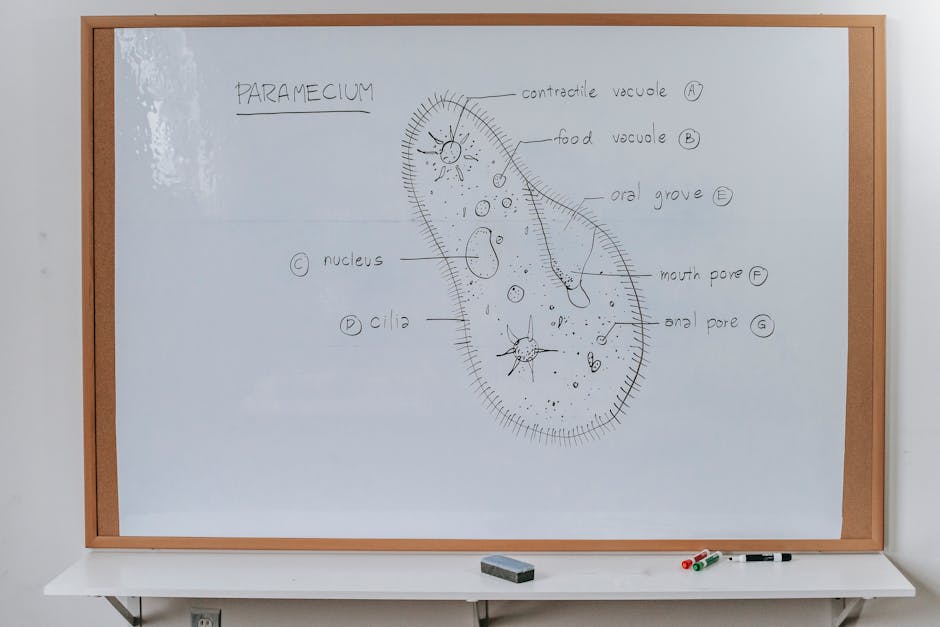
Photo by Katerina Holmes on Pexels
These are more complex cells, generally larger, and possess a nucleus that houses their DNA. They also have various membrane-bound organelles, each performing specialized functions. Animal cells, plant cells, fungi, and protists are all eukaryotes.
Regardless of their type, cells are primarily composed of four major classes of organic molecules, also known as macromolecules, and water.
Chemical Constituents of Cells

Photo by turek on Pexels
-
Water (H₂O): It's the most abundant molecule in any cell, making up about 70-80% of its mass. Water is essential because it's an excellent solvent, allowing many chemical reactions vital for life to occur. Its unique properties, like high heat capacity, help regulate cell temperature.
-
Carbohydrates: These are sugars and starches. They're primarily used by cells for energy storage (like glycogen in animals or starch in plants) and structural support (like cellulose in plant cell walls or chitin in fungi). Simple sugars are immediate energy sources.
-
Lipids: This group includes fats, oils, waxes, and steroids. They're largely insoluble in water. Lipids are crucial for long-term energy storage, forming the cell membranes (phospholipids), and acting as hormones (steroids).
-
Proteins: These are arguably the most versatile macromolecules. Proteins do almost everything in a cell! They function as enzymes (catalyzing reactions), provide structural support (like collagen), transport molecules (hemoglobin), act as antibodies (immune defense), and many more roles. They are built from smaller units called amino acids.
-
Nucleic Acids: DNA and RNA are the nucleic acids. They carry and express genetic information. DNA (Deoxyribonucleic Acid) stores the cell's genetic blueprint, while RNA (Ribonucleic Acid) is involved in translating that blueprint into proteins. They are made from nucleotides.
Here's a simple breakdown of how these components relate:
graph TD
    A["Cell (The basic unit of life)"] --> B["Chemical Constituents"]
    B --> C["Water (Solvent, temp regulation)"]
    B --> D["Organic Macromolecules"]
    D --> D1["Carbohydrates (Energy, Structure)"]
    D --> D2["Lipids (Membranes, Energy storage)"]
    D --> D3["Proteins (Enzymes, Structure, Transport)"]
    D --> D4["Nucleic Acids (Genetic info, Protein synthesis)"]
    D1 --> D1a["Simple Sugars (Glucose)"]
    D1 --> D1b["Complex Carbs (Starch, Cellulose)"]
    D2 --> D2a["Phospholipids (Cell membranes)"]
    D2 --> D2b["Triglycerides (Fats, Oils)"]
    D3 --> D3a["Amino Acids (Building blocks)"]
    D4 --> D4a["DNA (Genetic blueprint)"]
    D4 --> D4b["RNA (Protein synthesis)"]
3. Worked Example
Let's consider the function of a typical animal muscle cell.
It needs to contract, which requires a lot of energy and structural components.
- Proteins are paramount: Actin and Myosin proteins are the actual contractile fibers. Enzymes (also proteins) quickly break down glucose to provide energy.
- Carbohydrates: Glycogen (a complex carbohydrate) is stored in muscle cells as a ready reserve of glucose, which is quickly converted into ATP (energy currency) for contraction.
- Lipids: The muscle cell membrane, which controls what enters and leaves, is primarily made of phospholipids. Fats can also be used as a long-term energy source.
- Nucleic Acids: DNA in the muscle cell's nucleus contains the instructions to build all the necessary proteins (like actin and myosin), and RNA carries these instructions out.
- Water: It acts as the medium for all these reactions, helping transport nutrients and waste, and maintaining the cell's shape.
Without any one of these components, the muscle cell wouldn't be able to function correctly, if at all.
4. Key Takeaways
- Cells are the fundamental building blocks of all living organisms.
- Prokaryotic cells are simple, lacking a nucleus, while eukaryotic cells are complex with a nucleus and organelles.
- Water is the most abundant and crucial molecule in cells, acting as a solvent.
- Carbohydrates provide energy and structural support for cells.
- Lipids form cell membranes and are used for long-term energy storage.
- Proteins are highly versatile, acting as enzymes, structural components, and transporters.
- Nucleic acids (DNA and RNA) store and express genetic information.
Common Mistakes to Avoid:
- Don't confuse prokaryotic cells with viruses; viruses aren't cells.
- Don't think lipids are only for energy; their role in membranes is equally vital.
- Don't underestimate water's role; it's not just a filler, but an active participant.
- Don't think of macromolecules as working in isolation; they all interact constantly.
5. Now Try It
Imagine you're designing a very simple, single-celled organism. Describe what role each of the five main chemical constituents (water, carbohydrates, lipids, proteins, nucleic acids) would play in your organism's survival. Focus on their primary functions. What would happen if one of these was completely missing? Success looks like a brief, coherent paragraph for each constituent outlining its role, followed by a short sentence about the impact of its absence.
Frequently asked about Introduction to Cell Biology and Chemical Constituents
Study this next
Get the full نمنن curriculum
Clone the complete plan to your dashboard for unlimited AI-generated notes, practice quizzes, and a personalised revision schedule.
Create Free Account