GCSE Biology: Cell Biology, Organisation, Infection and Response
From the GCSE Prep curriculum
TL;DR
Cells are the basic building blocks of all living things, organised into tissues, organs, and organ systems to perform specific functions. Organisms constantly interact with their environment, including responding to infections from pathogens like bacteria and viruses. Understanding these concepts helps explain how life works and how we stay healthy.
1. The Mental Model
Think of your body as a super complex city. Cells are like individual bricks or tiny functional units, tissues are like neighbourhoods of similar bricks, and organs are important buildings like a hospital or power station, all working together in systems to keep the city running. When things go wrong, like an infection, the city's defence system kicks in.
2. The Core Material
This topic covers how living organisms are built from the smallest unit up, how these parts work together, and how they deal with threats.
Cell Biology: The Building Blocks
Photo by Markus Winkler on Pexels
Everything alive is made of cells. There are two main types you need to know:
- Prokaryotic Cells: These are simple cells, like bacteria. They don't have a nucleus or many other specialised compartments (organelles) found in more complex cells. Their genetic material (DNA) floats freely in the cytoplasm.
- Eukaryotic Cells: These are more complex, found in animals, plants, fungi, and protists. They have a nucleus (which contains their DNA) and other organelles like mitochondria (for energy) and ribosomes (for making proteins).
You'll need to know the basic parts of animal and plant eukaryotic cells:
- Animal Cell:
- Nucleus: Controls cell activities, contains genetic material.
- Cytoplasm: Jelly-like substance where most chemical reactions happen.
- Cell Membrane: Controls what goes in and out of the cell.
- Mitochondria: Where aerobic respiration happens, releasing energy.
- Ribosomes: Where proteins are made.
- Plant Cell: Has all the animal cell parts PLUS:
- Cell Wall: A rigid outer layer for support and protection.
- Chloroplasts: Where photosynthesis happens (making food using sunlight).
- Permanent Vacuole: Stores water, nutrients, and waste, helps keep the cell firm.
Organisation: From Cells to Systems
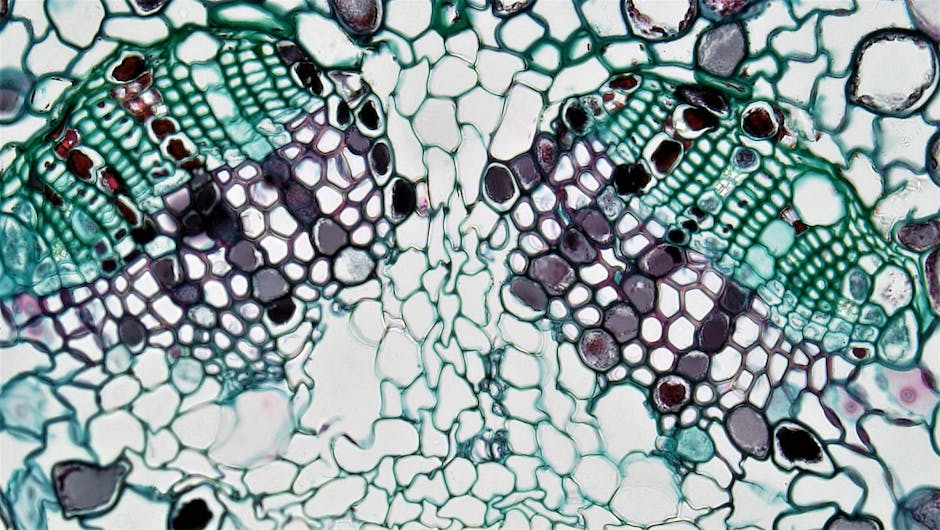
Photo by Fayette Reynolds M.S. on Pexels
Living organisms are organised in a hierarchical way:
- Cells: Basic structural and functional units.
- Tissues: Groups of similar cells working together to perform a specific function (e.g., muscle tissue for movement, xylem tissue in plants for water transport).
- Organs: Groups of different tissues working together to perform a specific function (e.g., heart pumps blood, leaf performs photosynthesis).
- Organ Systems: Groups of organs working together to perform a particular life function (e.g., digestive system, circulatory system).
- Organism: A whole living being made up of many organ systems.
Here's a diagram showing this organisation:
graph LR
    A["Cells"] --> B["Tissues"]
    B --> C["Organs"]
    C --> D["Organ Systems"]
    D --> E["Organism"]
Infection and Response: Staying Healthy

Photo by Max Mishin on Pexels
Your body has ways to protect itself from harmful microorganisms called pathogens.
-
Pathogens: Microorganisms that cause disease. These include:
- Bacteria: Single-celled prokaryotes. Can cause diseases like salmonella and bacterial meningitis.
- Viruses: Non-living particles that reproduce inside host cells. Can cause diseases like flu, measles, and HIV.
- Fungi: Eukaryotic organisms. Can cause diseases like athlete's foot and candidiasis.
- Protists: Single-celled eukaryotes. Can cause diseases like malaria.
-
How Pathogens Cause Disease: They reproduce rapidly inside the body and produce toxins (poisons) that damage cells and tissues, or directly damage cells (especially viruses).
-
Body's Defences:
- First Line of Defence (Physical Barriers):
- Skin: A tough, waterproof barrier.
- Nose Hair/Mucus: Traps pathogens.
- Trachea/Bronchi: Lined with mucus and cilia (tiny hairs) to sweep pathogens out.
- Stomach Acid: Kills most pathogens in food/drink.
- Second Line of Defence (Immune System):
- White Blood Cells: These are the key players.
- Phagocytes: Engulf and digest pathogens (phagocytosis).
- Lymphocytes:
- Produce antibodies: Specific proteins that 'stick' to pathogens, marking them for destruction or neutralising them.
- Produce antitoxins: Neutralise toxins produced by pathogens.
- Remember specific pathogens, leading to immunity.
- White Blood Cells: These are the key players.
- First Line of Defence (Physical Barriers):
-
Immunisation (Vaccination):
- Introduces a small amount of a weakened or dead pathogen, or just parts of it, into the body.
- This triggers the immune system to produce antibodies and memory cells without causing the actual disease.
- If you encounter the real pathogen later, your immune system can quickly produce the right antibodies, preventing illness.
Preventing and Treating Disease

Photo by Monstera Production on Pexels
- Hygiene: Washing hands, keeping food refrigerated, cleaning surfaces.
- Isolation: Separating infected individuals.
- Vaccination: Widespread vaccination protects populations (herd immunity).
- Antibiotics: Medicines that kill bacteria or stop their growth. They don't work against viruses. Overuse can lead to antibiotic resistance.
- Antivirals: Medicines that specifically target viruses, often by stopping them from reproducing.
3. Worked Example
Imagine someone contracts measles, a viral disease.
1. Infection: Measles virus (pathogen) enters the body.
2. Symptoms: The virus infects cells and reproduces, causing symptoms like rash and fever.
3. Immune Response: Their lymphocytes detect the virus.
* Some lymphocytes start producing specific antibodies against the measles virus.
* These antibodies bind to the virus particles, marking them for destruction by other white blood cells, or preventing the virus from infecting more cells.
* Other white blood cells (phagocytes) engulf and destroy the marked viruses.
* Eventually, enough antibodies are produced to clear the infection.
4. Immunity: After recovery, some lymphocytes remain as "memory cells". If the person encounters the measles virus again, these memory cells will quickly produce a large amount of antibodies, preventing them from getting sick again – they're now immune. This is also how the measles vaccine works, without causing the actual illness.
4. Key Takeaways
- Cells are the fundamental units of life, with prokaryotic cells being simpler than eukaryotic cells.
- Living organisms are structured hierarchically: cells → tissues → organs → organ systems → organism.
- Pathogens (bacteria, viruses, fungi, protists) cause disease by damaging cells or producing toxins.
- Your body has physical barriers and a sophisticated immune system (white blood cells) to defend against pathogens.
- White blood cells produce specific antibodies and antitoxins, and some also engulf pathogens.
- Vaccination provides immunity by stimulating your immune system to produce memory cells without you getting sick.
- Antibiotics treat bacterial infections but are ineffective against viruses, and their misuse can lead to resistance.
Common Mistakes to Avoid:
* Confusing the functions of plant cell parts (e.g., chloroplasts for photosynthesis, vacuole for water storage).
* Thinking antibiotics work on viruses – they don't!
* Forgetting that pathogens cause disease by both directly damaging cells AND producing toxins.
* Not understanding that memory cells are crucial for long-term immunity after infection or vaccination.
* Mixing up the body's first line of defence (barriers) with the immune system (white blood cells).
5. Now Try It
Spend 15 minutes drawing and labelling a basic animal cell and a plant cell. Next to each labelled part, write a one-sentence description of its function. Then, list three different pathogens and for each, describe one way your body defends against it. Success looks like having clearly drawn and correctly labelled diagrams with accurate functions, and a correct list of pathogens with appropriate defence mechanisms.
Frequently asked about GCSE Biology: Cell Biology, Organisation, Infection and Response
More from GCSE Prep
Get the full GCSE Prep curriculum
Clone the complete plan to your dashboard for unlimited AI-generated notes, practice quizzes, and a personalised revision schedule.
Save this course free