Introduction to Hemichordates and Balanoglossus Classification
From the Balenoglosus 1st sem zoology minor detailed curriculum
Introduction to Hemichordates and Balanoglossus Classification
TL;DR
Hemichordates are a small group of marine invertebrates, often considered a link between non-chordates and chordates due to some shared features. Balanoglossus, a common hemichordate, exemplifies these characteristics and helps us understand their unique classification. You'll learn their key features and how they fit into the animal kingdom.
1. The Mental Model
Think of hemichordates as an evolutionary "middle child." They've got some traits you'd see in simpler invertebrates, but also hint at more complex chordate features, making them a really interesting group to study in zoology.
2. The Core Material
Hemichordates are marine animals that primarily live in burrows in soft sediments. Their name, "hemi-chordate," literally means "half-chordate," which points to their evolutionary position. They used to be grouped with chordates, but now they're considered a separate phylum, closely related but distinct.
Key Characteristics of Hemichordates

Photo by Jonathan Borba on Pexels
- Body Plan: They have a distinctive three-part body: an anterior proboscis, a short collar, and a long, cylindrical trunk.
- Stomochord: This is a key feature. It's a hollow outgrowth from the buccal cavity into the proboscis. It was once thought to be a true notochord (hence the "half-chordate" idea), but it's structurally different and doesn't provide skeletal support in the same way.
- Pharyngeal Gill Slits: They possess paired gill slits in the pharynx, similar to those found in chordates, used for filter feeding and respiration.
- Dorsal Nerve Cord: While not as complex as a chordate's, they have a hollow nerve cord, especially prominent in the collar region. They also have a ventral nerve cord.
- Open Circulatory System: Blood flows through sinuses rather than enclosed vessels for the most part.
- Development: They often have a free-swimming larval stage called a tornaria larva, which resembles the bipinnaria larva of echinoderms, suggesting a shared ancestry.
Classification of Hemichordates

Photo by Diana ✨ on Pexels
Hemichordata is a phylum within the animal kingdom. It's traditionally divided into two main classes:
- Enteropneusta (Acorn Worms): These are solitary, worm-like animals that live in burrows. Balanoglossus is the most well-known example. They have a prominent proboscis, collar, and trunk, and numerous gill slits.
- Pterobranchia: These are colonial, sessile animals that live in tubes. They are much smaller than enteropneusts and have a U-shaped gut and ciliated tentacles on their arms (lophophore-like structures) for filter feeding.
Here's a simplified classification hierarchy to show you where Balanoglossus fits:
graph TD
    A["Kingdom: Animalia"] --> B["Phylum: Hemichordata"]
    B --> C["Class: Enteropneusta"]
    B --> D["Class: Pterobranchia"]
    C --> E["Genus: Balanoglossus"]
    E --> F["Species: Balanoglossus clavigerus"]
    E --> G["Species: Balanoglossus gigas"]
Balanoglossus - An Acorn Worm
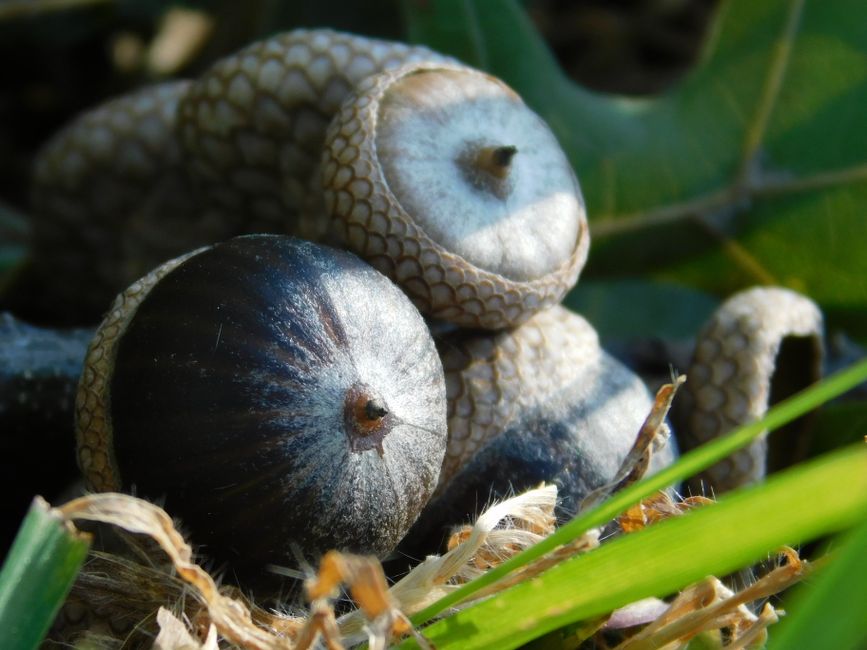
Photo by Lou Davis on Pexels
Balanoglossus is the classic example you'll study. It's often called an "acorn worm" because its proboscis resembles an acorn and its collar looks like the cup.
- Habitat: Lives in U-shaped burrows in sandy or muddy marine sediments, often in intertidal zones.
- Feeding: It's a filter feeder. Water is drawn in through the mouth, particles are trapped in mucus and transported to the gut, and water exits via the gill slits.
- Movement: It moves by peristaltic contractions of its proboscis and trunk muscles.
3. Worked Example
Let's imagine you've found a marine worm-like creature on the beach. How would you start to identify if it's a Balanoglossus?
- Observe the body segmentation: Does it have a clear three-part body—a bulbous proboscis, a distinct collar, and a longer, segmented trunk? If yes, that's a strong indicator.
- Look for gill slits: Carefully examine the trunk region, especially near the collar. Can you see rows of small openings on the sides, which are the pharyngeal gill slits? These are crucial.
- Check habitat: Was it found in a burrow in sand or mud in a shallow marine environment? Balanoglossus is typically found this way.
- Consider its size and texture: Is it somewhat fragile, soft-bodied, and worm-like? Balanoglossus fits this description.
If all these points match, you're likely looking at an acorn worm, probably Balanoglossus, due to its characteristic proboscis and collar.
4. Key Takeaways
- Hemichordates are a phylum of marine invertebrates distinct from, but related to, chordates.
- Their three-part body (proboscis, collar, trunk), stomochord, and pharyngeal gill slits are defining features.
- The stomochord is not a true notochord, which distinguishes them from chordates.
- Balanoglossus is an enteropneust, a burrowing acorn worm, and a classic example of a hemichordate.
- Hemichordates are important for understanding the evolutionary link between invertebrates and chordates.
Common Mistakes to Avoid:
- Don't confuse the stomochord with the notochord; they are structurally and functionally different.
- Don't assume all "worms" are the same; Balanoglossus has a very specific body plan.
- Don't forget that Hemichordata is now its own phylum, not a subphylum of Chordata.
- Don't overlook the significance of the tornaria larva in showing evolutionary relationships.
5. Now Try It
Imagine you're explaining Hemichordates and Balanoglossus to a friend who knows nothing about zoology. Write a short paragraph (3-5 sentences) highlighting their most unique features and why they're considered important in understanding animal evolution. Focus on using simple, clear language.
What success looks like: Your friend should understand Balanoglossus isn't just any worm, why its "half-chordate" name makes sense without being misleading, and why biologists care about it.
Frequently asked about Introduction to Hemichordates and Balanoglossus Classification
Study this next
Get the full Balenoglosus 1st sem zoology minor detailed curriculum
Clone the complete plan to your dashboard for unlimited AI-generated notes, practice quizzes, and a personalised revision schedule.
Create Free Account