Whittaker's Five Kingdom Classification
From the biological classification curriculum
TL;DR
Whittaker's Five Kingdom Classification organizes living organisms into five main groups: Monera, Protista, Fungi, Plantae, and Animalia. This system primarily considers cell structure, mode of nutrition, and body organization to group organisms. It's a widely accepted framework that helps us understand the vast diversity of life on Earth.
1. The Mental Model
Think of it like sorting your clothes into five specific drawers based on their type, material, and how they're made. Similarly, scientists sort all known living things into five "drawers" based on fundamental biological characteristics.
2. The Core Material
Before this system, organisms were often divided into just two kingdoms: plants and animals. However, many organisms didn't fit neatly into either. In 1969, R.H. Whittaker proposed the Five Kingdom Classification to address these issues, creating a more comprehensive and logical way to categorize life.
The primary criteria Whittaker used for classification were:
- Cell Structure: Is the cell prokaryotic (simple, no true nucleus) or eukaryotic (complex, with a true nucleus and organelles)?
- Body Organization: Is the organism unicellular (single-celled) or multicellular (many cells)?
- Mode of Nutrition: How does the organism get its food? Is it autotrophic (makes its own food, e.g., photosynthesis), heterotrophic (consumes other organisms), or saprophytic (absorbs nutrients from dead organic matter)?
- Reproduction: How do organisms produce offspring?
- Phylogenetic Relationships: Evolutionary relationships between organisms.
Let's break down each kingdom:
Kingdom Monera
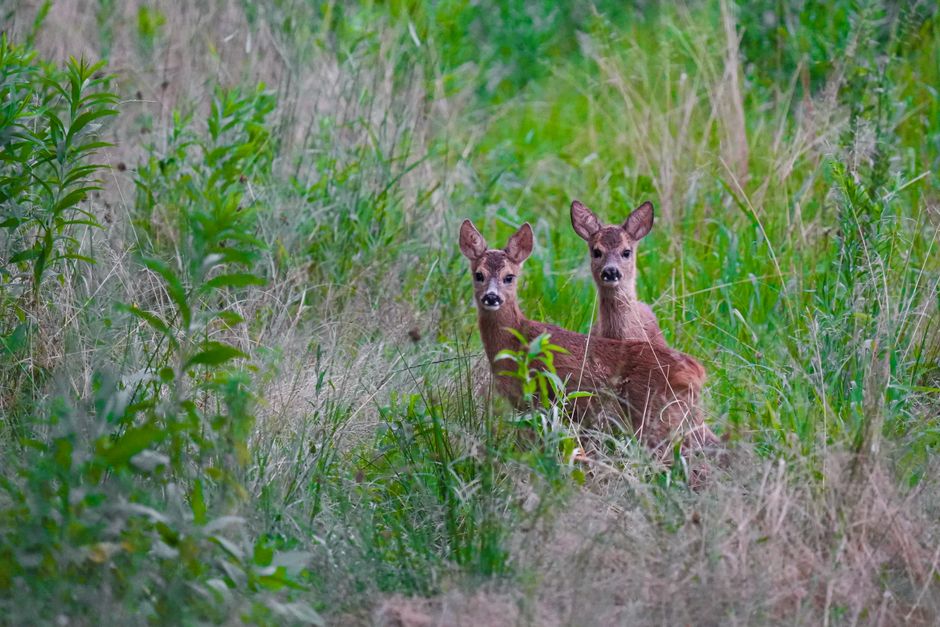
Photo by Nikola Tomašić on Pexels
These are the simplest and most ancient forms of life.
* Cell Type: Prokaryotic (no true nucleus or membrane-bound organelles).
* Body Organization: Unicellular.
* Mode of Nutrition: Can be autotrophic (chemosynthetic or photosynthetic) or heterotrophic (saprophytic or parasitic).
* Examples: Bacteria, cyanobacteria (blue-green algae), archaea.
Kingdom Protista
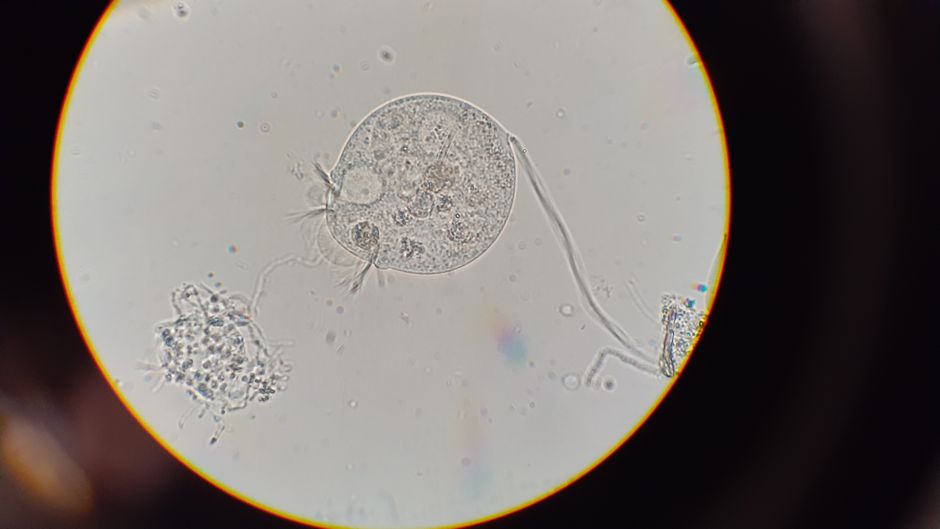
Photo by Coy on Pexels
This kingdom includes many single-celled eukaryotes. It's often called the "catch-all" kingdom because it contains organisms that don't fit into Fungi, Plantae, or Animalia.
* Cell Type: Eukaryotic.
* Body Organization: Mostly unicellular, some simple multicellular forms.
* Mode of Nutrition: Can be autotrophic (photosynthetic, like algae), heterotrophic (ingesting food, like amoeba), or both.
* Examples: Amoeba, Paramecium, diatoms, Euglena.
Kingdom Fungi
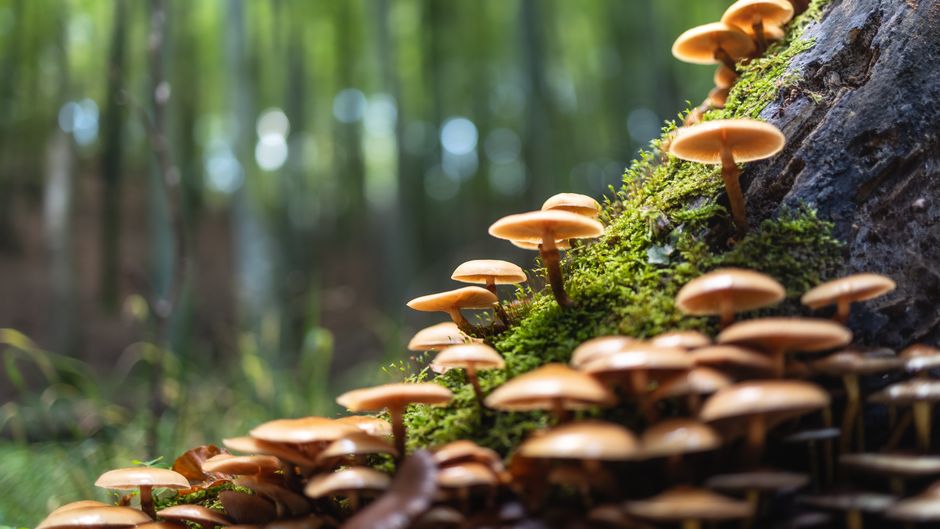
Photo by Marek Piwnicki on Pexels
Fungi are unique in their mode of nutrition.
* Cell Type: Eukaryotic.
* Body Organization: Mostly multicellular (e.g., mushrooms), but some are unicellular (e.g., yeast).
* Cell Wall: Present, made of chitin.
* Mode of Nutrition: Heterotrophic, specifically saprophytic (they secrete digestive enzymes onto dead organic matter and then absorb the nutrients).
* Examples: Mushrooms, yeast, molds.
Kingdom Plantae
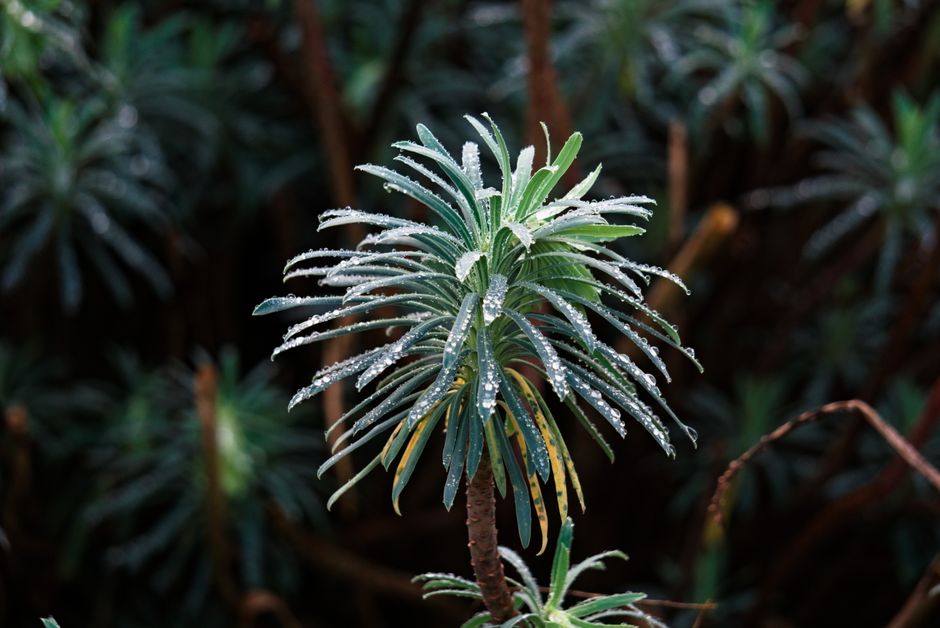
Photo by Richard REVEL on Pexels
This kingdom comprises all plants.
* Cell Type: Eukaryotic.
* Body Organization: Multicellular.
* Cell Wall: Present, made of cellulose.
* Mode of Nutrition: Autotrophic (primarily photosynthetic, meaning they make their own food using sunlight).
* Examples: Trees, grasses, ferns, mosses, flowering plants.
Kingdom Animalia
This kingdom includes all animals.
* Cell Type: Eukaryotic.
* Body Organization: Multicellular.
* Cell Wall: Absent.
* Mode of Nutrition: Heterotrophic (ingest food and then digest it internally).
* Examples: Insects, fish, birds, mammals, humans.
Here's a visual summary of the key distinctions:
graph TD
    A["Living Organisms"] --> B["Monera (Prokaryotic, Unicellular)"]
    A --> C["Eukaryotic Organisms"]

    C --> D["Protista (Unicellular/Simple Multicellular)"]
    C --> E["Multicellular Eukaryotes"]

    E --> F["Fungi (Cell Wall: Chitin, Heterotrophic/Saprophytic)"]
    E --> G["Plantae (Cell Wall: Cellulose, Autotrophic)"]
    E --> H["Animalia (No Cell Wall, Heterotrophic/Ingestive)"]
3. Worked Example
Imagine you find an unknown organism and need to classify it using Whittaker's system. Let's say it has the following characteristics:
- It's made of many cells.
- Each cell has a nucleus and other membrane-bound organelles.
- It cannot make its own food; instead, it consumes smaller organisms for energy.
- It moves around actively.
- Its cells do not have a cell wall.
Let's go through the steps:
- Step 1: Cell Structure (Prokaryotic vs. Eukaryotic)? Since its cells have a nucleus and membrane-bound organelles, it's eukaryotic. This rules out Monera.
- Step 2: Body Organization (Unicellular vs. Multicellular)? It's made of many cells, so it's multicellular. This rules out most Protista (though some simple multicellular ones exist, the other criteria will help).
- Step 3: Cell Wall Presence? It says its cells do not have a cell wall. This immediately rules out Fungi (chitin cell wall) and Plantae (cellulose cell wall).
- Step 4: Mode of Nutrition? It cannot make its own food and consumes other organisms, making it heterotrophic (ingestive). This aligns perfectly with Animalia.
Based on these characteristics, the unknown organism would be classified into Kingdom Animalia.
4. Key Takeaways
- Whittaker's Five Kingdom Classification groups life based on fundamental cellular and nutritional features.
- The five kingdoms are Monera (prokaryotic), Protista, Fungi, Plantae, and Animalia (all eukaryotic).
- Cell structure (prokaryotic/eukaryotic), body organization (unicellular/multicellular), and mode of nutrition are the primary criteria.
- Monera are the only prokaryotic kingdom; all others are eukaryotic.
- Fungi are unique among eukaryotes for their saprophytic nutrition and chitin cell walls.
- Plantae are autotrophic (photosynthetic) with cellulose cell walls.
- Animalia are heterotrophic (ingestive) and lack cell walls.
Common mistakes to avoid:
- Confusing prokaryotic with eukaryotic organisms – remember Monera are the only prokaryotes.
- Forgetting that Fungi are heterotrophic, not autotrophic, despite often growing in soil like plants.
- Mixing up the cell wall components: chitin for Fungi, cellulose for Plantae, and no cell wall for Animalia.
- Assuming all unicellular organisms are Monera; many Protists are also unicellular but are eukaryotic.
5. Now Try It
You discover another organism. It's single-celled, has a true nucleus and chloroplasts, and gets its energy by performing photosynthesis. It can also engulf smaller particles for food when light isn't available. Which kingdom would it most likely belong to, and why? Describe your reasoning in 2-3 sentences, referring to at least two of Whittaker's criteria.
Success looks like: Correctly identifying the kingdom and clearly explaining how the given characteristics (cell type, organization, and nutrition) fit that specific kingdom, while ruling out others.
Frequently asked about Whittaker's Five Kingdom Classification
Study this next
Get the full biological classification curriculum
Clone the complete plan to your dashboard for unlimited AI-generated notes, practice quizzes, and a personalised revision schedule.
Save this course free