Foundations of Physics
From the Science exam curriculum
Foundations of Physics
TL;DR
Physics is the study of matter, energy, space, and time, exploring how the universe works at its most fundamental level. It's built on core principles like forces, motion, and energy, which explain everything from falling apples to orbiting planets. Understanding these basics gives you the tools to analyze and predict physical phenomena around you.
1. The Mental Model
Think of physics as the instruction manual for the universe. It describes the basic "rules" that everything follows, from tiny atoms to massive galaxies. By learning these rules, you can understand why things happen the way they do, not just what happens.
2. The Core Material
Physics often starts with mechanics, which is the study of motion and its causes. We're talking about how things move, what makes them move, and what stops them.
a. Forces and Motion: Newton's Laws

Photo by Jose Manuel Gonzalez Lupiañez Photography on Pexels
Newton's three laws of motion are fundamental:
- Inertia: An object at rest stays at rest, and an object in motion stays in motion with the same speed and in the same direction unless acted upon by an unbalanced force. Think about pushing a heavy box – it resists moving.
- F=ma: The acceleration of an object is directly proportional to the net force acting on it and inversely proportional to its mass. This is arguably the most famous equation in physics. It tells you that if you push harder (more force), an object speeds up more (more acceleration), and if an object is heavier (more mass), it takes more force to get it to speed up.
- Action-Reaction: For every action, there is an equal and opposite reaction. When you push on a wall, the wall pushes back on you with the same force. This is why rockets can fly – they push gas downwards, and the gas pushes the rocket upwards.
b. Energy and Work

Photo by Mik Dominguez on Pexels
Energy is the ability to do work. It comes in many forms, like kinetic (motion) and potential (stored).
Work is done when a force causes displacement (movement) in the direction of the force. If you push a box across the floor, you're doing work. If you push on a wall and it doesn't move, you're not doing any work in the physics sense.
The Law of Conservation of Energy is crucial: energy cannot be created or destroyed, only transformed from one form to another. A ball thrown upwards has kinetic energy, which converts to potential energy at its peak, and then back to kinetic energy as it falls.
graph TD
    A["Object at Rest"] --> B["Unbalanced Force Applied?"]
    B -- No --> A
    B -- Yes --> C["Object Accelerates (F=ma)"]
    C --> D["Work Done (Energy Transferred)"]
    D --> E["Change in Kinetic/Potential Energy"]
    E --> F["New State of Motion/Position"]
    F --> G["Action-Reaction Forces Present"]
c. Waves and Light

Photo by betül aymergen on Pexels
Waves are disturbances that transfer energy without transferring matter. Examples include sound waves and light waves.
Light is an electromagnetic wave, meaning it doesn't need a medium to travel through (unlike sound). It travels incredibly fast in a vacuum. Light exhibits properties of both waves (like diffraction and interference) and particles (called photons), a concept known as wave-particle duality.
d. Electricity and Magnetism
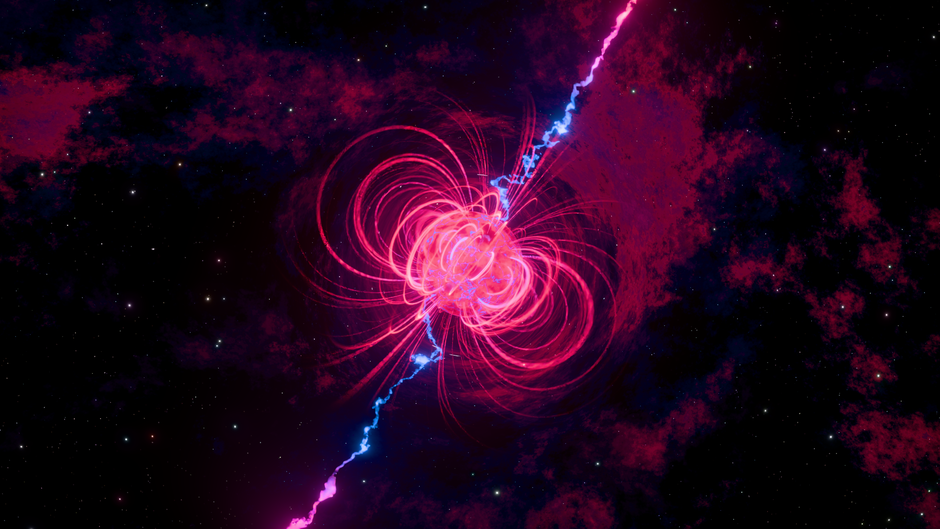
Photo by Nicola Narracci on Pexels
These two are fundamentally linked. Electricity is about electric charges (like electrons and protons) and their interactions. Magnetism is about magnetic fields, often created by moving electric charges. A changing magnetic field can produce an electric current (electromagnetic induction), and a changing electric field can produce a magnetic field. This relationship is essential for generators, motors, and virtually all modern electronics.
3. Worked Example
Let's apply Newton's Second Law (F=ma).
You have a cart with a mass of 10 kg. You push it with a force of 50 Newtons (N). What is the acceleration of the cart?
Here's how you'd work it out:
- Identify what you know:
- Mass (m) = 10 kg
- Force (F) = 50 N
- Identify what you want to find:
- Acceleration (a)
- Choose the right formula: Newton's Second Law: F = ma
- Rearrange the formula to solve for 'a':
- Divide both sides by 'm': a = F / m
- Plug in the numbers and calculate:
- a = 50 N / 10 kg
- a = 5 m/s² (meters per second squared)
So, the cart accelerates at 5 meters per second squared. This means its speed increases by 5 meters per second every second that the force is applied.
4. Key Takeaways
- Newton's Laws of Motion explain how forces affect an object's movement.
- Energy is the ability to do work, and it's always conserved, just changing forms.
- Work is done only when a force causes displacement in its direction.
- Waves transfer energy without transferring matter, like sound and light.
- Electricity and magnetism are two sides of the same fundamental force, intrinsically linked.
- Physics provides a framework for understanding the fundamental workings of the universe.
- Measurements in physics require standard units (like meters, kilograms, seconds, Newtons).
Common Mistakes to Avoid:
- Confusing mass (amount of matter) with weight (force of gravity on mass).
- Thinking that a force always causes motion; it only causes acceleration. Constant velocity means zero net force.
- Assuming that "work" in everyday language is the same as "work" in physics.
- Forgetting that action-reaction forces act on different objects.
- Ignoring units in calculations; always include them and ensure they cancel correctly.
5. Now Try It
Imagine you're designing a ramp to slide a 20 kg box. You want the box to accelerate down the ramp at 2 m/s². What net force would be required to achieve this acceleration? Think about which of Newton's laws applies directly here.
Once you have the force, describe in your own words what would happen if you applied less force than required (what would the acceleration be like?), and what would happen if you applied more force.
What success looks like: You should be able to correctly calculate the required net force using the appropriate formula and then clearly explain the relationship between force and acceleration based on Newton's laws.
Frequently asked about Foundations of Physics
Study this next
Get the full Science exam curriculum
Clone the complete plan to your dashboard for unlimited AI-generated notes, practice quizzes, and a personalised revision schedule.
Create Free Account