ICSE/ISC: Physics — Mechanics, Light and Sound
From the ICSE & ISC Prep curriculum
TL;DR
This note covers key concepts in Mechanics, Light, and Sound, focusing on understanding fundamental principles rather than just memorising formulas. We'll explore how forces affect motion, how light behaves, and the nature of sound waves. Mastering these areas will help you excel in your ICSE/ISC Physics exams.
1. The Mental Model
Think of Physics as the rulebook for how the universe works. Mechanics explains why things move or stay still, Light explains how we see, and Sound explains how we hear. Each topic builds on simple ideas to explain complex everyday phenomena.
2. The Core Material
Mechanics: Understanding Motion and Forces
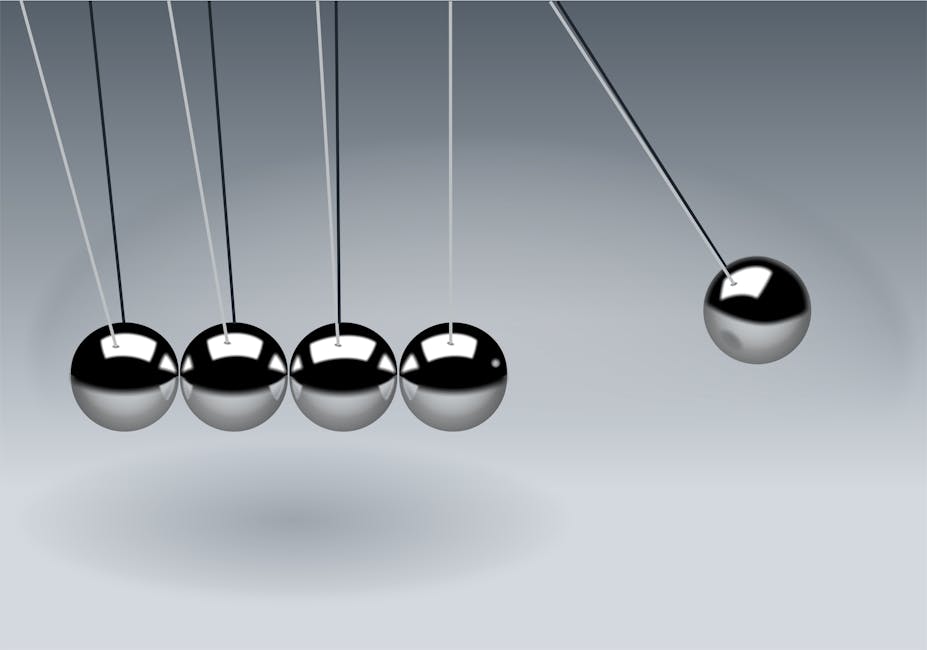
Photo by Pixabay on Pexels
Mechanics is all about forces, motion, and energy. It helps us understand why a ball rolls, why a car stops, or why a planet orbits the sun.
- Scalar vs. Vector Quantities:
- Scalar: Only has magnitude (size). Examples: distance, speed, mass, time.
- Vector: Has both magnitude and direction. Examples: displacement, velocity, acceleration, force.
- Why it matters: You can't just add speeds if directions are different, but you can add forces if you consider their directions!
- Newton's Laws of Motion: These are the bedrock of classical mechanics.
- First Law (Inertia): An object at rest stays at rest, and an object in motion stays in motion with the same speed and in the same direction unless acted upon by an unbalanced force. (Think about why you lurch forward when a bus suddenly stops.)
- Second Law (F = ma): The acceleration of an object is directly proportional to the net force acting on it and inversely proportional to its mass. ($F = ma$, where $F$ is force, $m$ is mass, and $a$ is acceleration). This is the most crucial one for calculations.
- Third Law (Action-Reaction): For every action, there is an equal and opposite reaction. (When you push a wall, the wall pushes back on you with the same force.)
- Work, Energy, and Power:
- Work (W): Force applied over a distance in the direction of the force ($W = F \times d$). Measured in Joules (J). No work is done if there's no displacement or if the force is perpendicular to displacement.
- Energy (E): The capacity to do work.
- Kinetic Energy (KE): Energy due to motion ($KE = \frac{1}{2}mv^2$).
- Potential Energy (PE): Energy due to position or state ($PE = mgh$ for gravitational potential energy).
- Power (P): The rate at which work is done ($P = \frac{W}{t}$ or $P = F \times v$). Measured in Watts (W).
Light: The Science of Seeing
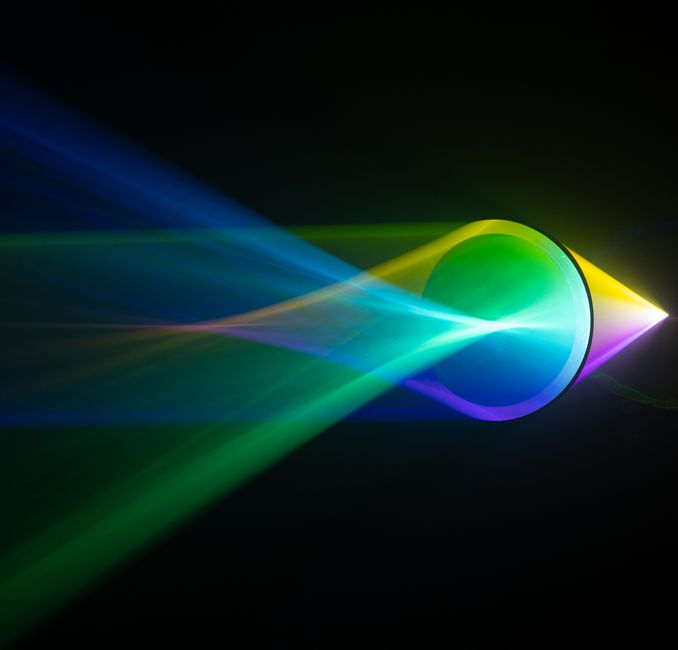
Photo by Anthony Dalesandro on Pexels
Light is an electromagnetic wave that allows us to see. Its behaviour can be explained by reflection and refraction.
- Reflection: The bouncing back of light when it strikes a surface.
- Laws of Reflection:
- The incident ray, the reflected ray, and the normal (a line perpendicular to the surface at the point of incidence) all lie in the same plane.
- The angle of incidence (i) is equal to the angle of reflection (r). ($i = r$)
- Mirrors: Flat (plane) mirrors produce virtual, erect, laterally inverted images of the same size. Curved mirrors (concave and convex) produce different types of images depending on the object's position.
- Laws of Reflection:
- Refraction: The bending of light as it passes from one medium to another (e.g., air to water). This happens because light changes speed in different media.
- Snell's Law: $\frac{\sin i}{\sin r} = n$ (where $n$ is the refractive index, a measure of how much a medium bends light).
- Total Internal Reflection (TIR): Occurs when light travels from a denser to a rarer medium and the angle of incidence exceeds a critical angle. All light is reflected back into the denser medium. This is how optical fibres work!
- Lenses:
- Convex (converging): Thicker in the middle, converges parallel light rays. Used in magnifying glasses, cameras.
- Concave (diverging): Thinner in the middle, diverges parallel light rays. Used to correct short-sightedness.
Sound: Waves We Can Hear

Photo by Dany Kurniawan on Pexels
Sound is a mechanical wave that requires a medium (solid, liquid, or gas) to travel. It cannot travel through a vacuum.
- Nature of Sound Waves:
- Longitudinal Waves: The particles of the medium vibrate parallel to the direction of wave propagation. Think of a Slinky being pushed and pulled.
- Compressions and Rarefactions: Sound waves consist of regions where particles are crowded together (compressions, high pressure) and regions where they are spread out (rarefactions, low pressure).
- Characteristics of Sound:
- Loudness: Related to the amplitude of the sound wave. Larger amplitude means louder sound.
- Pitch: Related to the frequency of the sound wave. Higher frequency means higher pitch (e.g., a siren).
- Quality/Timbre: What makes two sounds of the same pitch and loudness from different sources sound different (e.g., a piano vs. a guitar). It's due to the presence of overtones.
- Echo: The repetition of sound due to reflection from a distant object. For a distinct echo, the reflected sound must reach the ear at least 0.1 seconds after the original sound.
- Speed of Sound: Depends on the medium and temperature. Generally, sound travels fastest in solids, then liquids, and slowest in gases.
Here's how these wave properties connect:
graph LR
    A["Wave"] --> B["Wavelength (λ)"]
    A --> C["Frequency (f)"]
    A --> D["Amplitude"]
    A --> E["Speed (v)"]

    B -- "Distance for one cycle" --> F["Determines Pitch (Sound) / Color (Light)"]
    C -- "Cycles per second" --> F
    D -- "Max displacement from equilibrium" --> G["Determines Loudness (Sound) / Brightness (Light)"]
    E -- "How fast wave travels" --> H["v = f × λ"]
3. Worked Example
Problem: A block of mass 5 kg is pulled across a horizontal surface by a force of 20 N. If the coefficient of kinetic friction is 0.2, calculate the acceleration of the block. (Take g = 10 m/s²).
Solution:
-
Identify forces:
- Applied Force (F_applied) = 20 N (horizontal)
- Gravitational Force (Weight, W) = mg = 5 kg * 10 m/s² = 50 N (downwards)
- Normal Force (N) = W = 50 N (upwards, since the surface is horizontal)
- Frictional Force (F_friction) = μ_k * N = 0.2 * 50 N = 10 N (opposite to motion)
-
Calculate Net Force:
- The forces perpendicular to motion (Normal and Weight) cancel out.
- The net force in the direction of motion is F_net = F_applied - F_friction
- F_net = 20 N - 10 N = 10 N
-
Apply Newton's Second Law:
- F_net = ma
- 10 N = 5 kg * a
- a = 10 N / 5 kg = 2 m/s²
The acceleration of the block is 2 m/s².
4. Key Takeaways
- Understand the difference between scalar and vector quantities; it's fundamental for all physics problems.
- Newton's Laws aren't just for memorisation; they explain why things move or stay still.
- Work is done only when force causes displacement in its own direction.
- Light reflects (bounces) and refracts (bends); these are key to optics.
- Sound needs a medium to travel and is a longitudinal wave.
- Common mistake: Confusing speed with velocity or distance with displacement. Remember, velocity and displacement include direction.
- Common mistake: Not drawing free-body diagrams for mechanics problems. Visualising forces helps immensely.
- Common mistake: Incorrectly applying Snell's Law or reflection laws by mixing up angles. Always measure angles from the normal.
- Common mistake: Forgetting that work is zero if force is perpendicular to displacement (e.g., carrying a bag horizontally).
5. Now Try It
Spend 15 minutes reviewing the chapter on sound. Pay particular attention to the conditions required for a distinct echo and how frequency, amplitude, and wavelength relate to pitch and loudness. Then, explain in your own words, to an imaginary friend, why astronauts on the moon cannot hear each other without radios. Success looks like you can clearly articulate the necessity of a medium for sound propagation and correctly identify which wave characteristic corresponds to pitch and loudness.
Frequently asked about ICSE/ISC: Physics — Mechanics, Light and Sound
Study this next
Get the full ICSE & ISC Prep curriculum
Clone the complete plan to your dashboard for unlimited AI-generated notes, practice quizzes, and a personalised revision schedule.
Save this course free