Pengenalan Kepada Reka Bentuk dan Teknologi
From the Rbt curriculum
Pengenalan Kepada Reka Bentuk dan Teknologi
TL;DR
Reka Bentuk dan Teknologi (RBT) isn't just about building things; it's about solving problems creatively using a structured approach. You'll learn to identify needs, generate ideas, create designs, and then make and evaluate solutions. It combines your creativity with practical skills to bring ideas to life.
1. The Mental Model
Think of RBT as a systematic way to turn an idea in your head into a useful product or solution. It's like having a superpower that lets you see a problem, dream up a fix, and then actually build it. You're becoming a problem-solver and an innovator.
2. The Core Material
Reka Bentuk dan Teknologi (RBT) covers the whole process of creating solutions, from the initial spark of an idea to the final product. It's an important subject because it teaches you practical skills and how to think critically and creatively.
Apa itu Reka Bentuk?

Photo by Ann H on Pexels
Reka bentuk is all about planning and creating ideas for something new. It's not just about making things look good; it's about making them functional, safe, and user-friendly. When you design, you're thinking about who will use it, how they'll use it, and what problem it solves.
Apa itu Teknologi?

Photo by Shotkit on Pexels
Teknologi refers to the application of scientific knowledge for practical purposes, especially in industry. In RBT, technology isn't just about computers; it includes tools, methods, and processes used to develop products or solve problems. It's the "how-to" part of bringing a design to life.
Bidang Reka Bentuk dan Teknologi

Photo by Rasyid Ahmad on Pexels
RBT isn't a single thing; it covers many areas. Here are some key ones:
- Reka Bentuk Fesyen: Designing clothes, accessories, and footwear.
- Reka Bentuk Grafik: Creating visual concepts using computer software or by hand to communicate ideas.
- Reka Bentuk Industri: Designing products that are manufactured, like furniture, appliances, or vehicles.
- Reka Bentuk Kejuruteraan: Applying scientific and mathematical principles to design and build structures, machines, and systems.
- Reka Bentuk Makanan: Innovating new food products or improving existing ones.
- Reka Bentuk Mekanikal: Focusing on the design, analysis, manufacturing, and maintenance of mechanical systems.
Proses Reka Bentuk
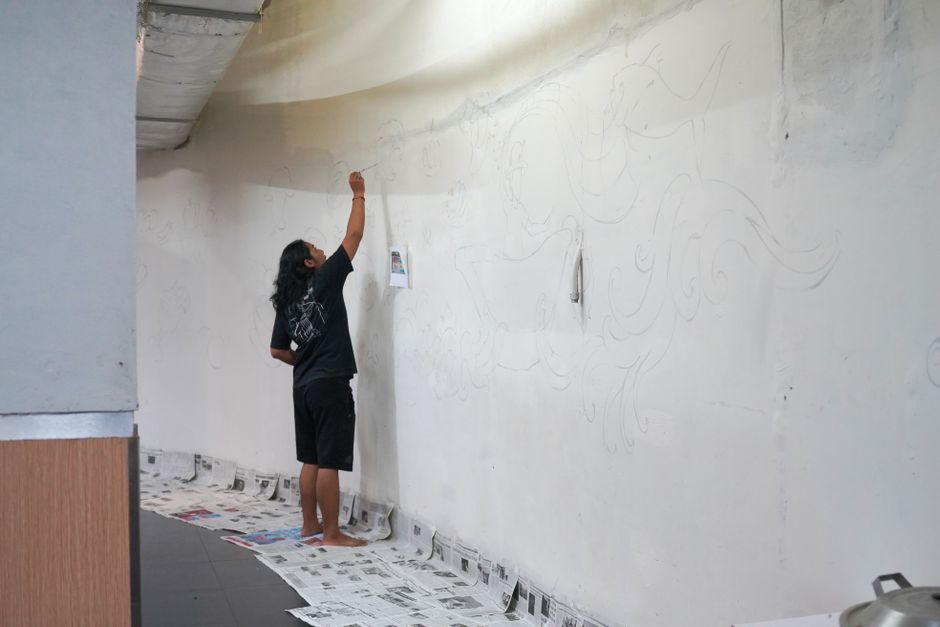
Photo by Barong Studio on Pexels
The design process is a cycle. You don't just do it once; you often go back and improve. Here's a common flow:
graph LR
    A["Mengenal Pasti Masalah"] --> B["Menjana Idea"]
    B --> C["Memilih Idea Terbaik"]
    C --> D["Melakar Reka Bentuk"]
    D --> E["Membina Model / Prototaip"]
    E --> F["Menguji dan Menilai"]
    F --> G["Membuat Penambahbaikan"]
    G --> A;
- Mengenal Pasti Masalah: What needs solving? What's the user's need?
- Menjana Idea: Brainstorming different ways to solve the problem. Don't censor yourself!
- Memilih Idea Terbaik: Evaluating your ideas based on criteria like cost, feasibility, and effectiveness.
- Melakar Reka Bentuk: Drawing out your chosen idea, sometimes with technical details.
- Membina Model / Prototaip: Creating a physical (or digital) representation of your design to test it.
- Menguji dan Menilai: Checking if your design works as intended and meets the original requirements.
- Membuat Penambahbaikan: Refining your design based on the testing results. This often sends you back to earlier stages!
Elemen Reka Bentuk
These are the basic building blocks you use when you design something:
- Garisan: Lines can define shape, direction, and movement.
- Rupa: A 2D enclosed area, like a square or circle.
- Bentuk: A 3D object, like a cube or sphere.
- Tekstur: The surface quality of an object – how it feels or looks like it would feel.
- Saiz: The dimensions of an object.
- Warna: Used for aesthetic appeal, to highlight, or to create mood.
- Ruang: The area around or within objects.
Prinsip Reka Bentuk
These are guidelines for how to arrange the elements effectively:
- Keseimbangan: Distributing visual weight evenly. Can be symmetrical or asymmetrical.
- Penekanan: Making certain parts stand out.
- Kesatuan: How well all the elements work together to form a coherent whole.
- Kepelbagaian: Using different elements to avoid monotony, but still maintaining unity.
- Pergerakan: Guiding the eye through the design.
- Jalinkan: Repeating elements to create a sense of rhythm or pattern.
3. Worked Example
Let's say you want to design a better pencil case for students.
- Mengenal Pasti Masalah: Many pencil cases are messy, hard to find specific items, and don't fit rulers well.
- Menjana Idea:
- A simple box with compartments.
- A roll-up case with elastic loops.
- A case with an expandable section for larger items.
- A case with clear pockets.
- Memilih Idea Terbaik: The expandable section with clear pockets seems promising, offering both organization and visibility, plus space for longer items.
- Melakar Reka Bentuk: You'd sketch a pencil case that has a main zippered compartment, a side zipper that expands it for a ruler, and transparent mesh pockets inside for erasers/sharpeners. You'd include dimensions.
- Membina Model / Prototaip: You might use cardboard and tape to make a rough model, or even sew a simple fabric prototype.
- Menguji dan Menilai: You give the prototype to a friend. They find the expandable zipper gets stuck sometimes, and the mesh pockets are too small for some items.
- Membuat Penambahbaikan: You decide to use a smoother zipper and make the mesh pockets slightly larger. You also add a small handle. This improved design can then be tested again.
4. Key Takeaways
- RBT is a systematic process of identifying problems and creating solutions.
- It involves both creative thinking (reka bentuk) and practical application (teknologi).
- The design process is iterative; you'll often refine and improve your ideas.
- Understanding the elements (like line, shape, color) and principles (like balance, emphasis) helps you create effective designs.
- RBT skills are valuable in many different career fields, from fashion to engineering.
Common mistakes you should avoid:
- Jumping straight to making something without planning or generating ideas.
- Not considering the user's needs or the problem you're trying to solve.
- Giving up after the first design fails; iteration is key.
- Forgetting to test your prototype or collect feedback.
- Focusing only on aesthetics and ignoring functionality or safety.
5. Now Try It
Think about a common problem you face at home or school, maybe something small like organizing your desk or keeping your phone charged. Use the RBT design process (Mengenal Pasti Masalah, Menjana Idea, Memilih Idea Terbaik, Melakar Reka Bentuk) to come up with three different design ideas to solve that problem. Don't build anything yet, just sketch out your three ideas and briefly explain why you think each one could work.
What success looks like: You'll have clearly identified a problem, brainstormed at least three distinct solutions, chosen the most promising one, and created simple sketches (even stick figures are fine!) for each, showing how they would address the problem.
Frequently asked about Pengenalan Kepada Reka Bentuk dan Teknologi
More from Rbt
Get the full Rbt curriculum
Clone the complete plan to your dashboard for unlimited AI-generated notes, practice quizzes, and a personalised revision schedule.
Create Free Account