The Scientific Method and Measurement
From the Science curriculum
The Scientific Method and Measurement
TL;DR
The scientific method is a structured way to investigate phenomena by forming hypotheses and testing them through experiments. Accurate measurement is crucial for reliable data, helping you draw valid conclusions. Together, they form the bedrock of scientific discovery and understanding.
1. The Mental Model
Think of the scientific method as a detective's playbook for solving mysteries. You see something, make an educated guess, then gather clues (measurements) to see if your guess holds up.
2. The Core Material
Science isn't just a collection of facts; it's a process for understanding the world. The scientific method provides a systematic approach to investigate observations, ask questions, and test ideas. It's a cyclical process, meaning findings often lead to new questions.
2.1 Steps of the Scientific Method

Photo by Tara Winstead on Pexels
Here's how it generally works:
- Observation: You notice something interesting or a problem.
- Question: Based on your observation, you ask "Why?" or "How?".
- Hypothesis: You propose a testable explanation or prediction for your question. This isn't just a guess; it's an informed guess.
- Experiment: You design and conduct an experiment to test your hypothesis. This is where you gather data.
- Analysis: You look at the data collected from your experiment. What do the numbers or observations tell you?
- Conclusion: You decide if your data supports or refutes your hypothesis. This often leads to new questions and further experiments.
graph TD
    A["Observe a phenomenon"] --> B("Ask a Question");
    B --> C("Formulate a Hypothesis");
    C --> D("Design & Conduct Experiment");
    D --> E("Analyze Data");
    E --> F{"Hypothesis Supported?"};
    F -- "Yes" --> G("Draw Conclusion & Report");
    F -- "No" --> C;
    G --> H("New Questions / Further Research");
    H --> A;
2.2 The Importance of Measurement
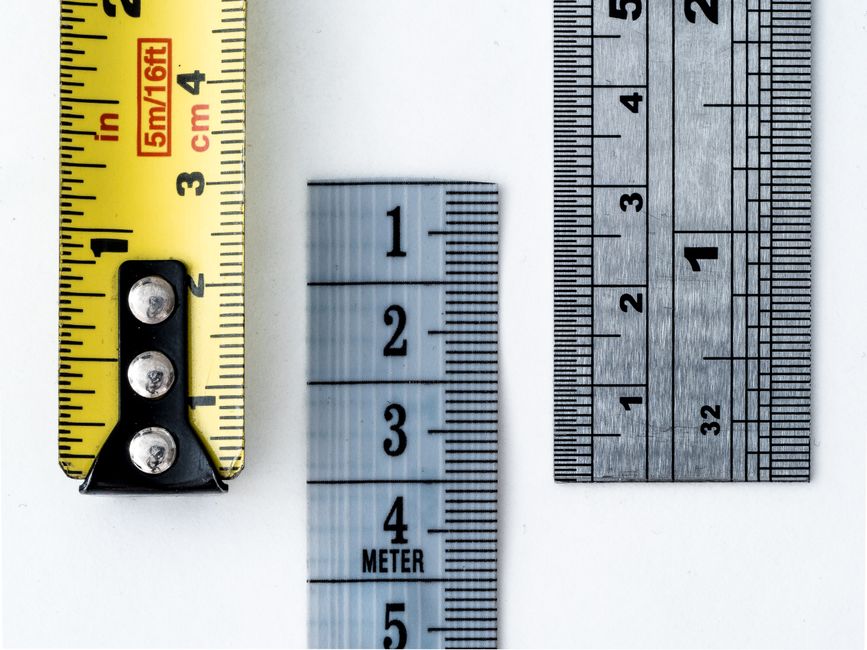
Photo by William Warby on Pexels
Measurement is how you collect your data during an experiment. If your measurements are inaccurate, your conclusions will be flawed.
-
Precision vs. Accuracy:
- Precision is how close repeated measurements are to each other. If you weigh the same object five times and get 10.1g, 10.0g, 10.2g, 10.1g, 10.0g, your measurements are precise.
- Accuracy is how close your measurement is to the true value. If that object actually weighs 12.0g, your precise measurements above aren't very accurate. You want both!
-
Units: Always use appropriate units (e.g., meters, grams, seconds, Celsius). The International System of Units (SI) is the standard in science. For example, mass is in kilograms (kg), not pounds, and temperature in Kelvin (K) or Celsius (°C), not Fahrenheit.
-
Variables:
- Independent Variable: The thing you change in an experiment. (e.g., the amount of fertilizer you give plants).
- Dependent Variable: The thing you measure that changes in response to the independent variable. (e.g., the height of the plants).
- Controlled Variables: Everything else you keep the same to ensure a fair test. (e.g., amount of water, sunlight, type of soil for all plants).
3. Worked Example
Let's say you notice that some plants in your garden seem to grow taller than others, even though they're the same type.
- Observation: You see two groups of identical tomato plants; one group is taller.
- Question: Does fertilizer make tomato plants grow taller?
- Hypothesis: If tomato plants receive fertilizer, then they will grow taller than tomato plants that don't receive fertilizer. (This is testable!)
- Experiment:
- Get 10 identical tomato plants.
- Put 5 plants in pots with fertilizer (independent variable).
- Put the other 5 plants in identical pots without fertilizer (control group).
- Give all plants the same amount of water and sunlight (controlled variables).
- Measure the height of each plant weekly for a month (dependent variable). Use a ruler and record heights in centimeters (cm).
- Analysis: After a month, you compare the average height of the fertilized plants to the unfertilized plants. You might find the fertilized plants are, on average, 15 cm taller.
- Conclusion: Your data supports the hypothesis that fertilizer makes tomato plants grow taller. This conclusion might lead you to ask why fertilizer makes them taller, or what kind of fertilizer is best, starting the cycle again.
4. Key Takeaways
- The scientific method is a cyclical process of observation, questioning, hypothesis, experiment, analysis, and conclusion.
- A good hypothesis is a testable statement, not just a random guess.
- Experiments need independent, dependent, and controlled variables for a fair test.
- Accurate and precise measurements are vital for reliable experimental results.
- Always use correct units for your measurements to ensure clarity and consistency.
Common Mistakes to Avoid

Photo by KATRIN BOLOVTSOVA on Pexels
- Don't change more than one independent variable at a time in an experiment.
- Don't confuse correlation with causation; just because two things happen together doesn't mean one causes the other.
- Don't ignore data that doesn't support your hypothesis; analyze it critically and learn from it.
- Don't forget to repeat experiments or have a large enough sample size to ensure your results aren't just a fluke.
5. Now Try It
Think of a common observation you've made (e.g., "Why does ice melt faster on some surfaces?"). Formulate a specific, testable hypothesis about it, identify the independent, dependent, and at least two controlled variables for an experiment. What success looks like: You'll have a clear, concise hypothesis and a logical plan for how you'd test it, demonstrating an understanding of the variable types.
Frequently asked about The Scientific Method and Measurement
Get the full Science curriculum
Clone the complete plan to your dashboard for unlimited AI-generated notes, practice quizzes, and a personalised revision schedule.
Create Free Account