Weather Expressions and Verbs
From the german curriculum
Weather Expressions and Verbs
TL;DR
Learning German weather expressions often involves the impersonal verb "es" (it) and specific verbs like "regnen" (to rain) or "schneien" (to snow). You'll combine these with adjectives or adverbs to describe various weather conditions. Mastering these common phrases will significantly boost your ability to talk about the weather in German.
1. The Mental Model
Think of German weather as almost always being described by "it" doing something. It's rarely "the sun shines" but more like "it shines the sun" or "it is sunny." This "es" is key, even when it feels a bit clunky in direct translation.
2. The Core Material
When talking about weather in German, you'll almost always start with es (it). This impersonal "es" acts as the subject of the sentence, even though it doesn't refer to a specific thing.
Impersonal Verbs for Weather

Photo by Brett Jordan on Pexels
Many weather phenomena have their own dedicated verbs that are almost always used with "es":
- Es regnet. (It's raining.)
- Es schneit. (It's snowing.)
- Es hagelt. (It's hailing.)
- Es blitzt. (It's lightening.)
- Es donnert. (It's thundering.)
- Es friert. (It's freezing.)
Notice how these verbs conjugate with "es" just like any other verb with a singular subject.
Using "Es ist" with Adjectives

Photo by icon0 com on Pexels
For other weather conditions, you'll often use es ist (it is) followed by an adjective:
- Es ist sonnig. (It is sunny.)
- Es ist bewölkt. (It is cloudy.)
- Es ist windig. (It is windy.)
- Es ist kalt. (It is cold.)
- Es ist warm. (It is warm.)
- Es ist heiß. (It is hot.)
- Es ist neblig. (It is foggy.)
- Es ist stürmisch. (It is stormy.)
Describing Temperature
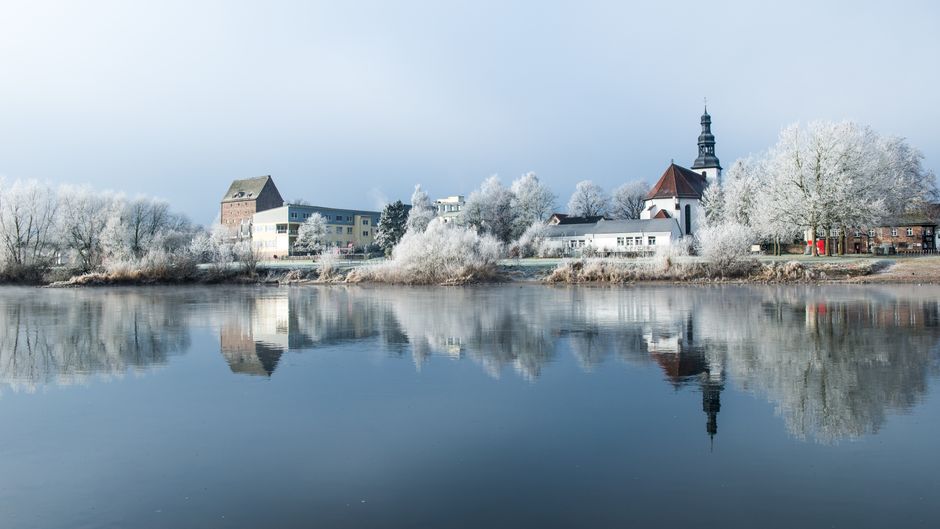
Photo by Wolfgang Weiser on Pexels
To describe specific temperatures, you'll usually use "es sind" or "es hat" (less common, but you might hear it):
- Es sind 20 Grad. (It is 20 degrees.)
- Es sind minus 5 Grad. (It is minus 5 degrees.)
Combining Elements
Photo by Wolfgang Weiser on Pexels
You can combine these to form more complex sentences.
- Es regnet und es ist kalt. (It's raining and it's cold.)
- Morgen wird es sonnig sein. (Tomorrow it will be sunny.) – Future tense with "werden".
Here's a simple flow of how to construct basic weather sentences:
graph TD
    A["Start: What's the weather like?"] --> B{Is there a specific weather verb?};
    B -- Yes --> C["Use 'Es' + Weather Verb"];
    C --> D[e.g., "Es regnet."];
    B -- No --> E{Can it be described with an adjective?};
    E -- Yes --> F["Use 'Es ist' + Adjective"];
    F --> G[e.g., "Es ist sonnig."];
    E -- No --> H{Is it about temperature?};
    H -- Yes --> I["Use 'Es sind' + Degrees"];
    I --> J[e.g., "Es sind 25 Grad."];
    J --> K["End: Weather described."];
    G --> K;
    D --> K;
Asking About the Weather
To ask about the weather, common phrases include:
- Wie ist das Wetter? (How is the weather?)
- Wie wird das Wetter morgen? (How will the weather be tomorrow?)
3. Worked Example
Let's imagine you're planning a trip to Berlin and want to describe the weather for a few days.
- Today (Heute): It's sunny and warm.
- Heute ist es sonnig und warm.
- Tomorrow (Morgen): It will rain and be cold.
- Morgen wird es regnen und es wird kalt sein. (Or simply: Morgen regnet es und es ist kalt.)
- Day after tomorrow (Übermorgen): It's snowing and freezing, minus 3 degrees.
- Übermorgen schneit es und es friert. Es sind minus 3 Grad.
Notice how the impersonal "es" is consistently used as the subject, even when combining conditions.
4. Key Takeaways
- Always start weather descriptions with es (it) as the subject.
- Many weather phenomena have dedicated verbs (e.g., regnen, schneien) that are conjugated with es.
- For other conditions, use es ist followed by an adjective (e.g., es ist sonnig, es ist kalt).
- For temperatures, use es sind + the number of degrees.
- Remember to conjugate verbs correctly with es (e.g., regnet, schneit, ist).
- The phrase Wie ist das Wetter? is your go-to for asking about the weather.
Common Mistakes to Avoid:
* Don't try to translate "The sun is shining" directly as "Die Sonne scheint" – while correct, Es ist sonnig or Die Sonne scheint are both common. Focus on "es" first.
* Forgetting the "es" entirely (e.g., saying "Regnet" instead of "Es regnet").
* Using "ist" with verbs (e.g., "Es ist regnen" instead of "Es regnet").
* Confusing "es ist kalt" (it is cold) with "mir ist kalt" (I am cold).
5. Now Try It
Imagine you're checking the weather forecast for your hometown for the next three days. Write down three sentences in German, one for each day, describing the weather. Include at least one temperature, one impersonal weather verb, and one "es ist" adjective.
Success looks like: Three grammatically correct German sentences, each describing a different day's weather, incorporating the concepts covered. For example: "Heute ist es warm. Es sind 25 Grad. Morgen regnet es. Übermorgen ist es windig."
Frequently asked about Weather Expressions and Verbs
More from german
Get the full german curriculum
Clone the complete plan to your dashboard for unlimited AI-generated notes, practice quizzes, and a personalised revision schedule.
Create Free Account