Introduction to Matter: Definition and Classification
From the chemistry curriculum
Introduction to Matter: Definition and Classification
TL;DR
Matter is anything that has mass and takes up space, existing in various states like solid, liquid, gas, and plasma. You can classify matter into pure substances (elements and compounds) or mixtures (homogeneous and heterogeneous). Understanding these classifications helps you predict how different materials will behave.
1. The Mental Model
Think of matter as all the 'stuff' around you. You can group this 'stuff' based on what it's made of (pure or mixed) and how uniformly it's distributed. This helps you understand its basic properties and how it interacts.
2. The Core Material
You encounter matter every second of every day. From the air you breathe to the phone in your hand, it's all matter.
What is Matter?

Photo by Ann H on Pexels
Matter is simply anything that has mass and occupies space (has volume). That's it! It's composed of tiny particles like atoms and molecules.
States of Matter
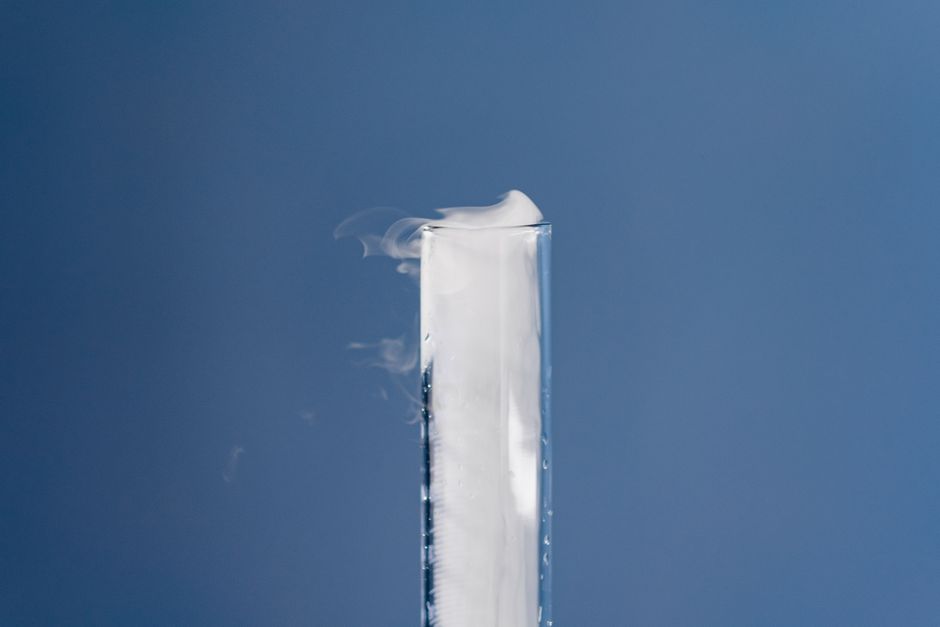
Photo by Ron Lach on Pexels
You've likely heard of these. They're physical forms matter can take based on how its particles are arranged and move.
- Solids: Particles are packed tightly and vibrate in fixed positions. They have a definite shape and volume. (e.g., ice, a rock)
- Liquids: Particles are close but can slide past each other. They have a definite volume but take the shape of their container. (e.g., water, oil)
- Gases: Particles are far apart and move randomly. They have no definite shape or volume and fill their container. (e.g., air, steam)
- Plasma: An ionized gas, often found in stars or lightning. It's less common on Earth but important in the universe. (e.g., inside a fluorescent light bulb)
Classification of Matter

Photo by Brett Jordan on Pexels
Now, let's break down how we classify matter based on its composition. This is a fundamental concept.
graph TD
    A["Matter"] --> B["Pure Substance"]
    A --> C["Mixture"]

    B --> D["Element"]
    B --> E["Compound"]

    C --> F["Homogeneous Mixture"]
    C --> G["Heterogeneous Mixture"]

    D --> D1["(e.g., Gold, Oxygen)"]
    E --> E1["(e.g., Water, Salt)"]
    F --> F1["(e.g., Saltwater, Air)"]
    G --> G1["(e.g., Sand & Water, Salad)"]
Pure Substances
A pure substance has a fixed, uniform composition and distinct properties. You can't separate it into simpler components by physical means.
- Elements: The simplest form of matter. You can't break them down into other substances by chemical reactions. Each element has a unique number of protons (atomic number). Think of the periodic table! (e.g., gold (Au), oxygen (O), iron (Fe)).
- Compounds: Formed when two or more different elements are chemically bonded together in a fixed ratio. Their properties are usually very different from the elements they're made of. You can only separate them by chemical reactions. (e.g., water (H₂O), table salt (NaCl), carbon dioxide (CO₂)).
Mixtures
A mixture is a physical combination of two or more substances where each substance retains its own chemical identity. You can often separate mixtures by physical means.
- Homogeneous Mixtures (Solutions): The components are uniformly distributed throughout the mixture, so it looks the same everywhere. You can't see individual components. (e.g., saltwater, air, brass (an alloy)).
- Heterogeneous Mixtures: The components are not uniformly distributed, and you can usually see the different parts. (e.g., sand and water, salad, oil and vinegar dressing).
3. Worked Example
Let's say you have a glass containing ice cubes, liquid water, and some sugar dissolved in the water. How would you classify each part?
- Ice cubes: These are solid water. They are a pure substance (compound). Although solid, they're still H₂O.
- Liquid water: This is also a pure substance (compound). Just in a different state.
- Sugar dissolved in water: This is a homogeneous mixture. The sugar and water are evenly mixed, and you can't easily see the sugar separate from the water once dissolved. You could boil off the water to get the sugar back (a physical separation).
- The entire glass's contents (ice + sugared water): This would be a heterogeneous mixture because you can clearly see the solid ice floating in the liquid sugared water. It's not uniform throughout.
4. Key Takeaways
- Matter is anything that has mass and takes up space.
- The four common states of matter are solid, liquid, gas, and plasma, differing in particle arrangement and movement.
- Pure substances have a fixed composition and include elements (simplest form) and compounds (chemically bonded elements).
- Mixtures are physical combinations of substances; their components retain individual properties.
- Homogeneous mixtures are uniform throughout (like saltwater), while heterogeneous mixtures are not (like sand and water).
- You can separate mixtures by physical means, but compounds require chemical reactions to break down.
Common mistakes to avoid:
- Confusing an element with a compound; remember, elements are on the periodic table.
- Thinking that a compound is a mixture; compounds involve chemical bonds, mixtures don't.
- Assuming a mixture is always visible as separate parts; homogeneous mixtures are uniform.
- Forgetting that water (H₂O) is a compound, not an element, and can be in different states.
5. Now Try It
Think about your breakfast this morning. Pick three distinct items you ate or drank. For each item, classify it as an element, compound, homogeneous mixture, or heterogeneous mixture. For example, if you had a cup of coffee with sugar, you'd classify the sugar (compound), water (compound), black coffee (homogeneous mixture), and then coffee with sugar (still a homogeneous mixture, or potentially heterogeneous if the sugar didn't fully dissolve). Your goal is to correctly classify three common items and explain why using the definitions above.
Frequently asked about Introduction to Matter: Definition and Classification
More from chemistry
Get the full chemistry curriculum
Clone the complete plan to your dashboard for unlimited AI-generated notes, practice quizzes, and a personalised revision schedule.
Create Free Account