Connective Tissue and its Functions
From the Regional terms and Histology curriculum
Connective Tissue and its Functions
TL;DR
Connective tissue (CT) is one of the four basic tissue types, providing support, protection, and integration for other tissues. It's characterized by cells dispersed within an extracellular matrix (ECM) of fibers and ground substance. Its diverse roles include binding organs, storing energy, and transporting substances.
1. The Mental Model
Think of connective tissue as the "glue" and "packing material" of your body. It holds things together, provides structure, and helps transport nutrients, making sure everything is in its right place and working together.
2. The Core Material
Connective tissue is super diverse, but all types share some common features: they have cells, and they have an extracellular matrix (ECM). The ECM is the non-living stuff outside the cells and consists of ground substance (a gel-like material) and protein fibers (like collagen and elastin). The specific combination of these components dictates the CT's function.
Components of Connective Tissue

Photo by Leo Freire on Pexels
-
Cells: These are the living parts.
- Fibroblasts: The most common type; they produce and secrete the fibers and ground substance of the ECM. Think of them as the architects and builders of CT.
- Adipocytes: Fat cells that store energy.
- Immune cells: Macrophages, mast cells, plasma cells, and leukocytes protect against pathogens and initiate immune responses.
- Chondroblasts/Chondrocytes: Found in cartilage.
- Osteoblasts/Osteocytes: Found in bone.
-
Extracellular Matrix (ECM): The non-living framework.
- Ground Substance: An amorphous (shapeless) gel-like material that fills the space between cells and fibers. It holds water and allows for nutrient diffusion and waste removal. It's made of proteoglycans and glycoproteins.
- Fibers: Provide strength and elasticity.
- Collagen fibers: The strongest and most abundant, providing high tensile strength (resistance to stretching). Think of tough ropes.
- Elastic fibers: Contain elastin, allowing tissues to stretch and recoil (like a rubber band).
- Reticular fibers: Thin, branching collagen fibers that form delicate networks, providing support for soft organs.
Functions of Connective Tissue
Photo by Leo Freire on Pexels
CT plays several vital roles:
- Binding and Support: It holds tissues and organs together (e.g., ligaments connect bone to bone, tendons connect muscle to bone).
- Protection: It cushions organs (e.g., adipose tissue around kidneys) and forms skeletal structures (bone, cartilage) that protect vital organs.
- Insulation: Adipose tissue provides thermal insulation.
- Energy Storage: Adipose tissue stores fat.
- Transport: Blood (a specialized CT) transports nutrients, gases, hormones, and waste products.
- Immune Response: Contains various immune cells that defend the body.
Here's a simplified breakdown of CT types and their main roles:
graph TD
    A["Connective Tissue (CT)"] --> B["Loose CT"]
    B --> C["Areolar CT (Packing Material)"]
    B --> D["Adipose CT (Energy Storage, Insulation, Cushioning)"]
    B --> E["Reticular CT (Support for Lymphoid Organs)"]

    A --> F["Dense CT"]
    F --> G["Dense Regular CT (Tendons, Ligaments - Strong in one direction)"]
    F --> H["Dense Irregular CT (Dermis, Organ Capsules - Strong in multiple directions)"]
    F --> I["Elastic CT (Aorta, Vocal Cords - Stretch & Recoil)"]

    A --> J["Specialized CT"]
    J --> K["Cartilage (Support, Flexibility)"]
    K --> L["Hyaline (Joints, Nose, Trachea)"]
    K --> M["Elastic (Ear, Epiglottis)"]
    K --> N["Fibrocartilage (Intervertebral Discs, Menisci)"]

    J --> O["Bone (Support, Protection, Mineral Storage)"]
    J --> P["Blood (Transport, Immunity)"]
Classification of Connective Tissue
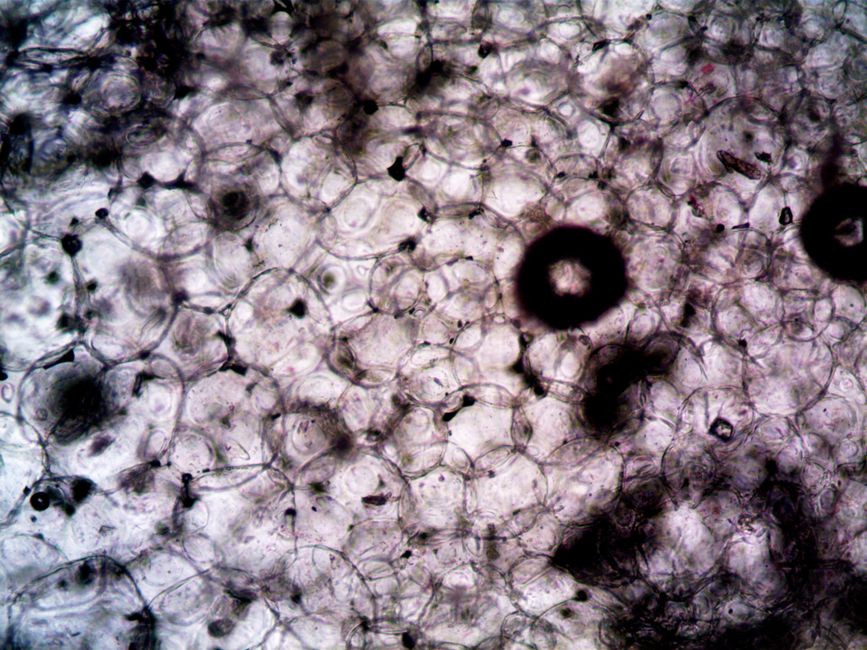
Photo by turek on Pexels
Connective tissue is broadly categorized into:
-
Connective Tissue Proper: This includes loose and dense connective tissues.
- Loose CT: Has more ground substance and fewer fibers. It's flexible and acts as packing material. Examples: Areolar (under epithelia), Adipose (fat), Reticular (lymph nodes, spleen).
- Dense CT: Has more fibers and less ground substance, making it stronger.
- Dense Regular: Fibers aligned in parallel, like in tendons (muscle to bone) and ligaments (bone to bone), providing strength in one direction.
- Dense Irregular: Fibers arranged randomly, providing strength in multiple directions, like in the dermis of the skin or organ capsules.
- Elastic: Rich in elastic fibers, found in walls of large arteries and vocal cords.
-
Specialized Connective Tissue: These have unique properties.
- Cartilage: Provides support and flexibility. Contains chondrocytes in lacunae (small spaces). It's avascular (no blood supply), so it heals slowly.
- Hyaline Cartilage: Most common; found at joint surfaces, nose, trachea.
- Elastic Cartilage: Flexible; found in the external ear and epiglottis.
- Fibrocartilage: Strongest; found in intervertebral discs and knee menisci.
- Bone: Hard, calcified tissue providing structural support, protection, and mineral storage. Contains osteocytes. It's well-vascularized.
- Blood: A fluid connective tissue with a plasma matrix and blood cells (red, white, platelets). Its primary role is transport.
- Cartilage: Provides support and flexibility. Contains chondrocytes in lacunae (small spaces). It's avascular (no blood supply), so it heals slowly.
3. Worked Example
Imagine you're examining a biopsy from a patient's Achilles tendon.
- Identify the tissue type: Given it's a tendon, you'd immediately think of Dense Regular Connective Tissue.
- Recall its structure: You'd expect to see a lot of collagen fibers densely packed and running in parallel. There would be very little ground substance.
- Identify the primary cells: The main cells responsible for maintaining this tissue would be fibroblasts (or fibrocytes, their mature form), which are typically flattened and appear squeezed between the collagen bundles.
- Relate structure to function: The parallel arrangement of collagen fibers provides immense tensile strength in one direction, perfect for transmitting force from muscle to bone and resisting pulling forces during movement. This organization explains why a torn Achilles tendon is so debilitating and hard to heal; its structure is optimized for strength, not necessarily rapid repair.
4. Key Takeaways
- Connective tissue (CT) provides critical support, protection, insulation, and transport functions throughout the body.
- All CT types consist of cells embedded in an extracellular matrix (ECM), which has ground substance and protein fibers.
- Fibroblasts are the primary cells in CT proper, responsible for producing the ECM components.
- Collagen fibers provide strength, while elastic fibers allow for stretch and recoil.
- CT is broadly classified into CT proper (loose, dense) and specialized CT (cartilage, bone, blood).
- The specific composition of the ECM determines the mechanical properties and function of each CT type.
Common Mistakes to Avoid

Photo by KATRIN BOLOVTSOVA on Pexels
- Don't confuse CT's role in support with epithelial tissue's role as a covering.
- Forgetting that blood is considered a specialized connective tissue.
- Underestimating the importance of the extracellular matrix; it's not just "filler."
- Assuming all connective tissues are highly vascularized; cartilage is avascular.
- Mixing up the functions of dense regular (strength in one direction) and dense irregular (strength in multiple directions).
5. Now Try It
You're looking at a microscopic image of the external ear. Describe what type of specialized connective tissue you'd expect to find there, what its key features would be (cells, fibers, matrix), and how those features contribute to the ear's flexibility and shape. What would success look like? You should be able to clearly identify the tissue type, its distinct components, and directly link those components to the ear's ability to bend and spring back without breaking.
Frequently asked about Connective Tissue and its Functions
More from Regional terms and Histology
Get the full Regional terms and Histology curriculum
Clone the complete plan to your dashboard for unlimited AI-generated notes, practice quizzes, and a personalised revision schedule.
Create Free Account