Introduction to Prokaryotes: Characteristics and Classification
From the Procariotas curriculum
TL;DR
Prokaryotes are single-celled organisms without a nucleus or other membrane-bound organelles, making them structurally simpler than eukaryotes. They're incredibly diverse and are classified primarily into Bacteria and Archaea based on genetic and biochemical differences. Understanding their fundamental characteristics helps explain their widespread presence and ecological importance.
1. The Mental Model
Think of prokaryotes as the "minimalist" cells. They get the job done efficiently without the extra compartments (organelles) you see in more complex cells like your own. They're like a studio apartment compared to a mansion.
2. The Core Material
Prokaryotes are fascinating microscopic organisms that represent the earliest forms of life on Earth. Despite their simplicity, they're incredibly successful and diverse, inhabiting nearly every environment imaginable.
What Makes a Prokaryote a Prokaryote?
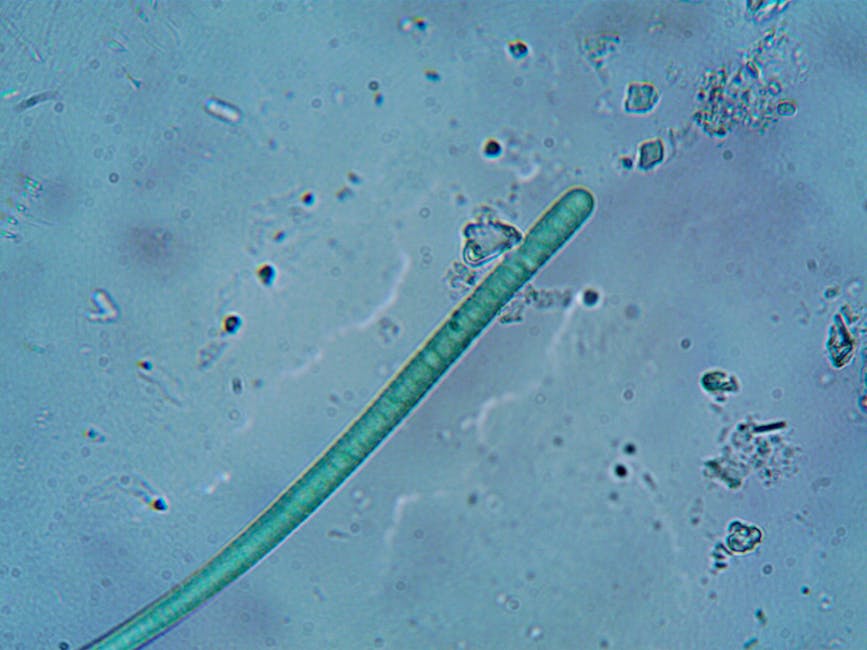
Photo by turek on Pexels
The defining feature of prokaryotes is their lack of a nucleus. This means their genetic material (DNA) isn't enclosed within a membrane but floats freely in a region called the nucleoid. They also lack other membrane-bound organelles like mitochondria, chloroplasts, or an endoplasmic reticulum.
Here's a breakdown of their key characteristics:
- Size: Generally much smaller than eukaryotic cells, typically 0.2-2.0 µm (micrometers) in diameter.
- Genetic Material:
- Chromosome: A single, circular DNA molecule located in the nucleoid.
- Plasmids: Small, extra-chromosomal circular DNA molecules that can carry genes for things like antibiotic resistance.
- Ribosomes: Present, but smaller (70S) than those found in eukaryotes (80S). These are crucial for protein synthesis.
- Cell Wall: Almost always present, providing structural support and protection. Its composition differs significantly between Bacteria and Archaea.
- Cell Membrane: Encloses the cytoplasm, regulating what enters and leaves the cell.
- Locomotion: Many have flagella (whip-like structures) or pili (hair-like appendages) for movement or attachment.
- Reproduction: Primarily by binary fission, a simple asexual process where one cell divides into two identical daughter cells.
- Metabolic Diversity: Prokaryotes exhibit an astonishing range of metabolic strategies, from photosynthesis to chemosynthesis, allowing them to thrive in various conditions.
Classification: Bacteria vs. Archaea

Photo by Monstera Production on Pexels
Historically, all prokaryotes were grouped together as "bacteria." However, genetic and biochemical analyses revealed two distinct domains: Bacteria and Archaea. These two groups, while both prokaryotic, are as different from each other as they are from eukaryotes.
graph LR
    A["Prokaryotes"] --> B["Domain: Bacteria"]
    A --> C["Domain: Archaea"]

    B --> B1["Peptidoglycan Cell Wall"]
    B --> B2["Common Pathogens & Commensals"]
    B --> B3["Diverse Metabolism (e.g., Cyanobacteria, E. coli)"]

    C --> C1["Non-peptidoglycan Cell Wall (Pseudopeptidoglycan, S-layers)"]
    C --> C2["Live in Extreme Environments (Extremophiles)"]
    C --> C3["Unique Membrane Lipids (Ether linkages)"]
    C --> C4["Closer to Eukaryotes Genetically (e.g., RNA Polymerase structure)"]
Key differences to remember:
- Cell Wall Composition: Bacteria walls contain peptidoglycan, a unique polymer. Archaea walls lack peptidoglycan; they might have pseudopeptidoglycan or S-layers made of protein.
- Membrane Lipids: Bacterial membranes have fatty acids linked by ester bonds. Archaea have unique branched hydrocarbons linked by ether bonds, which helps them survive extreme conditions.
- Genetic Machinery: While both are prokaryotic, Archaea share more genetic similarities with eukaryotes in aspects like RNA polymerase structure and ribosomal proteins.
- Habitats: Bacteria are ubiquitous, found everywhere from soil to your gut. Archaea are often known for living in extreme environments (extremophiles) like hot springs, salt flats, and deep-sea vents, though they're also found in less extreme places.
3. Worked Example
Let's say you're examining a new single-celled organism under a powerful microscope and want to determine if it's a prokaryote, and if so, whether it's a bacterium or an archaeon.
- First observation: You notice it's very small (around 1 µm) and lacks any visible internal membrane-bound structures like a nucleus or mitochondria. This immediately tells you it's a prokaryote. If you saw a nucleus, you'd know it was a eukaryote.
- Next, you perform a biochemical test on its cell wall. You find that its cell wall contains peptidoglycan. This crucial finding points directly to it being a Bacterium. If the test for peptidoglycan were negative, and instead you found pseudopeptidoglycan or just proteins forming an S-layer, you'd lean towards Archaea.
- Finally, you analyze its membrane lipids. You discover they are branched hydrocarbons connected by ether linkages. While the peptidoglycan test already pointed to Bacteria, this new information would contradict it. This highlights that you need to look at multiple characteristics. If the cell wall was negative for peptidoglycan and you found ether-linked lipids, then you'd be quite confident it's an Archaea.
In this example, the presence of peptidoglycan is a strong indicator of a bacterium. If it lacked peptidoglycan, the unique ether-linked lipids would be a strong indicator of an archaeon.
4. Key Takeaways
- Prokaryotes are single-celled organisms lacking a nucleus and other membrane-bound organelles.
- Their genetic material (DNA) is typically a single circular chromosome in the nucleoid region, often with additional plasmids.
- They primarily reproduce through binary fission, a simple asexual division.
- Prokaryotes are divided into two distinct domains: Bacteria and Archaea.
- Bacteria have cell walls containing peptidoglycan, while Archaea lack peptidoglycan and have unique membrane lipids.
- Archaea are often found in extreme environments but are also ubiquitous, and are genetically more similar to eukaryotes than Bacteria in some ways.
Common Mistakes to Avoid:

Photo by KATRIN BOLOVTSOVA on Pexels
- Don't confuse prokaryotes with eukaryotes; the presence or absence of a nucleus is the key differentiator.
- Don't assume all "germs" are bacteria; some are archaea, and many archaea are not harmful.
- Don't think Archaea are "primitive" or failed bacteria; they are a distinct and ancient domain of life.
- Don't forget that size matters; prokaryotes are generally much smaller than eukaryotic cells.
5. Now Try It
Imagine you've discovered a new microbe. It's single-celled, lacks a nucleus, and reproduces by dividing in half. A genetic analysis reveals its ribosomes are 70S (the smaller type) and its DNA is a single circular chromosome. You perform a chemical test on its cell wall and find no peptidoglycan, but you detect unique branched lipids in its cell membrane.
Based on these observations, what domain do you think this organism belongs to (Bacteria or Archaea) and why?
(Success looks like you correctly identifying the domain and explaining which specific characteristics led you to that conclusion.)
Frequently asked about Introduction to Prokaryotes: Characteristics and Classification
Study this next
Get the full Procariotas curriculum
Clone the complete plan to your dashboard for unlimited AI-generated notes, practice quizzes, and a personalised revision schedule.
Save this course free