Early Renaissance Architecture
From the history of architecture 2 curriculum
Early Renaissance Architecture
TL;DR
Early Renaissance architecture in Florence marked a return to classical Roman principles, emphasizing harmony, proportion, and humanism. Architects like Brunelleschi rediscovered perspective and ancient building techniques, creating innovative structures. This period laid the groundwork for future architectural developments across Europe.
1. The Mental Model
Think of Early Renaissance architecture as a breath of fresh air after the Gothic period. It’s like rediscovering an old, beautiful language (classical antiquity) and using it to express new ideas about human potential and reason. It's about order, clarity, and beauty derived from mathematics.
2. The Core Material
Early Renaissance architecture, flourishing primarily in Florence in the 15th century, represented a conscious break from the medieval Gothic style. It was driven by a renewed interest in classical antiquity—specifically ancient Roman architecture—and the emerging philosophical movement of humanism, which placed human beings and their capabilities at the center of thought.
The Florentine Context
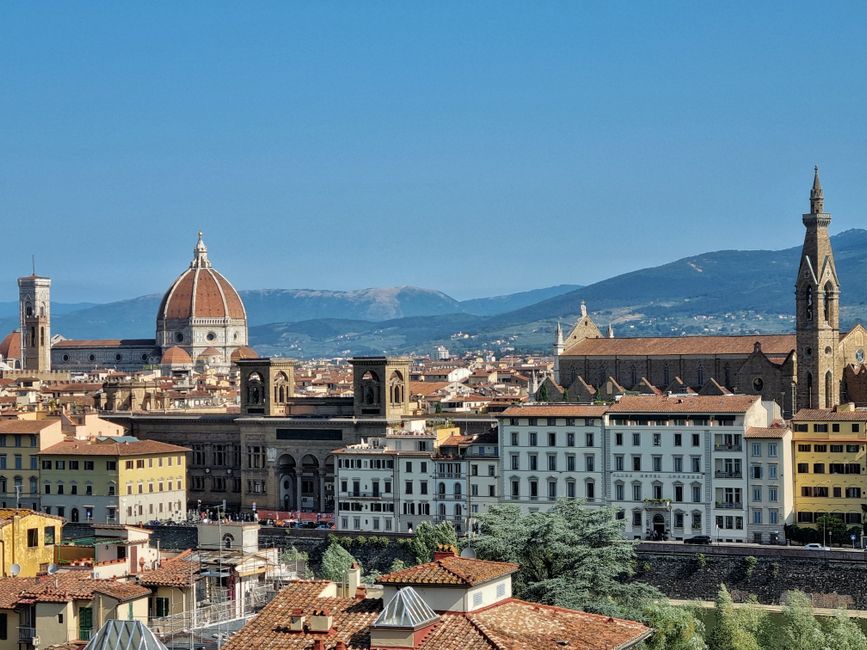
Photo by Aliguieri on Pexels
Florence was a wealthy and intellectually vibrant city, making it the perfect incubator for this new style. Patrons like the Medici family actively supported artists and architects, encouraging innovation and a return to classical ideals.
Key Principles and Characteristics

Photo by Markus Winkler on Pexels
- Revival of Classical Forms: Architects looked to Roman ruins and texts for inspiration. You'll see elements like:
- Round arches: Replacing the pointed arches of Gothic architecture.
- Columns and pilasters: Often in classical orders (Doric, Ionic, Corinthian).
- Vaults and domes: Particularly the hemispherical dome.
- Classical ornamentation: Dentils, egg-and-dart motifs, cornices.
- Emphasis on Proportion and Harmony: Renaissance architects believed that beauty came from harmonious relationships between parts, often based on simple mathematical ratios (like 1:2, 1:3, 2:3). This created a sense of order and balance.
- Perspective: Filippo Brunelleschi is credited with rediscovering linear perspective, allowing architects and artists to create realistic three-dimensional spaces on a two-dimensional plane. This was crucial for designing coherent and visually impactful buildings.
- Human Scale: Unlike the soaring, awe-inspiring scale of Gothic cathedrals, Early Renaissance buildings aimed for a more human-centered scale, making them feel inviting and rational.
- Central Plan: A preference for buildings organized symmetrically around a central axis, often circular or square, symbolizing divine perfection.
Important Figures
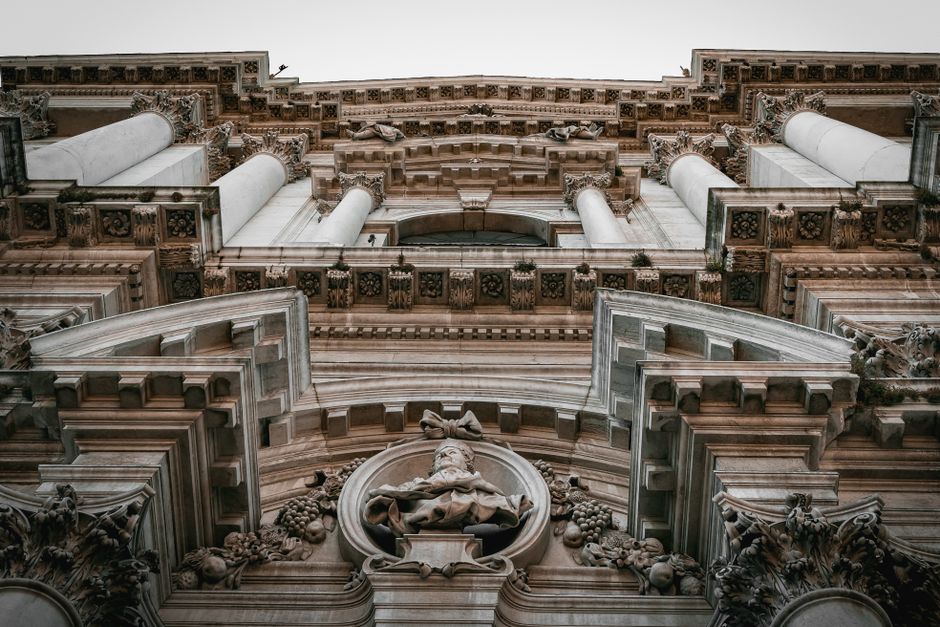
Photo by Cătălin Todosia on Pexels
- Filippo Brunelleschi (1377–1446): Often considered the "father" of Renaissance architecture. His greatest achievement is the Dome of Florence Cathedral, a feat of engineering that resurrected ancient Roman building techniques. He also designed the Ospedale degli Innocenti (Foundling Hospital), which showcased classical elements like round arches, slender columns, and a sense of measured rhythm.
- Leon Battista Alberti (1404–1472): A true Renaissance man—architect, theorist, and humanist. He wrote De re aedificatoria (On the Art of Building), the first architectural treatise since antiquity, advocating for beauty based on reason and proportion. His works include the Palazzo Rucellai and Sant'Andrea in Mantua.
- Donato Bramante (1444–1514): Though more active in the High Renaissance, his early work, like the Tempietto (a small, perfectly proportioned circular temple), embodies many Early Renaissance ideals.
Here's a simplified flow of how these ideas connected:
graph TD
    A["Rediscovery of Classical Texts & Ruins"] --> B["Humanism (Focus on Human Reason & Potential)"]
    B --> C["Desire for Order, Harmony, & Rationality"]
    C --> D["Architectural Innovations (e.g., Linear Perspective)"]
    D --> E["Return to Classical Forms (Columns, Arches, Domes)"]
    E --> F["Emphasis on Proportion & Mathematical Ratios"]
    F --> G["Creation of Early Renaissance Architecture (e.g., Brunelleschi's Dome)"]
    G --> H["Influence on Future European Architecture"]
3. Worked Example
Let's look at Brunelleschi's Ospedale degli Innocenti (Foundling Hospital) in Florence (begun 1419).
When you look at its famous facade, you see:
- Arcade: A series of nine perfectly round arches, supported by slender Corinthian columns. This contrasts sharply with the pointed arches of Gothic architecture.
- Proportion: The space between each column (the bay) is a perfect cube. The height of the columns equals the depth of the arcade, and the width between the columns. This strict adherence to simple mathematical ratios creates a feeling of calm and order.
- Rhythm: The repeating sequence of arch-column-arch creates a clear, measurable rhythm across the facade, making it easy for your eye to follow and understand the building's structure.
- Materiality: The use of pietra serena (a gray stone) for architectural elements against a white stucco wall emphasizes the structural lines and gives a sense of clarity and precision.
- Human Scale: While impressive, the scale doesn't overwhelm you; it feels approachable and rational, fitting for a civic building designed to care for children.
This building isn't just functional; it's a manifesto for the new architectural style, demonstrating how classical principles could be reinterpreted for contemporary needs with grace and mathematical precision.
4. Key Takeaways
- Early Renaissance architecture began in 15th-century Florence, inspired by ancient Rome.
- It prioritized classical elements like round arches, columns, and domes.
- Proportion and harmony, often based on simple mathematical ratios, were central to its aesthetic.
- Filippo Brunelleschi was a pivotal figure, known for the Florence Cathedral dome and rediscovering perspective.
- Humanism deeply influenced the style, promoting a rational and human-centered approach to design.
- Buildings aimed for a human scale, creating clear, understandable spaces.
- The use of pietra serena against white stucco often highlighted structural elements.
Common Mistakes to Avoid:
- Don't confuse it with Romanesque or Gothic; it's a deliberate break from both.
- Don't overemphasize ornamentation; the focus was on structural clarity and proportion, not elaborate decoration.
- Don't forget the role of patrons like the Medici; their support was crucial for its development.
- Don't overlook the theoretical aspect; Alberti's writings codified many of its principles.
5. Now Try It
Imagine you are an architect in 15th-century Florence. Your patron wants a small, private chapel designed in the "new style." Sketch out a simple floor plan and a facade for this chapel.
What to do:
1. Draw a basic symmetrical floor plan (perhaps square or circular).
2. Add elements like columns (maybe pilasters on the facade) and round arches.
3. Think about how you'd use simple mathematical relationships for its dimensions (e.g., length is twice the width, or all sides are equal).
4. Label two or three key features on your sketch that demonstrate Early Renaissance principles.
What success looks like: Your sketch clearly shows classical influence, symmetry, and a sense of ordered proportion, rather than the verticality and complexity of Gothic architecture.
Frequently asked about Early Renaissance Architecture
Get the full history of architecture 2 curriculum
Clone the complete plan to your dashboard for unlimited AI-generated notes, practice quizzes, and a personalised revision schedule.
Create Free Account