Introduction to Biomolecules and Water
From the BIOMOLECULE curriculum
TL;DR
Biomolecules are the essential, carbon-based molecules that make up all living things, including you. Water is incredibly special and vital because its unique properties, like being a great solvent, allow life's chemistry to happen. Understanding these fundamental building blocks and water's role is key to grasping how biology works.
1. The Mental Model
Think of biomolecules as the Lego bricks of life. Water is like the essential liquid medium or glue that lets these bricks interact, move, and build complex structures, making life possible.
2. The Core Material
You're made of matter, and a huge part of that matter is composed of biomolecules. These are large, complex organic molecules (meaning they contain carbon, usually bonded to hydrogen) that are essential for life. There are four main types: carbohydrates, lipids, proteins, and nucleic acids. Each type has specific jobs, but they all work together in incredibly intricate ways.
What are Biomolecules?

Photo by Ann H on Pexels
Biomolecules are polymers, which means they're built from smaller repeating units called monomers. Imagine a pearl necklace: each pearl is a monomer, and the whole necklace is a polymer.
- Carbohydrates: These are your body's primary energy source and also provide structural support. Their monomers are monosaccharides (simple sugars like glucose).
- Lipids: These include fats, oils, and waxes. They're great for long-term energy storage, insulation, and forming cell membranes. Unlike the others, they don't form true polymers from repeating monomers but are still large molecules.
- Proteins: These are the workhorses of the cell, doing almost everything—from catalyzing reactions (enzymes) to transporting molecules and providing structure. Their monomers are amino acids.
- Nucleic Acids: DNA and RNA are nucleic acids. They store and transmit genetic information, which is basically the instruction manual for building and operating an organism. Their monomers are nucleotides.
Water: The Solvent of Life
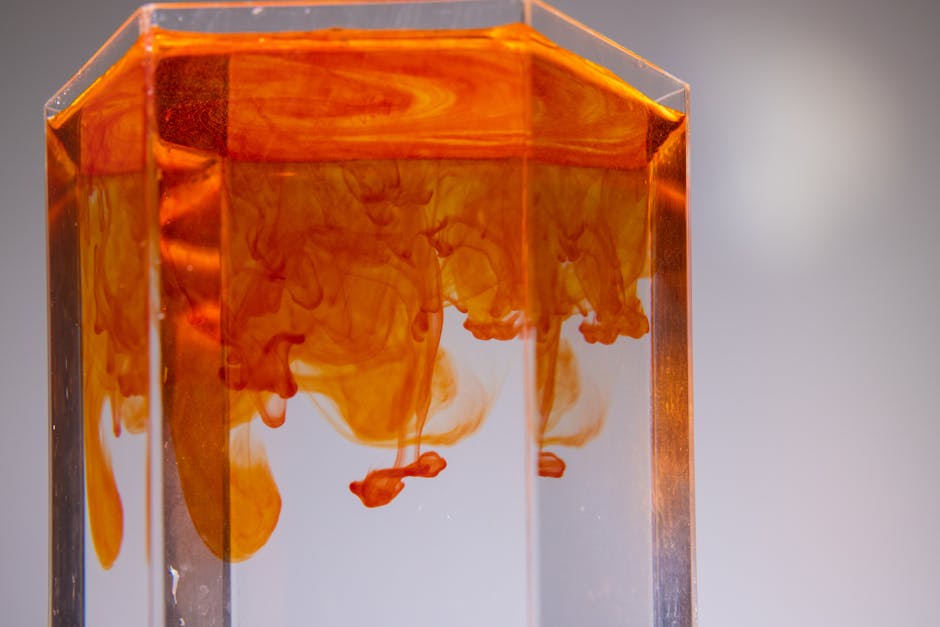
Photo by Jill Burrow on Pexels
Water ($H_2O$) is perhaps the most crucial molecule for life on Earth. Its unique properties stem from its structure: it's a bent molecule with oxygen in the middle and two hydrogens. Oxygen is more "electronegative," meaning it pulls electrons closer to itself, creating a slight negative charge on the oxygen and slight positive charges on the hydrogens. This makes water a polar molecule.
graph TD
    A["Hydrogen (+)"] --> B["Oxygen (-)"];
    C["Hydrogen (+)"] --> B;
This polarity allows water to form hydrogen bonds with other water molecules and with other polar molecules. These bonds are weaker than covalent bonds but are numerous and collectively strong, giving water its special characteristics:
- Excellent Solvent: Because water is polar, it can dissolve many other polar and ionic substances (like salt, which separates into Na+ and Cl- ions). This is vital for transporting nutrients and waste, and for chemical reactions to occur in solution. Substances that dissolve well in water are called hydrophilic ("water-loving").
- High Specific Heat: Water can absorb a lot of heat energy before its temperature rises significantly. This helps regulate temperatures in organisms and on Earth.
- High Heat of Vaporization: A lot of energy is needed to turn liquid water into gas. This is why sweating cools you down – as sweat evaporates from your skin, it takes a lot of heat with it.
- Cohesion and Adhesion: Water molecules stick to each other (cohesion) and to other surfaces (adhesion). This is how water travels up plants and forms droplets.
- Ice Floats: Unlike most substances, solid water (ice) is less dense than liquid water, so it floats. This is crucial for aquatic life, as ponds and lakes freeze from the top down, insulating the water below.
Without water's unique properties, the complex chemistry of biomolecules simply couldn't happen, and life as we know it wouldn't exist.
3. Worked Example
Imagine you're making a glass of sugary lemonade.
1. Sugar (sucrose) is a carbohydrate, specifically a disaccharide (two monosaccharides linked together).
2. Water is the solvent. When you add sugar to water, the polar water molecules surround and interact with the polar sugar molecules.
3. The slight positive poles of water are attracted to the slight negative poles of sugar, and vice versa. These attractions are stronger than the attractions between individual sugar molecules, causing the sugar to dissolve and disperse evenly throughout the water.
4. This interaction creates a solution, allowing you to drink the sugar and your body to easily absorb it as an energy source. If water wasn't a good solvent, the sugar would just sit at the bottom, and your body couldn't use it efficiently.
4. Key Takeaways
- Biomolecules are essential, large organic molecules forming the basis of all life.
- The four main types of biomolecules are carbohydrates, lipids, proteins, and nucleic acids, each with distinct functions.
- Water is a polar molecule, meaning it has slight positive and negative charges due to uneven electron sharing.
- Water's polarity leads to hydrogen bonding, giving it unique properties critical for life.
- Water's ability to dissolve many substances (hydrophilic property) makes it the "solvent of life."
- Water's high specific heat and heat of vaporization help regulate temperature in living systems.
- The fact that ice floats is vital for aquatic ecosystems.
Common Mistakes to Avoid:
- Don't confuse monomers with polymers; monomers are the building blocks, polymers are the large structures.
- Don't think of all biomolecules as "polymers" in the same way; lipids are an exception to the repeating monomer rule.
- Don't underestimate the importance of water; its properties aren't just interesting, they're foundational to biology.
- Don't forget that "organic" in biology means containing carbon, not necessarily "natural" or "healthy."
5. Now Try It
Take 15 minutes to list three specific examples of each of the four main biomolecule types that you encounter in your daily life (e.g., in food, your body). Then, think about one more unique property of water (beyond what we discussed) and how it's important for living organisms.
What success looks like: You'll have a clear list of 12 examples (3 per biomolecule type) and a thoughtful explanation of an additional water property, showing you can connect these concepts to the real world.
Frequently asked about Introduction to Biomolecules and Water
Study this next
Get the full BIOMOLECULE curriculum
Clone the complete plan to your dashboard for unlimited AI-generated notes, practice quizzes, and a personalised revision schedule.
Save this course free