Introduction to Physics and Measurement
From the physics curriculum
TL;DR
Physics is about understanding how the universe works, from tiny particles to massive galaxies, by observing and experimenting. Measurement is crucial in physics because it lets us quantify our observations accurately. Standard units help ensure everyone speaks the same scientific language.
1. The Mental Model
Think of physics as the ultimate detective story where you're trying to figure out the rules of nature. Measurement is your detective toolkit, providing concrete evidence, and units are the language you use to report your findings so others can understand.
2. The Core Material
Physics is the natural science that studies matter, its fundamental constituents, its motion and behavior through space and time, and the related entities of energy and force. It's about figuring out the "how" and "why" behind everything you see.
What do physicists actually do?

Photo by Vitaly Gariev on Pexels
Physicists use a combination of observation, experimentation, and mathematical modeling to develop theories that explain natural phenomena. They then test these theories to see if they accurately predict what will happen.
The Importance of Measurement
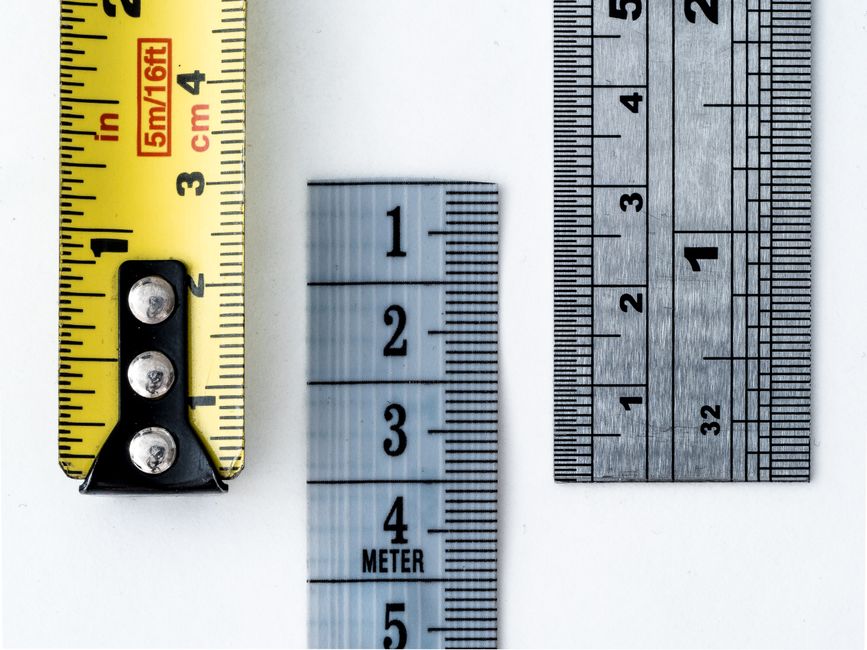
Photo by William Warby on Pexels
Measurements are the backbone of experimental physics. Without precise measurements, we can't test theories or make accurate predictions. Imagine trying to build a complex machine without knowing the exact length of each part – it wouldn't work!
Units and the SI System

Photo by Jakub Pabis on Pexels
To make sure everyone understands measurements universally, we use standardized units. The most common system is the International System of Units, or SI system. It defines seven base units from which all other units are derived.
Here's how the SI system works:
graph TD
    A["Physics Measurement"] --> B["SI Base Units"];
    B --> C["Length (Meter)"];
    B --> D["Mass (Kilogram)"];
    B --> E["Time (Second)"];
    B --> F["Electric Current (Ampere)"];
    B --> G["Temperature (Kelvin)"];
    B --> H["Amount of Substance (Mole)"];
    B --> I["Luminous Intensity (Candela)"];
    B --> J["Derived Units"];
    J --> K["Speed (m/s)"];
    J --> L["Force (Newton)"];
    J --> M["Energy (Joule)"];
    C --> K;
    E --> K;
    D --> L;
    K --> L;
    L --> M;
- Length: Meter (m) – How long something is.
- Mass: Kilogram (kg) – How much "stuff" is in an object.
- Time: Second (s) – How long an event lasts.
- Electric Current: Ampere (A) – The flow rate of electric charge.
- Thermodynamic Temperature: Kelvin (K) – The absolute measure of temperature.
- Amount of Substance: Mole (mol) – How many particles are in a sample.
- Luminous Intensity: Candela (cd) – The power emitted by a light source.
All other units, like speed (meters per second, m/s) or force (Newtons, kg·m/s²), are derived units because they're combinations of these base units.
Precision vs. Accuracy

Photo by icon0 com on Pexels
These terms are often confused:
* Accuracy refers to how close a measurement is to the true or accepted value.
* Precision refers to how close multiple measurements are to each other (their repeatability), regardless of whether they're close to the true value.
Imagine throwing darts:
* Accurate means hitting the bullseye.
* Precise means hitting the same spot on the board repeatedly, even if it's not the bullseye.
* The best measurements are both accurate and precise.
3. Worked Example
Let's say you're measuring the length of a table.
- Goal: Measure the table's length accurately.
- Tool: A meter stick.
- Measurement process:
- You align the meter stick carefully at one end.
- You read the measurement at the other end. Let's say you read 1.52 meters.
- You repeat the measurement two more times: 1.53 meters and 1.52 meters.
- Analysis:
- Your measurements (1.52m, 1.53m, 1.52m) are quite precise because they are very close to each other.
- To determine accuracy, you'd need to know the true length of the table. If the table was known to be exactly 1.525 meters long, your measurements are also quite accurate. If it was actually 1.60 meters long, your measurements would be precise but not accurate.
4. Key Takeaways
- Physics uses observation, experimentation, and math to explain how the universe works.
- Measurement is essential for making observations quantifiable and testing scientific theories.
- The SI system provides a universal set of base units for consistent communication in science.
- Derived units are formed by combining these base units (e.g., speed, force).
- Accuracy is how close a measurement is to the true value; precision is how repeatable measurements are.
- Good scientific practice strives for both accurate and precise measurements.
Common Mistakes to Avoid:
- Mixing different unit systems (e.g., feet and meters) in the same problem without conversion.
- Confusing accuracy with precision.
- Not understanding the scale of a measurement (e.g., forgetting a prefix like "kilo" or "milli").
- Failing to include units with your numerical answers.
5. Now Try It
Find three different objects around you (e.g., a pen, a book, a phone). Using a ruler or tape measure, carefully measure the length of each object in centimeters (cm). For each object, take three separate measurements. What do you notice about the precision of your measurements? Convert one of your measurements to meters (m) and then to millimeters (mm). What does this conversion highlight about the importance of unit prefixes?
Frequently asked about Introduction to Physics and Measurement
Study this next
Get the full physics curriculum
Clone the complete plan to your dashboard for unlimited AI-generated notes, practice quizzes, and a personalised revision schedule.
Save this course free